The away end at the Allianz Arena did not move for 29 minutes after the final whistle. Five thousand PSG supporters, still in their section, still singing — one name, on a loop. Ousmane Dembélé walked over to them with his children at his side and the kind of expression that only makes sense if you know where he was eighteen months ago.
January 2024. PSG are restructuring, Luis Enrique is reshaping the squad around a post-Mbappé identity, and Dembélé — signed the previous summer for a reported €50m from Barcelona — is being quietly offered around European clubs. The logic, at the time, was not unreasonable. He was inconsistent, injury-prone by reputation, and the project needed different energy. Several outlets reported concrete interest. He stayed, not because the club suddenly believed in him, but because the market didn't move fast enough.
That is the part worth sitting with. Dembélé did not force his way back into favour through some dramatic gesture. He just kept playing.
Enrique's system asks for width, directness, and the ability to carry the ball into tight spaces at pace without needing a safety net behind you. In theory, that is a profile Dembélé has always had. In practice, it took until the second half of the 2023-24 season for the two ideas — the manager's and the player's — to properly overlap. By the time PSG reached the Champions League semi-finals last spring, Dembélé was their most dangerous attacker on a consistent basis. Not occasionally. Consistently.
This season, that consistency has calcified into something rarer. He has been the driving force behind PSG's Champions League run — the creativity, the directness, the moments that change the shape of a game before the opposition's defensive structure has time to adjust. The Allianz, on the night, was simply the latest venue to find out.
He didn't rush over. He let the players do the lap, let the noise settle into something more specific, and then walked to the away end with his kids. The fans had been there for the better part of half an hour at that point.
That walk took about forty seconds. It felt longer — the way things do when a crowd of five thousand people goes slightly quieter because the thing they were waiting for is actually happening.
PSG's post-Mbappé era was always going to need a face. The assumption, in most quarters, was that it would be a name they signed — someone brought in to fill the commercial and sporting void. Instead, the answer was already in the building, nearly on his way out the door, waiting for a system to finally fit the way he moves.
Dembélé is not a reclamation project. He did not change. The context around him did, and he was sharp enough — or stubborn enough — to still be there when it shifted. The Ballon d'Or conversation is no longer a stretch. Twelve months ago, it would have been a punchline.
The away end at the Allianz Arena did not move for 29 minutes after the final whistle. Five thousand PSG supporters, still in their section, still singing — one name, on a loop.
Bronnen
Al Jazeera
Flagside-artikelen zijn originele stukken samengesteld uit meerdere bronnen. We citeren elk medium dat in het artikel verwerkt is.
Hoogtepunten van de nachtelijke wedstrijden, wat de transfermarkt doet, en de ene column die je vandaag moet lezen. Geen advertenties. Geen tips. Geen operators.
Eenmalig afmelden. We delen je e-mailadres niet.
“Stays on Champions League — different angle, same beat.”
 UCL
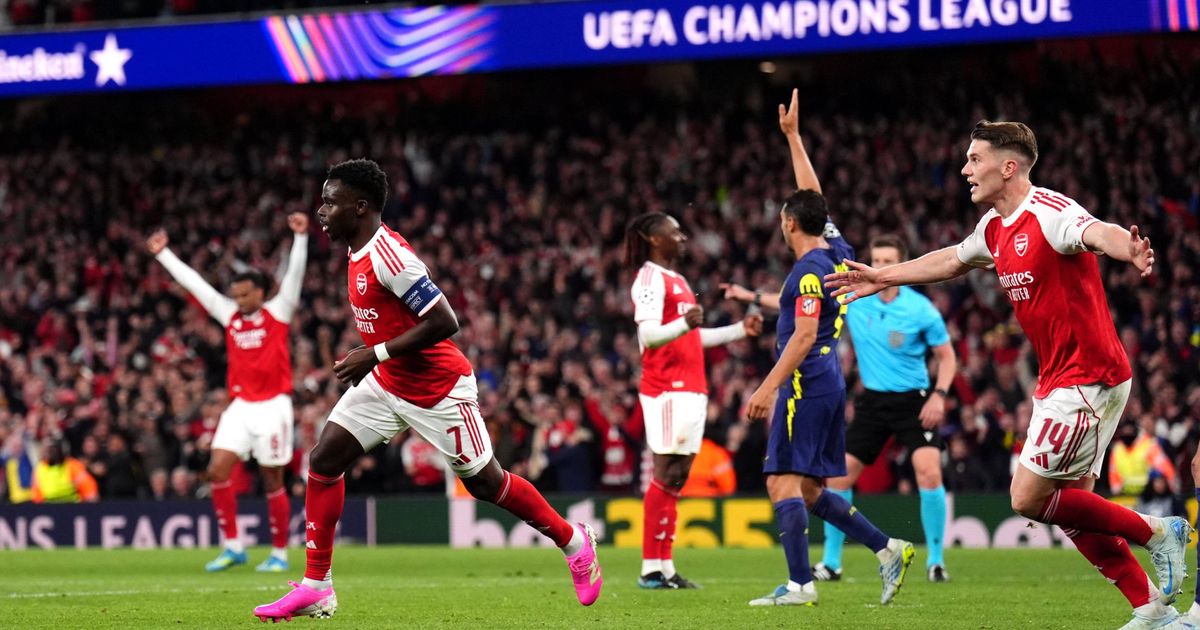
UCLArsenal are eighteen days away from the biggest game in the club's modern history — a Champions League final against Paris Saint-Germain in what would be a genuinely seismic night for Mikel Arteta and
“Stays on Champions League — different angle, same beat.”
UCLArsenal are eighteen days away from the biggest game in the club's modern history — a Champions League final against Paris Saint-Germain in what would be a genuinely seismic night for Mikel Arteta and