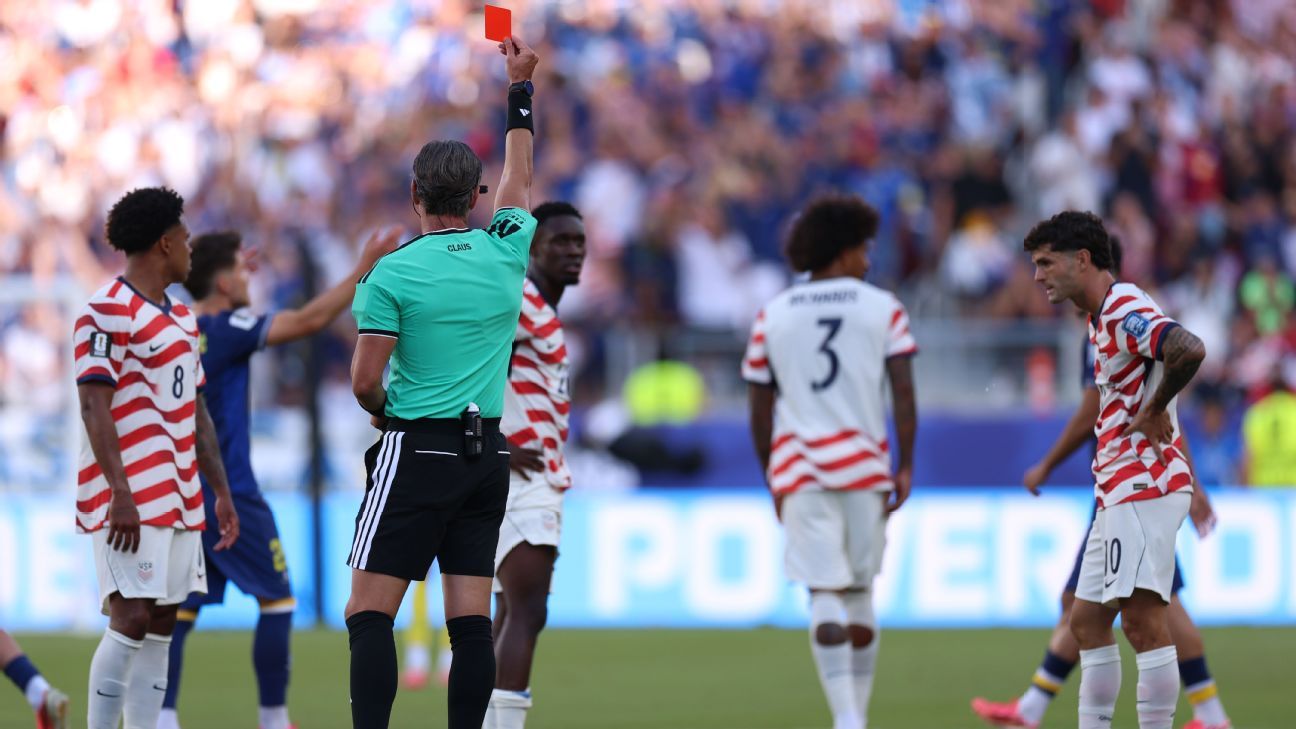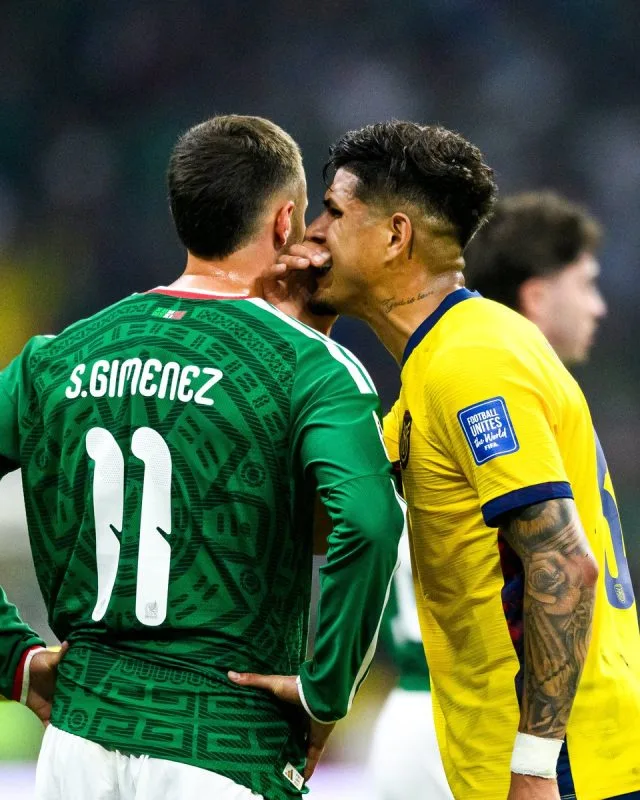
Piero Hincapie did not throw a punch. He did not rake his studs down a shin or headbutt anyone. He covered his mouth while confronting an opponent — and walked. The Ecuador defender became the second player dismissed at the 2026 World Cup for that specific act on 1 July in Mexico City, and the football world is now asking the same question at full volume: is this rule actually serious?
Hincapie was shown a red card after covering his mouth during a confrontation with an opposing player — a gesture that, under a relatively new FIFA directive, constitutes an attempt to hide communication from lip-readers and broadcast cameras. The punishment: immediate dismissal. Ecuador, already navigating a tournament where every point matters, were reduced to ten men.
The detail that made this go everywhere: it has now happened twice at the same World Cup.
The first dismissal for this offence earlier in the tournament raised eyebrows. The second one — Hincapie's — turned those eyebrows into a full-blown debate. Two red cards for covering your mouth at a single World Cup is not a coincidence; it is a pattern. And patterns at a tournament watched by billions have a way of becoming the story.
The reaction online was predictable — plenty of fans pointing to the apparent absurdity of a player being sent off for what, in any other context, looks like a completely ordinary gesture. Others noted that players cover their mouths in training, in press conferences, in the tunnel — and nobody bats an eye. Do it on the pitch at a World Cup, though, and you are off.
The rule itself is not brand new — FIFA introduced guidance around concealing communication to protect the integrity of the game and prevent collusion being hidden from officials and broadcasters. The logic is there, even if the optics are not.
FIFA's reasoning is rooted in transparency. Covering your mouth while speaking to an opponent or a teammate in a confrontational moment can obscure what is being said — potentially hiding dissent, abuse, or tactical instruction from the fourth official and the VAR team. In an era where broadcasters routinely use lip-reading analysis as part of their coverage, the rule is designed to keep the game accountable.
Whether a red card is the right sanction is where the argument really starts. A yellow card — or even a warning system — would satisfy the transparency goal without removing a player from the field for what many consider an instinctive, almost involuntary gesture. It is hard to argue the punishment fits the gesture — and if this tournament produces a third dismissal for the same offence, that argument will only get louder.
Hincapie, for his part, is one of Ecuador's most important defenders — a player who has built a serious reputation in European club football. Losing him to this, at a World Cup, is the kind of moment that will follow the rule around for years.
The rule exists for a reason. The red card still feels like a lot.
Piero Hincapie did not throw a punch. He did not rake his studs down a shin or headbutt anyone. He covered his mouth while confronting an opponent — and walked.
Quellen
Capital Sports
Flagside-Artikel sind Eigenrecherchen aus mehreren Quellen. Wir nennen jedes Outlet, das in den Text geflossen ist.
Die Highlights der Nacht, was das Transferfenster macht und die eine Kolumne, die du heute lesen solltest. Keine Ads. Keine Tipps. Keine Operator.
Ein-Klick-Abmeldung. Wir geben deine E-Mail nicht weiter.
“Stays on World Cup — different angle, same beat.”
 VIRAL
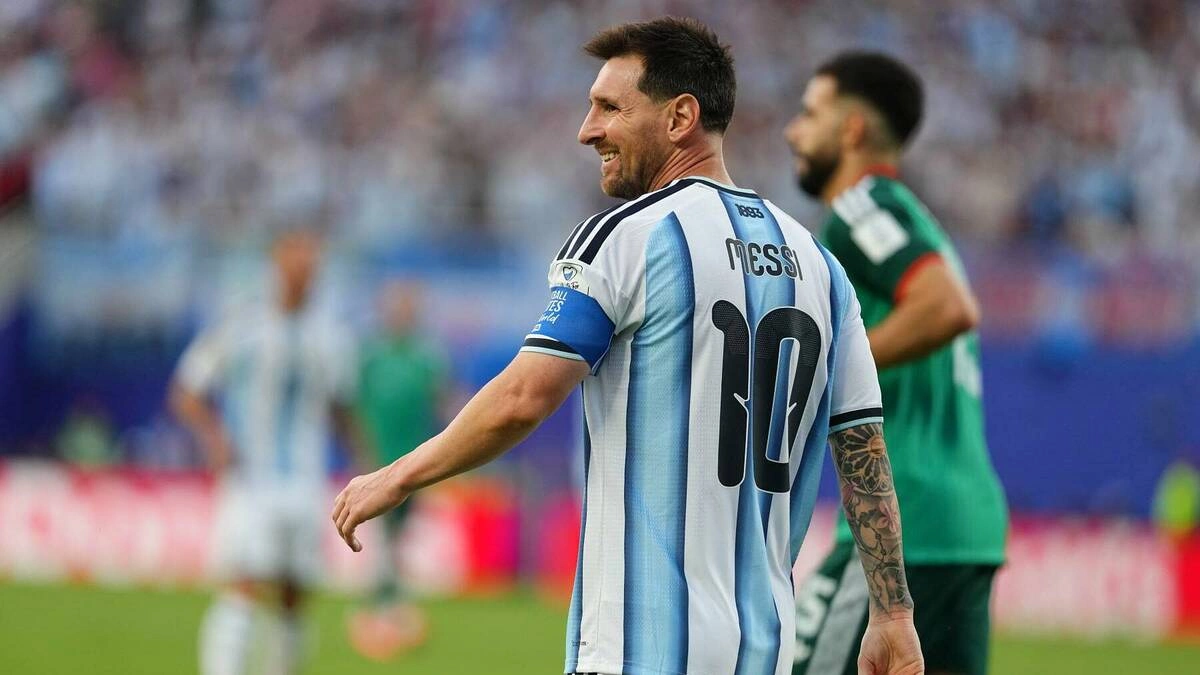
VIRALTrong nhiều năm, người ta gọi đó là lười biếng. FIFA vừa gọi đó là thiên tài chiến thuật — và Lionel Messi có 6 bàn thắng ở vòng bảng World Cup 2026 để chứng minh ai đúng.
“Stays on World Cup — different angle, same beat.”
VIRALTrong nhiều năm, người ta gọi đó là lười biếng. FIFA vừa gọi đó là thiên tài chiến thuật — và Lionel Messi có 6 bàn thắng ở vòng bảng World Cup 2026 để chứng minh ai đúng.