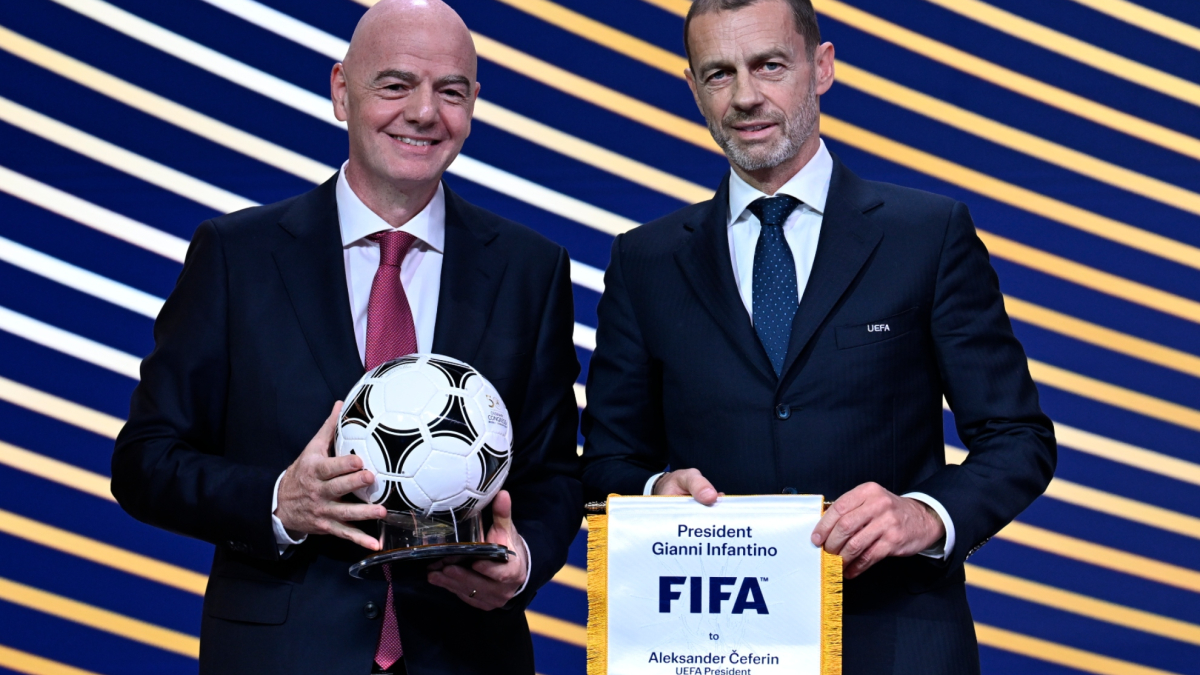
Fifty-five associations. Fifty-five votes. Zero dissent. At an emergency UEFA meeting on 30 July, every single European football federation backed a boycott of FIFA competitions — beginning with next year's Women's World Cup — if Gianni Infantino pushes ahead with plans to hand portions of the World Cup to US-based private investors. This is not a strongly-worded letter. This is a 55-0 vote to walk away.
The precise mechanics of Infantino's plan have not been fully disclosed, but according to The Guardian, the FIFA president is pursuing a deal that would see US-based private investment take a stake in — or acquire rights connected to — the World Cup itself. The exact percentage, structure, and what rights would transfer remain unclear from what has been made public. What is clear is that UEFA's 55 member associations consider it a fundamental threat to the governance model that has underpinned international football for over a century.
The concern, broadly, is commercialisation of the tournament at a structural level — not just a sponsorship deal or a broadcast arrangement, but something that would give private financial interests a seat at the table on the world's most-watched sporting event.
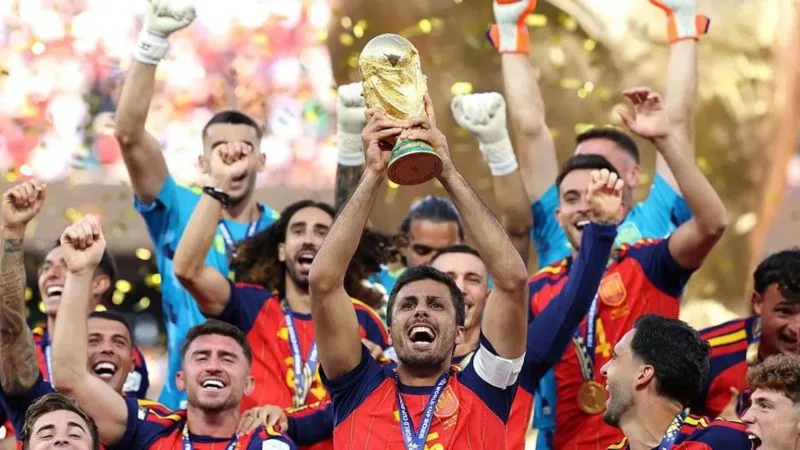
Let's be direct about the stakes here. Remove Europe from the World Cup and you remove Germany, France, Spain, England, Portugal, Italy, the Netherlands — every major footballing nation on the continent. You remove Jude Bellingham, Kylian Mbappé, Lamine Yamal, Erling Haaland. You remove roughly half the tournament's global television audience.
A World Cup without UEFA nations is not a World Cup in any meaningful sense. It is a regional competition with a famous name. The legitimacy of the trophy — and the billions in broadcast and commercial revenue that flow from it — depends entirely on European participation. Infantino knows this. UEFA knows he knows this.
Unanimity in a body of 55 associations is almost unheard of. These are organisations that disagree on almost everything — league formats, transfer windows, financial regulations, international calendars. The fact that not one broke ranks tells you how seriously European football's leadership is treating this moment.
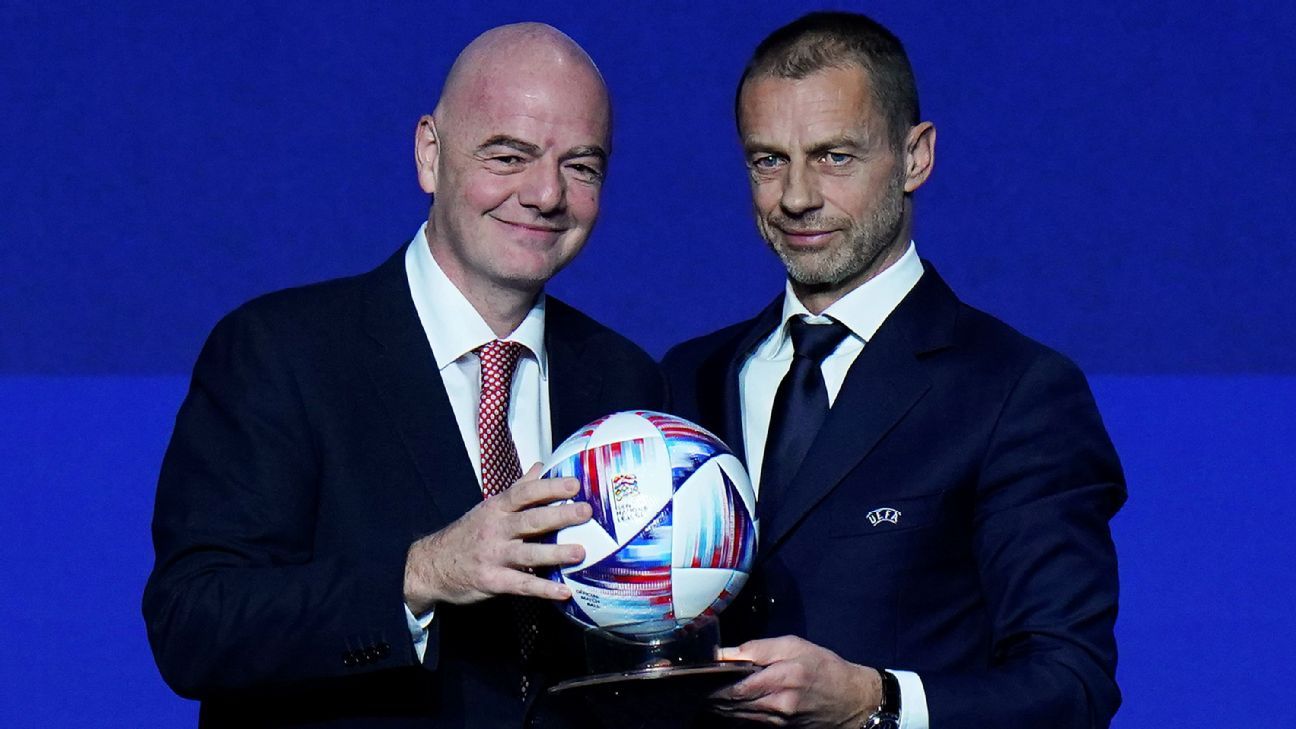
Gianni Infantino did not look like a man who expected this outcome.
It is not yet known whether CONMEBOL, CAF, or the AFC are aligned with UEFA's position. South American, African, and Asian confederations have their own relationships with FIFA — and their own financial dependencies on World Cup revenue — that may lead them to a different calculation. If UEFA stands alone, the pressure on individual associations to eventually comply could grow. If other confederations follow, Infantino's plan collapses entirely.
The Women's World Cup is named as the first competition affected by any boycott — a significant detail, given that the women's game has spent years building the kind of global momentum that a European withdrawal would devastate overnight.
The next move belongs to FIFA.
Fifty-five associations. Fifty-five votes. Zero dissent. At an emergency UEFA meeting on 30 July, every single European football federation backed a boycott of FIFA competitions
Quellen
The Guardian — Football
Flagside-Artikel sind Eigenrecherchen aus mehreren Quellen. Wir nennen jedes Outlet, das in den Text geflossen ist.
Die Highlights der Nacht, was das Transferfenster macht und die eine Kolumne, die du heute lesen solltest. Keine Ads. Keine Tipps. Keine Operator.
Ein-Klick-Abmeldung. Wir geben deine E-Mail nicht weiter.
“Stays on FIFA — different angle, same beat.”
Football has had governance rows before. It has never had one quite like this. According to ESPN FC, UEFA has voted to boycott all FIFA competitions — a direct response to Gianni Infantino's push to b
“Stays on FIFA — different angle, same beat.”
Football has had governance rows before. It has never had one quite like this. According to ESPN FC, UEFA has voted to boycott all FIFA competitions — a direct response to Gianni Infantino's push to b