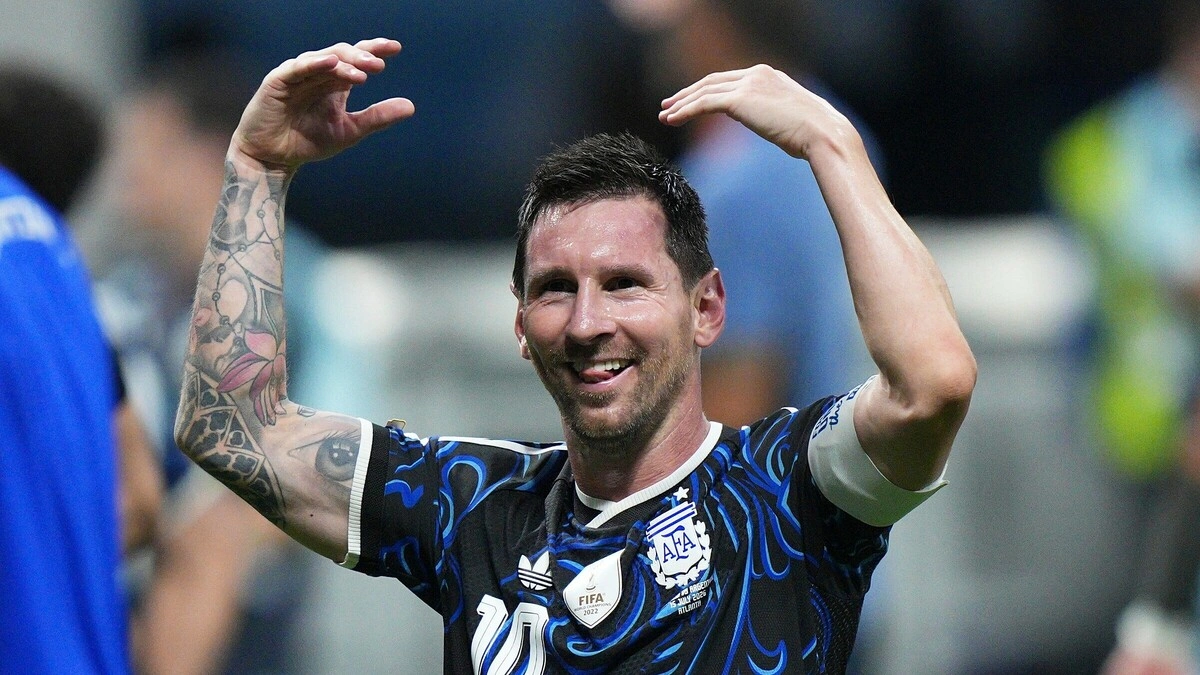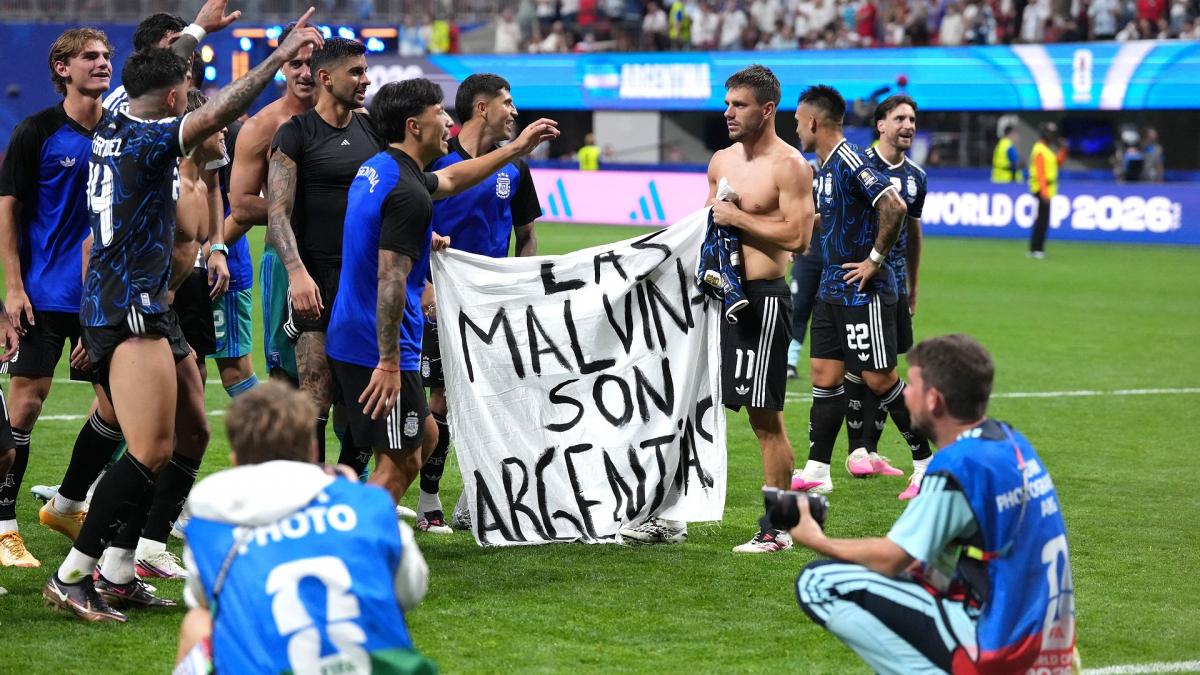
Argentina beat England in a World Cup semi-final and then, in the middle of the celebrations, several Albiceleste players unfurled a banner reading 'Las Malvinas son argentinas' — The Falklands are Argentine. Football and one of the most charged geopolitical disputes between the UK and Argentina, colliding on the biggest stage in the sport. FIFA has now broken its silence on the incident, according to Foot Mercato — though what that silence has been broken with matters enormously.
After Argentina's World Cup 2026 semi-final victory over England, a group of Albiceleste players produced a banner making a direct claim over the Falkland Islands — known in Argentina as the Malvinas — during their post-match celebrations. The Falklands conflict of 1982 remains one of the rawest points of tension between the two countries, and doing this in front of a global audience, immediately after eliminating England from a World Cup, was never going to pass quietly.
FIFA's rules explicitly prohibit political messages on the field of play. Article 13 of the FIFA disciplinary code bans players and officials from displaying slogans or images of a political nature during matches and official events. On paper, the framework for action exists. Whether FIFA chooses to use it is a different question entirely.
Foot Mercato reports that FIFA has now issued a statement on the matter — but the full content of that statement, and whether any formal disciplinary process has been opened, remains unclear from available sourcing. What is known is that the governing body felt the pressure to respond publicly, which tells you something about the scale of the reaction.
FIFA statements in situations like this tend to walk a very careful line: acknowledge the rules, reference the review process, commit to nothing specific. If that is the shape of what has been issued here, England's FA will not find it satisfying — and neither will a significant portion of the British public.
The timing is the thing. Argentina versus England at a World Cup already carries weight that most fixtures simply don't — 1986, the Hand of God, Beckham's red card, penalty shootouts. Adding a Malvinas banner to that history is a deliberate escalation, and the players involved knew exactly what they were doing.
FIFA now faces a choice that goes well beyond football governance. Meaningful sanctions would be seen in Argentina as political interference; no sanctions would be seen in the UK as FIFA endorsing the use of its platform for territorial claims. There is no comfortable exit from this one.
England's FA has not yet issued a formal public response at the time of writing, but the pressure on them to demand action — from fans, from politicians, from the British press — will be considerable. The next few days will determine whether this becomes a disciplinary case or a diplomatic incident that football's governing body quietly hopes everyone forgets.
FIFA opened the door. Now everyone is waiting to see if anyone walks through it.
Argentina beat England in a World Cup semi-final and then, in the middle of the celebrations, several Albiceleste players unfurled a banner reading 'Las Malvinas son argentinas' — The Falklands are Argentine.
Lähteet
Foot Mercato
Flagsiden jutut ovat omaperäisiä, monista lähteistä syntetisoituja kirjoituksia. Mainitsemme jokaisen median, joka ruokki juttua.
Yön otteluiden poiminta, mitä siirtoikkunassa tapahtuu, ja yksi kolumni, josta toimituksen pöytä väitteli. Ei mainoksia. Ei vinkkejä. Ei operaattoreita.
Yksi klikkaus poistaa tilauksesta. Emme jaa sähköpostiosoitteita.
“Stays on World Cup — different angle, same beat.”
 MAAJOUKKUEET
Argentina are through to the 2026 World Cup final. That should be the story. Instead, the full-time whistle triggered something uglier — and Jude Bellingham is at the centre of it.
“Stays on World Cup — different angle, same beat.”
MAAJOUKKUEETArgentina are through to the 2026 World Cup final. That should be the story. Instead, the full-time whistle triggered something uglier — and Jude Bellingham is at the centre of it.