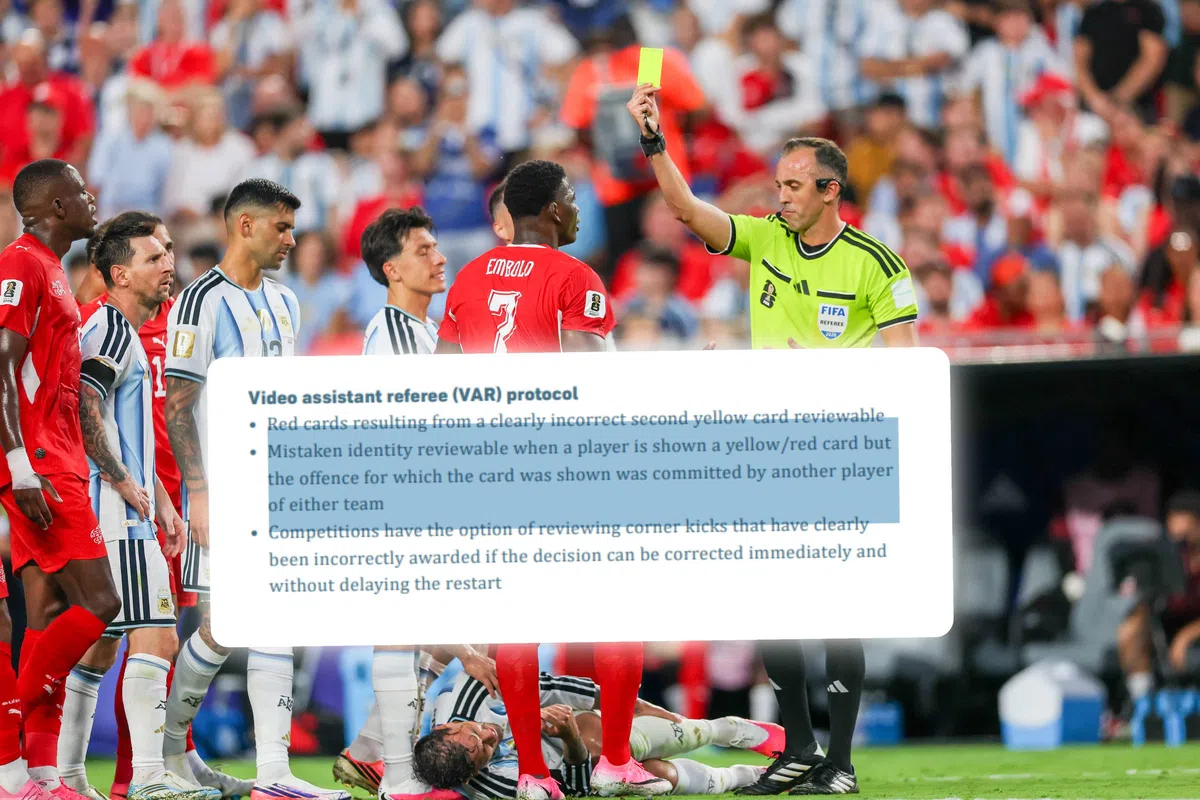
Breel Embolo stood on the pitch in tears, ten Swiss players behind him, 67 minutes still to play — and Switzerland's World Cup was already over in every way that mattered. Argentina went through in extra time, but the story of this quarter-final isn't the two goals that settled it. It's a VAR review, a disputed second yellow, and a Swiss federation furious enough to use the phrase 'mistaken identity' in public. At a World Cup quarter-final. In 2026.
Embolo picked up his second yellow card following a VAR review for simulation — a decision that reduced Switzerland to ten men with more than an hour of the match remaining, according to The Guardian. Switzerland have pushed back hard, describing the incident as a case of 'mistaken identity', though the precise nature of that claim — whether the wrong player was flagged or whether the incident itself was misread — has not been fully clarified by FIFA or match officials.
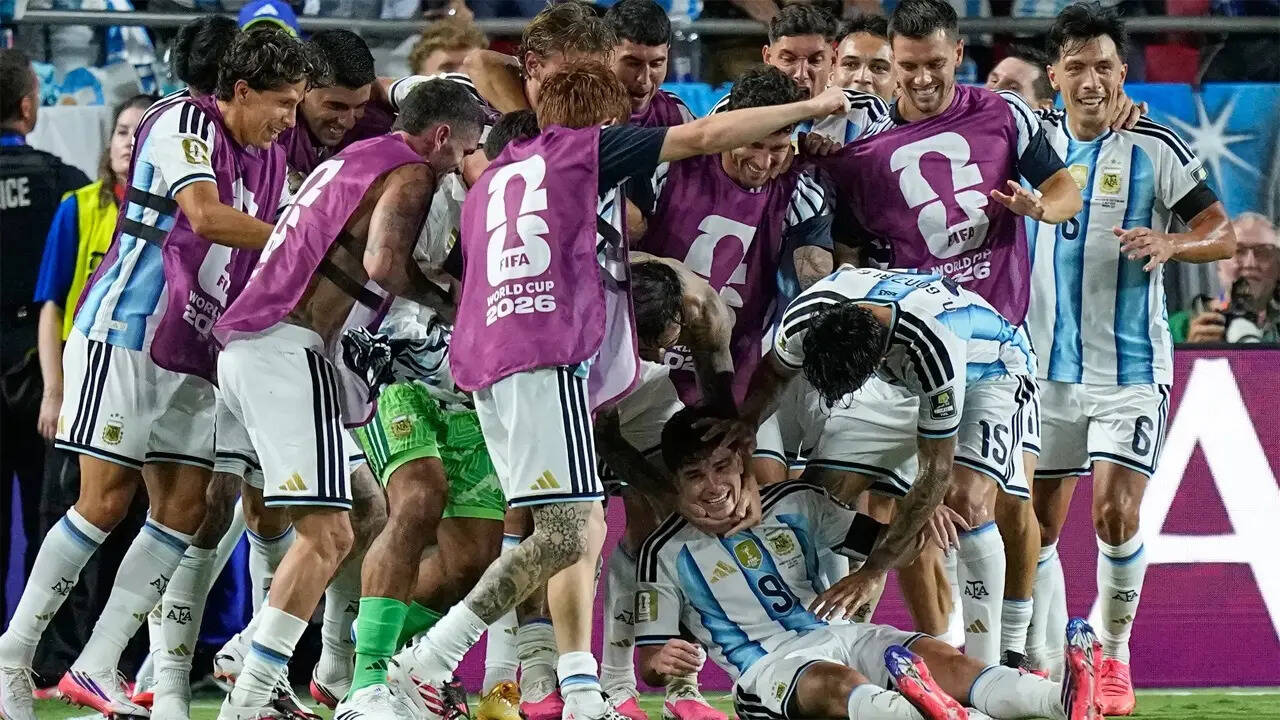
Argentina, given the numerical advantage for the majority of the contest, eventually found the decisive moments in extra time, scoring twice to advance to the semi-finals. In Swiss eyes, they were handed those moments.
The phrase alone is damaging enough. 'Mistaken identity' in a VAR context implies one of two things: either the officials reviewed footage of a different player and carded Embolo for something he didn't do, or the incident itself was so ambiguous that the wrong conclusion was drawn entirely. Neither reading is a good look for FIFA's refereeing structure at this stage of the tournament.
VAR was introduced, in part, to eliminate exactly this kind of error — the wrong call, the wrong man, the wrong moment. When it produces one instead, at a World Cup quarter-final, the backlash isn't just noise. It's a legitimate question about whether the protocol is functioning as designed.
Embolo in tears is the image that travels. But the Swiss federation's language is the thing that stays.
Argentina's extra-time victory is real. The scoreline stands. But football doesn't run on scorelines alone, and Switzerland — who played 67 minutes with ten men — will spend a long time asking what might have been with a full side. Their case isn't helped by the fact that simulation calls are among the most subjective in the game, which makes a VAR review overturning a live decision on those grounds particularly combustible.
FIFA have not, at time of writing, issued a formal response to Switzerland's 'mistaken identity' claim. That silence will not go unnoticed.
This is the kind of controversy that doesn't stay in the quarter-final. It follows the tournament into the semi-finals, into the final, into every post-match briefing where a manager is asked about VAR. The technology was meant to give the World Cup cleaner decisions. Right now, it has given it its defining controversy — and a Swiss forward who deserved better than to leave a World Cup quarter-final in tears over a call that his own federation won't accept.
Breel Embolo stood on the pitch in tears, ten Swiss players behind him, 67 minutes still to play — and Switzerland's World Cup was already over in every way that mattered.
Sources
The Guardian — Football
Flagside articles are original write-ups synthesised from multiple sources. We cite every outlet that fed into the piece.
Pick of the night's matches, what the transfer window's doing, and the one column you should read today. No ads. No tips. No operators.
One-click unsubscribe. We do not share emails.
“Stays on Argentina — different angle, same beat.”
 INT
INTLionel Scaloni stood at the microphone after Argentina's 3-1 win over Switzerland and said, with a straight face, that the upcoming semi-final against England is 'a football game and that is all.' Som
“Stays on Argentina — different angle, same beat.”
INTLionel Scaloni stood at the microphone after Argentina's 3-1 win over Switzerland and said, with a straight face, that the upcoming semi-final against England is 'a football game and that is all.' Som