
 COV1
COV1 NEW0
NEW0 LEV0
LEV0 SEV1
SEV1 LIV0
LIV0 MNC3
MNC3 CRY3
CRY3 NFO1
NFO1 HUL2
HUL2 EVE2
EVE2 RAC2
RAC2 VAL2
VAL2 BET5
BET5 OSA2
OSA2 RSO3
RSO3 DEP2
DEP2 ELC0
ELC0 CEL0
CEL0 RCL
RCL SCP
SCP SAB
SAB SLP
SLP ARS
ARS LILL
LILL ATM
ATM MAN
MAN GAL
GAL BAR
BAR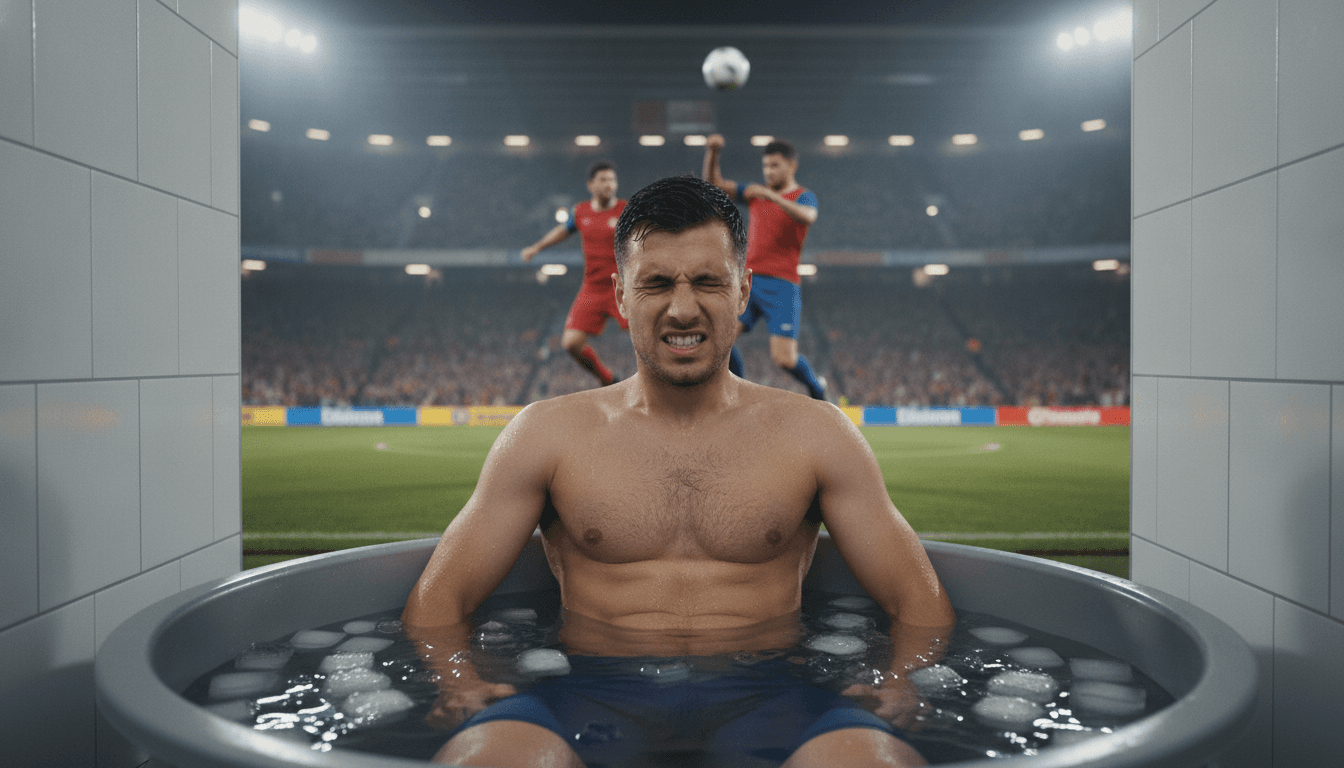
Why do football players take ice baths?
After the final whistle, some players head straight for a tub of freezing water. Here is what is actually happening to their bodies, and why not everyone is convinced it works.
Written with AI and checked automatically before publishing. How we work
Picture a player climbing into a large tub of ice-cold water in the changing room, minutes after the final whistle. He sits there, usually up to the waist, for somewhere between five and fifteen minutes, grimacing. That is the ice bath — unglamorous, uncomfortable, and common enough that most top clubs have the equipment ready before the team bus has even left the stadium.
The short answer to why they do it: cold water causes blood vessels to narrow, which cuts down on the swelling and soreness that builds up in muscles after ninety minutes of sprinting, tackling and jumping. Less swelling means less of that heavy, aching feeling in the legs the following morning.
The process works in two stages. While the player is in the water, the cold squeezes the blood vessels tight and slows the inflammation that hard exercise triggers in muscle tissue. Then, when he gets out and the body warms back up, those vessels open again and blood rushes back into the muscles. That returning blood helps carry away the waste products — the chemical byproducts of intense effort — that have built up during the match. The idea is that flushing those out faster leaves the player feeling fresher sooner.
Timing is the reason clubs care about this so much. In a league where teams can play twice in the space of a week, a player who recovers in three days rather than four is available for selection when it matters. Ice baths are not about the performance on the night — they are about being ready for the next one.
That said, the science is genuinely disputed. Not every club uses ice baths, and not every player who has access to one will use it. Some players find the discomfort outweighs any benefit they notice. Others swear by them. Researchers have questioned whether the reduction in inflammation — which the cold is suppressing — might actually slow down some of the natural muscle repair the body is trying to do. In other words, the same process that reduces soreness might, in some circumstances, get in the way of the body strengthening itself.
What that means in practice is that ice baths tend to be used selectively. A player in the middle of a congested run of fixtures, where recovery speed matters more than long-term muscle adaptation, is a more obvious candidate than a player in pre-season, where building fitness is the whole point. Clubs make that call differently, and individual players have their own preferences that staff tend to work around.
The ice bath is one of the more visible parts of recovery, partly because players occasionally mention it in interviews and partly because the image — a professional athlete sitting in freezing water looking miserable — is memorable. But it sits alongside sleep, nutrition and other methods that clubs use in combination, and no one at a serious club treats it as a fix on its own.




The day's football, in your inbox at 7 AM. Nothing else.
Pick of the night's matches, what the transfer window's doing, and the one column you should read today. No ads. No tips. No operators.
One-click unsubscribe. We do not share emails.
Comments
Loading comments…