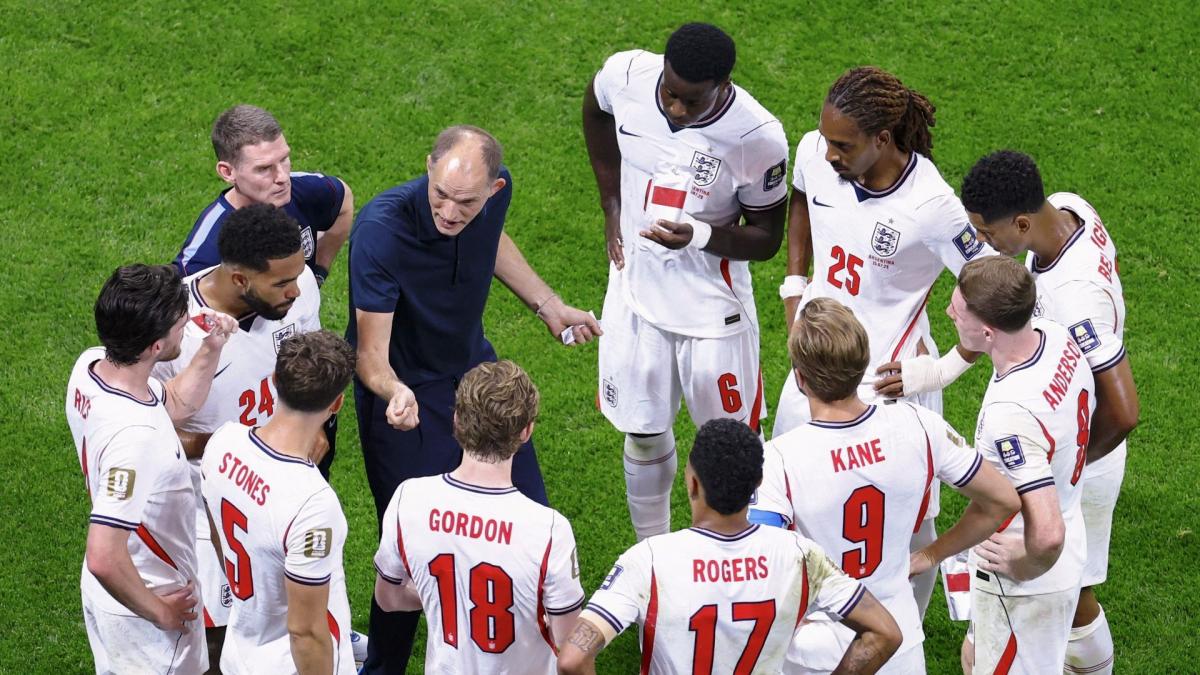
England are out of the 2026 World Cup. Semi-final, Atlanta, Argentina — and the post-mortem has already started before the stadium lights went down. Thomas Tuchel's in-game decisions are being picked apart across every back page and timeline, and the question of whether he should stay is being asked loudly, everywhere, all at once. But there is another question underneath that one — the harder, less comfortable one English football keeps avoiding.
Tuchel is the manager. He picked the team, made the substitutions, set the shape. When England lose a World Cup semi-final on home soil — or close enough to it — the manager is always first in the dock. That is how football works, and it is not entirely unfair. In-game decisions matter. Tactical choices at this level can be the difference between a final and a flight home.
According to The Guardian's Barney Ronay, though, framing this purely as a Tuchel problem is a way of avoiding something bigger. The argument, as Ronay puts it, is that England's failure in Atlanta is symptomatic of deeper structural problems in English football culture — problems that existed long before Tuchel took the job, and will exist long after whoever comes next.
This is not a new conversation. England have been having it, in various forms, since at least 1996. The Premier League's relentless schedule, the development pathway for young English players, the tactical education — or lack of it — at youth level, the culture around the national team itself. Every tournament exit produces a version of this debate. Every time, the cycle resets.
What makes this one sting differently is the context. A World Cup held in North America, with England effectively playing in front of a friendly crowd. A squad that, on paper, had genuine quality. A semi-final that felt, for a moment, like it might actually be different this time. It wasn't.
The Tuchel question will dominate the next few weeks. Whether he stays or goes, whether the FA backs him or moves on — that will be the noise. And it is a legitimate discussion. His decisions in Atlanta will be forensically examined, and rightly so.
But if that is the only discussion English football has — if the conclusion is simply 'wrong manager, find another one' — then the next semi-final exit will arrive on schedule, with a different name in the dugout and the same structural cracks underneath.
England have been here before. The scoreline changes. The manager changes. The argument stays exactly the same.
The real question is whether anyone in a position of power is actually listening to it.
England are out of the 2026 World Cup. Semi-final, Atlanta, Argentina — and the post-mortem has already started before the stadium lights went down.
Fuentes
The Guardian — Football
Los artículos de Flagside son redacciones originales sintetizadas de múltiples fuentes. Citamos cada medio que alimentó la pieza.
Lo mejor de los partidos de la noche, qué está haciendo la ventana de traspasos, y la columna que debes leer hoy. Sin anuncios. Sin pronósticos. Sin operadores.
Desuscripción con un clic. No compartimos emails.
“Stays on World Cup — different angle, same beat.”
Two very different football philosophies. One trophy. Spain arrive at the 2026 World Cup final as the tournament's most composed side — patient, positional, suffocating. Argentina arrive as the tourna
“Stays on World Cup — different angle, same beat.”
Two very different football philosophies. One trophy. Spain arrive at the 2026 World Cup final as the tournament's most composed side — patient, positional, suffocating. Argentina arrive as the tourna