
 LIE0
LIE0 GIB2
GIB2 RWA0
RWA0 KEN0
KEN0 MRI2
MRI2 SRI3
SRI3 UGA1
UGA1 COD1
COD1 KOR
KOR UZB
UZB CHN
CHN TJK
TJK IND
IND URU
URU RUS
RUS NGA
NGA ALG
ALG NIG
NIG JOR
JOR VEN
VEN ARG
ARG BEN
BEN COL
COL PER
PER USA
USA CAN
CAN MEX
MEX CHI
CHI
The Bundesliga's competitive problem, properly explained
The Bundesliga has a reputation problem, and it is not entirely unfair. One club winning the title for over a decade straight will do that. But the full picture is more interesting than the headline, and understanding why German football ended up here requires looking at how the league is actually structured.
Written with AI and checked automatically before publishing. How we work
How Bayern got so far ahead
Bayern Munich won the Bundesliga for eleven consecutive seasons before Bayer Leverkusen finally ended the run in the 2023-24 season. Eleven. That is not a dynasty in the traditional sense, it is a structural condition. When a club can consistently attract the best players from its domestic rivals, sometimes buying them directly from those rivals, the gap compounds year on year.
The mechanism is well understood. Bayern's commercial power, their Champions League presence, and their wage ceiling operate at a level no other Bundesliga club can match. Clubs like Dortmund, Leipzig, and Leverkusen can build competitive squads, but they are building them as stepping stones. The best players move on, often to Bayern, often to the Premier League, and the cycle resets.
Dortmund have reached Champions League finals and pushed Bayern in certain seasons, but they have not won the Bundesliga title in well over a decade. That gap between ambition and outcome is the defining feature of the league's competitive landscape.
The 50+1 rule: protection or constraint?
German football's 50+1 ownership rule is the structural fact that shapes everything else. Under it, clubs must retain majority voting rights, which effectively prevents the kind of external investment that has transformed clubs in England, France, and elsewhere. No Roman Abramovich moment, no Gulf sovereign wealth fund arriving to rewrite the competitive order overnight.
The rule was designed to protect German football from the worst excesses of outside ownership. It has largely done that. German clubs are generally well-run, financially stable, and connected to their supporter bases in ways that many Premier League clubs are not. But it also means the league cannot produce a Leicester City or a Napoli, a club that rises suddenly because money arrived from outside and changed everything.
RB Leipzig are the most contentious case. Red Bull's involvement found a route around the spirit of 50+1 through a membership structure that critics have long argued defeats the rule's purpose. Leipzig's rise has added a genuine competitor at the top, but it has also deepened the argument about what German football actually wants to be.
What Leverkusen's title actually proved
Bayer Leverkusen winning the Bundesliga unbeaten in 2023-24 was genuinely remarkable. It was not a fluke. Xabi Alonso built a side with a clear identity, and they held it across an entire league campaign without losing once. That does not happen by accident.
What it proved is that the gap between Bayern and the rest is closeable, under the right conditions, with the right coach, with a squad that stays together long enough to develop genuine cohesion. What it did not prove is that the structural imbalance has been fixed. Leverkusen's achievement was exceptional precisely because it was so rare.
The question of whether that title starts a new era or remains a one-season interruption will take several more years to answer.
Is the Bundesliga actually worse than other leagues?
Compared to what, exactly? The Premier League has four or five clubs capable of winning the title in most seasons, which makes it feel more competitive at the top. But the bottom half of the Premier League table is often just as predictable as the Bundesliga's, with promoted clubs cycling through relegation and the same established mid-table sides finishing in the same places year after year.
La Liga had its own version of this problem for years, with the title alternating almost exclusively between Real Madrid and Barcelona. Serie A has seen Juventus dominate for long stretches. The Bundesliga's version is more extreme, but the pattern of one club pulling away from the rest is not unique to Germany.
What makes the Bundesliga feel more exposed is that the gap at the top is so visible, and the league has fewer clubs capable of masking it with European runs or cup upsets.
The atmosphere argument
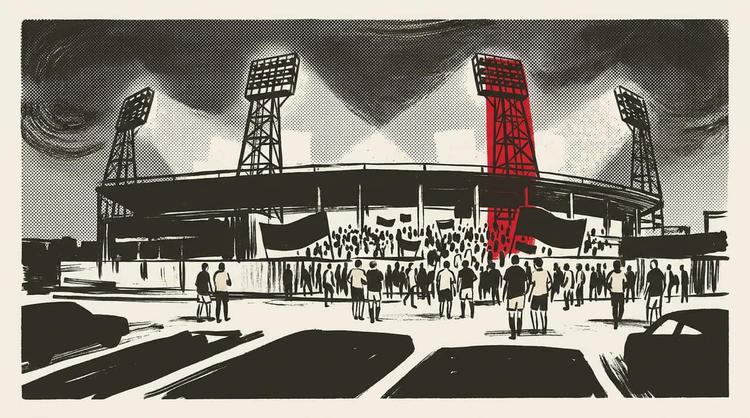
One thing the Bundesliga does not have a problem with is matchday culture. Attendances are consistently high. Standing sections, affordable tickets, and a supporter-first model produce atmospheres that most Premier League grounds cannot match. If the competitive balance argument is the case against German football, the matchday experience is the case for it, and it is a strong one.
The league's problem is not that it is broken. It is that one club spent over a decade making it feel inevitable.



The day's football, in your inbox at 7 AM. Nothing else.
Pick of the night's matches, what the transfer window's doing, and the one column you should read today. No ads. No tips. No operators.
One-click unsubscribe. We do not share emails.
Comments
Loading comments…