
 FUL1
FUL1 MAN1
MAN1 BOU0
BOU0 LIV1
LIV1 LEE0
LEE0 CRY0
CRY0 MNC5
MNC5 SUN3
SUN3 VAL2
VAL2 RSO3
RSO3 DEP1
DEP1 BET1
BET1 VIL3
VIL3 LEV1
LEV1 ATM2
ATM2 RMA1
RMA1 GET1
GET1 MCF0
MCF0 TSG0
TSG0 CHI1
CHI1 ARR0
ARR0 KAI0
KAI0 MAR0
MAR0 ORL2
ORL2 MIL1
MIL1 DUR1
DUR1 NCD0
NCD0 SOL2
SOL2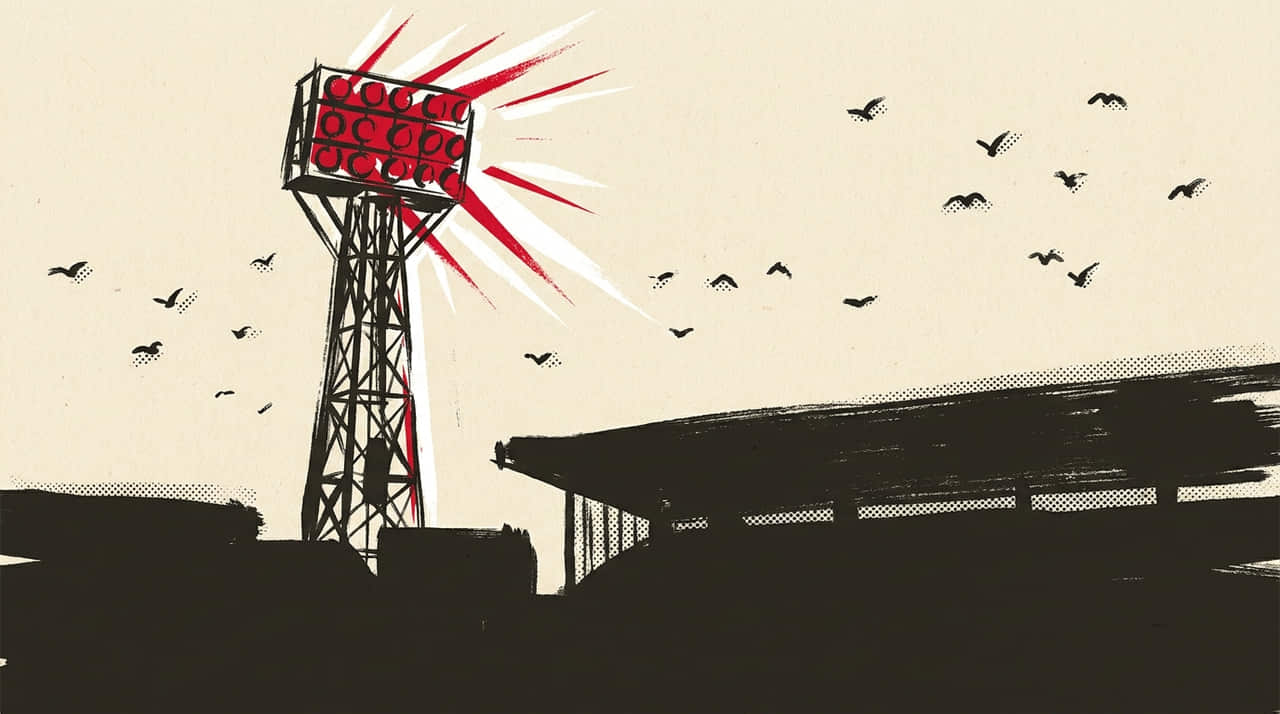
ILLUSTRATION — FLAGSIDE
The 15cm penalty trick, explained
Goalkeepers have spent decades treating the penalty spot as a coin flip decided purely by guessing left, right or staying put. The real edge, it turns out, is simpler: stand slightly off-center before the kick is even taken, and the numbers shift in the keeper's favour.

The classic mixed strategy
The foundational work on penalty kicks, done by economists Pierre-André Chiappori, Steven Levitt and Sohyoung Groseclose using 459 penalties from the French and Italian top flights, treated the penalty as a game theory problem. Their conclusion: a right-footed taker should send 43% of penalties left, 24% down the middle and 33% right. A goalkeeper facing that should dive left 60% of the time, stay central 9% of the time and go right 31% of the time.
That imbalance is not random. It exists because a right-footed kicker's natural strike, hit across their body to the goalkeeper's left, carries more accuracy and power than the mirror shot to the right. Even when the keeper guesses correctly and dives that way, the scoring probability stays high. The original payoff matrix makes the point directly: a keeper diving left still concedes at.632 when the shot also goes left, but a keeper diving right against a shot going right concedes at only.440. The left side of the goal is simply more dangerous, kick for kick.
Where standing off-center changes things
The standard assumption is that the keeper starts dead center between the posts. But nothing in the laws of the game requires that, and a keeper's starting position changes the geometry of the shot before the ball is even struck.
Shift the keeper roughly 15 centimeters to their own right, which is to the taker's left, and two things happen at once. The most dangerous strip of the goal, the far edge of the keeper's left, effectively shrinks, because the keeper's body has eaten into it before the dive begins. At the same time, a strip of equal width opens up on the right side of the goal, the less dangerous side, because the keeper has vacated some of that space.
The scoring probability of a shot rises the closer it gets to a post, on both sides. But the left side was already the more dangerous zone to begin with. So trading a slice of the dangerous left zone for an equal slice of the safer right zone is a net win for the keeper, even though the keeper has given up ground overall.
The new payoff matrix
Modelling that 15cm shift produces a noticeably different matrix. Against the standard positioning, the payoff for the keeper diving right and the taker shooting right sat at.440. Under the shifted stance, that same combination drops to.400. The central-dive-versus-left-shot cell climbs to.833, a jump that reflects how little of the left side the keeper's dive now covers once his starting stance has already leaned right.
Critically, the payoff for a left-side shot against a correctly diving keeper falls from.632 to.577, while shooting left against a keeper who dived right climbs to.899. What matters most for the taker's calculus is that shooting left and shooting right become almost equally rewarding once the keeper has shifted, at roughly.577 versus.899 depending on the dive, compared with a much larger gap under standard positioning. That is the whole mechanism: the shift flattens the kicker's biomechanical advantage on the left side until it barely matters which way they go.
Why the gain looks small but still matters
Once takers adjust their own strategy in response, the overall improvement in save rate settles at roughly 0.3%. That sounds marginal, and across a normal season it probably is. But penalties are rarely decided across a season. They decide shootouts, and shootouts decide knockout football, where a single save is the difference between going through and going home.
The other appeal is that it costs nothing. There is no training regime attached to this, no extra reach or reaction time required, no risk of injury. It is a starting position, adjustable before every single kick, that quietly nudges the odds without the taker necessarily noticing why. Elite penalty takers already study keeper tendencies obsessively. A keeper who starts shifting by 15 centimeters and mixes it with genuinely central starts as a decoy adds one more layer of doubt to a kick that already lives or dies on split-second decisions.
The catch
The advantage assumes takers do not fully adapt. Chiappori, Levitt and Groseclose's whole framework is a Nash equilibrium: if keepers start shifting predictably, sharp takers will retarget the space that has opened up on the keeper's right. The 15cm trick works precisely because most takers are still calibrated to a keeper standing center. The moment that stops being true, the equilibrium resets, and the advantage shrinks back toward zero. Until then, it is one of the cheapest edges available in the sport.
Will elite keepers actually adopt the 15cm shift, or stick with center?

The day's football, in your inbox at 7 AM. Nothing else.
Pick of the night's matches, what the transfer window's doing, and the one column you should read today. No ads. No tips. No operators.
One-click unsubscribe. We do not share emails.
Comments
Loading comments…