
 IPS0
IPS0 LIV2
LIV2 BET1
BET1 RMA0
RMA0 MAR2
MAR2 PCFC2
PCFC2 RBFC1
RBFC1 AMA2
AMA2 NEW
NEW BOU
BOU BRE
BRE SUN
SUN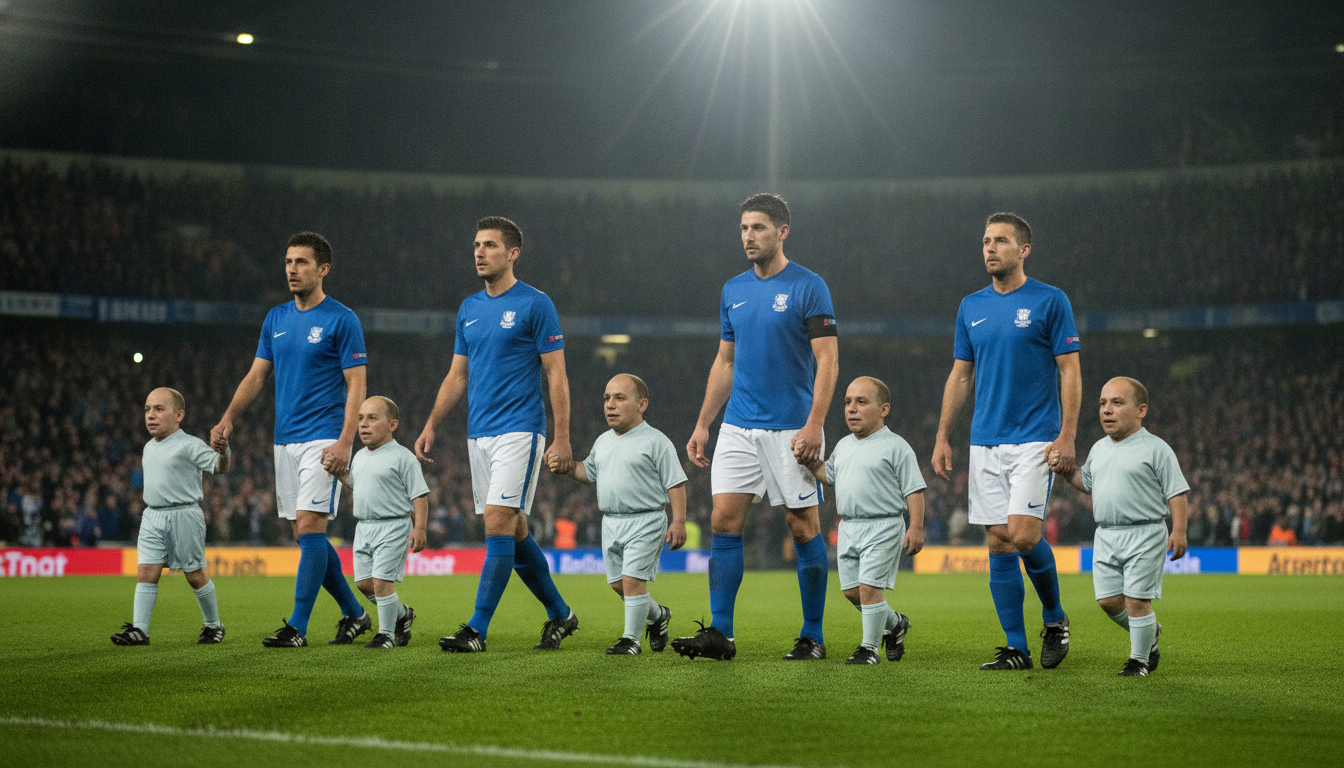
Why do football players hold children's hands before matches?
Why do football players hold children's hands before matches?
Before kickoff, a line of players walks onto the pitch, each one paired with a small child in a matching kit, hand in hand. Here's why that happens every week.

Watch the tunnel before almost any match and you'll see it: a professional footballer, often twice the height of the child beside them, walking out with a small hand tucked into theirs. The child wears a kit that matches the team, sometimes a size too big, and grins or looks nervously at the crowd. Some skip a little to keep pace. The player usually glances down, says something, maybe pats the child's shoulder once they reach the centre circle.
These children are mascots. They're brought onto the pitch to walk out alongside the players as part of the pre-match ceremony, and the hand-holding is simply part of that walk, a way of pairing an adult with a child so the child isn't wandering out alone in front of a full stadium.
The children get there in different ways. Some are picked through club programs that let young fans apply or win a spot for a single match. Others come through charity partnerships, where the club or a partner organisation selects children who are sick or facing hard circumstances, giving them a day that's built entirely around making them feel like part of the team. A few are chosen through competitions run by sponsors, schools, or local groups tied to the club.
None of this is about safety or logistics. There's no operational reason a mascot needs a player's hand to cross a football pitch safely. It's ceremonial, a small piece of theatre built to make the walkout feel warmer and more human before ninety minutes of hard competition. The image of a huge stadium, deafening noise, and a player calmly holding a child's hand is deliberately gentle, and that contrast is the point.
The charity link runs deeper than it looks. Many of these programs exist specifically to give children dealing with illness or difficult home lives a memorable, positive experience, meeting a team they support, wearing the kit, standing on the same pitch as their idols. For a child who has spent time in hospital, walking out at a professional ground holding a favourite player's hand can be the whole day, sometimes the whole year.
There's a commercial side too, and clubs aren't shy about it. Mascot programs are often sponsored, run in partnership with a business whose logo appears on the mascot kit or the matchday programme. Clubs also use the walkout as a promotional moment, a warm, photogenic scene that gets shared and remembered, good for the club's image and useful for whichever charity or sponsor is attached to that day's program.
The practice varies by club and by competition. Some clubs run mascot programs every single home game; others reserve it for bigger occasions. The charities involved differ from club to club too, some partner with children's hospitals, others with local youth groups or national causes. What stays consistent is the basic shape of it: a player, a child, a walk onto the pitch, and a hand held not because the game requires it, but because someone decided the moment should feel kind before it gets competitive.


The day's football, in your inbox at 7 AM. Nothing else.
Pick of the night's matches, what the transfer window's doing, and the one column you should read today. No ads. No tips. No operators.
One-click unsubscribe. We do not share emails.
Comments
Loading comments…