
 USA1
USA1 PER1
PER1 IND1
IND1 PAN1
PAN1 AUS1
AUS1 BRA1
BRA1 CAN
CAN CHI
CHI MEX
MEX COL
COL COK
COK TAH
TAH VAN
VAN NCD
NCD FIJ
FIJ PNG
PNG CHN
CHN NZL
NZL SEY
SEY SRI
SRI MLT
MLT LIE
LIE JOR
JOR SYR
SYR BOL
BOL PAR
PAR KGZ
KGZ MDV
MDV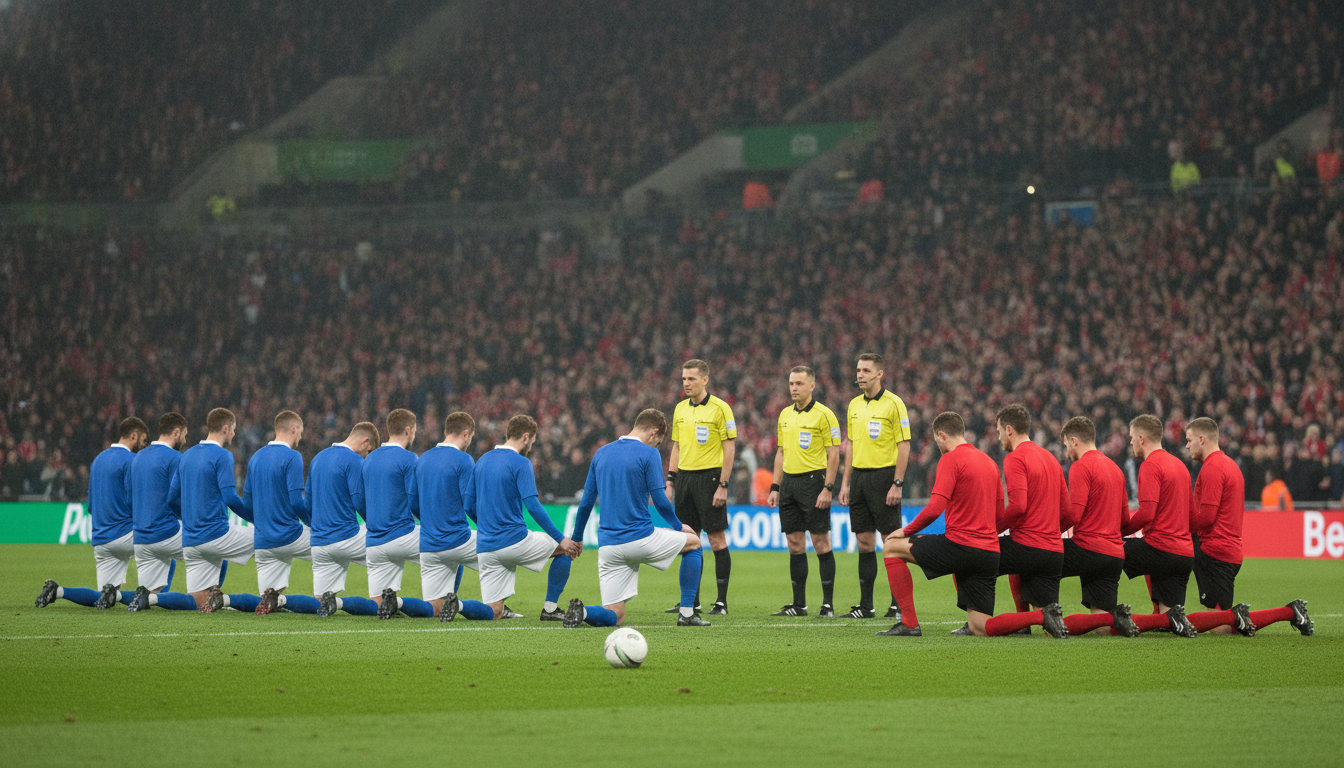
Why do football players take a knee?
Why do football players take a knee?
Before some matches, players from both teams drop to one knee on the pitch, hold the pose for a few seconds, then stand and get on with the game. Here's where that gesture comes from and why you see it less often now.
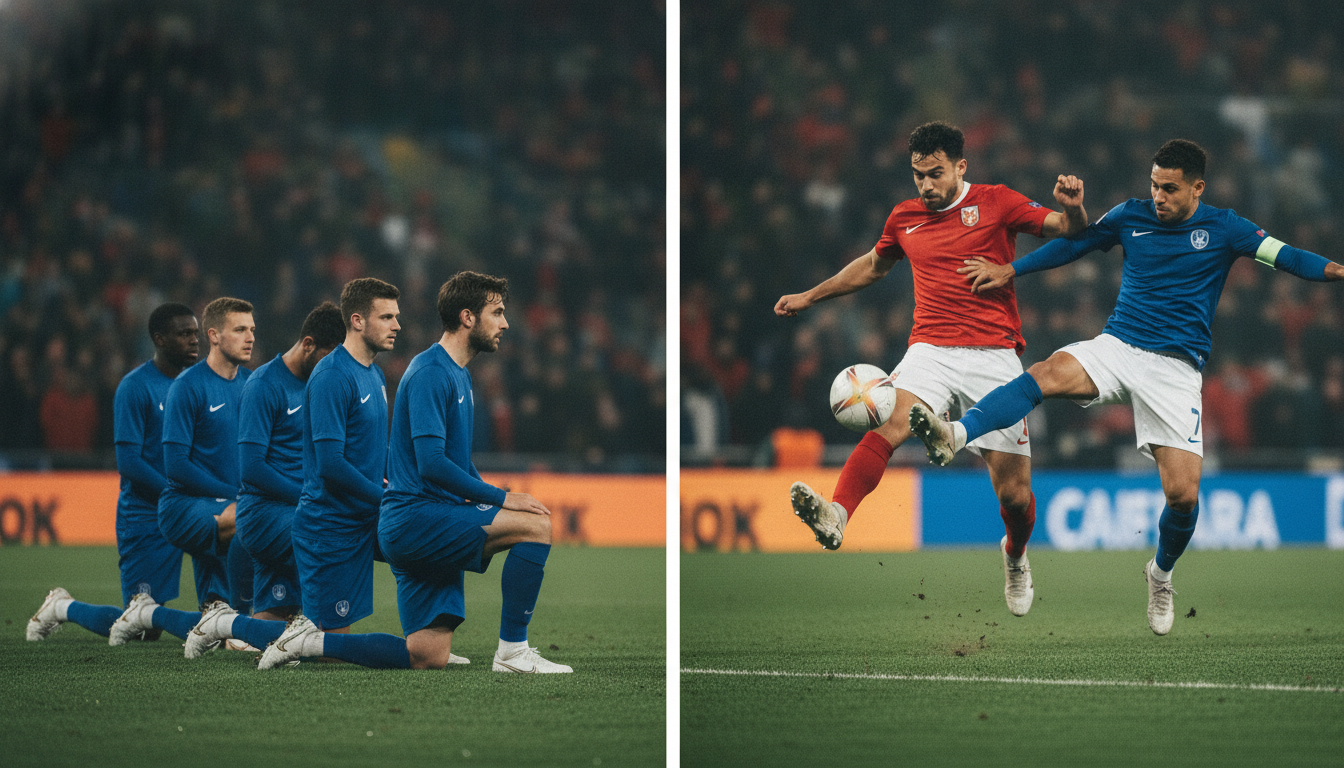
Picture the line-up moment just before kickoff. Instead of shaking hands and walking straight to positions, players from both sides go down on one knee, sometimes with a fist raised, sometimes just heads bowed, staying there for a beat before rising together. It looks deliberate because it is: this is a gesture against racism, done in solidarity with victims of racial injustice.
The gesture spread through football in 2020. That year, following the killing of George Floyd in the United States and the wave of Black Lives Matter protests that followed, players across the Premier League and other competitions started taking a knee before matches. It became a routine part of pre-match ritual for a stretch, appearing in televised games week after week, understood by anyone watching without needing an explanation.
The act itself did not start in football. It traces back to Colin Kaepernick, the American NFL quarterback who first knelt during the national anthem in 2016. Kaepernick's protest was aimed specifically at police brutality against Black Americans, and it cost him dearly in career terms at the time, but the image of an athlete kneeling in protest stuck. When football needed a way to visibly respond to events in 2020, that same gesture was there, ready-made and instantly recognisable, and it crossed from one sport and one country into a global one.
Why kneeling specifically, rather than a different gesture? Part of the answer is simply that it was already established and understood. Kaepernick's original act carried its meaning with it, so adopting the same pose meant football did not have to invent a new symbol from scratch, players and broadcasters and fans already knew what it stood for. It is quiet, it takes seconds, and it fits neatly into the pre-match routine without disrupting the game itself.
What a lot of casual viewers have not clocked is that clubs and competitions have since scaled the practice back. It is no longer something you see before every single match. Instead, it has become more occasional, reserved for the start of a season, for instance, or brought back specifically after a racist incident has occurred, rather than repeated as a fixture of every kickoff. So a viewer tuning into a random midweek game today is less likely to see it than someone watching in the months right after it began, and that shift itself reflects how the gesture's role has changed: from a constant, visible weekly statement to something used more sparingly, at moments organisers judge it matters most.
The day's football, in your inbox at 7 AM. Nothing else.
Pick of the night's matches, what the transfer window's doing, and the one column you should read today. No ads. No tips. No operators.
One-click unsubscribe. We do not share emails.
Comments
Loading comments…