
 DUR0
DUR0 STE0
STE0 ORL4
ORL4 RSO
RSO CEL
CEL MSU
MSU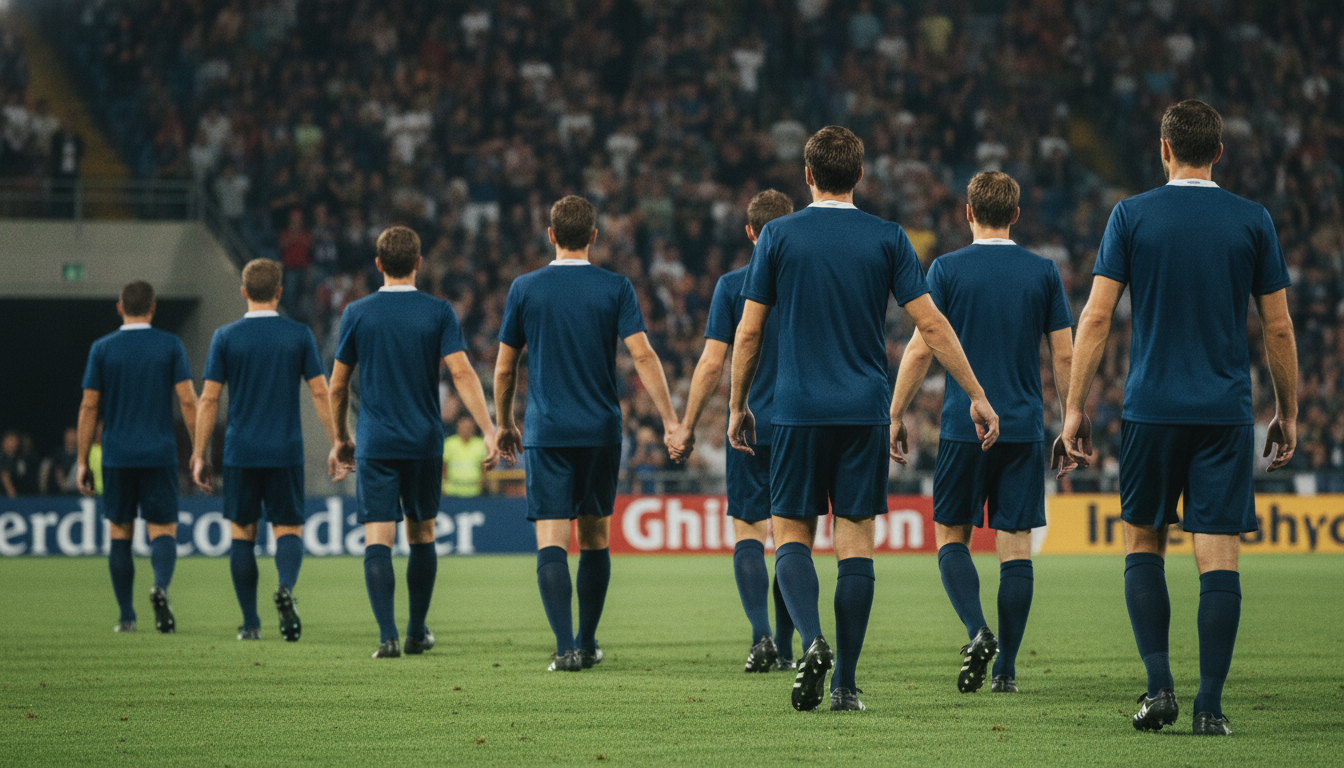
Why do football players walk out with children before a match?
Why do football players walk out with children before a match?
Before kickoff, as the teams line up in the tunnel, each player is paired off with a small child in matching kit, hand in hand, ready to walk out together onto the pitch.

Watch the moment closely and the picture is the same at almost every stadium: two lines of players standing side by side with children barely reaching their waists, gripping a hand, sometimes clutching a matchball or a flag, walking out together as the crowd applauds and the anthems play. The player looks down every so often, says something, maybe ruffles the child's hair once they reach the centre circle.
This is the player escort, sometimes called the mascot walk. The children are match mascots, and walking a favourite player out onto the pitch is treated as a genuine prize rather than a formality.
Clubs do not pick these children at random on the day. Places usually come through club membership schemes, partner schools, youth academies, sponsors running competitions, or charities that work with young people. A child might win the spot through a school raffle, a supporters' club ballot, or a programme run in partnership with a company that has paid for the right to put its name on the day. For the families involved, it is often built up as one of the biggest days of a young supporter's life, meeting the team, getting a kit, standing pitchside for the anthem.
The commercial and charitable side of it explains details that otherwise look odd, like why the children are sometimes dressed in a shirt that does not quite match the club's own strip. If a sponsor or a children's charity is behind that day's mascot programme, the shirts, the matchday passes and even the pre-match photos often carry that organisation's branding rather than the club's alone. Campaigns tied to child welfare or children's hospitals are common reasons a walk-out will have a specific look or theme on a given weekend.
None of this has anything to do with how the match is officiated or played. There is no tactical purpose and no connection to the rules of the game, it is a piece of ceremony that happens entirely before the referee's whistle, aimed at goodwill, sponsorship and giving children a memory of standing next to the players they watch on television. Once the anthems finish and the mascots are led back off the pitch by stewards, the day's real business starts and the tradition has done its job.
The practice varies a little from club to club and country to country. Some competitions reserve mascot places overwhelmingly for charity partners, others run them mostly through club membership schemes, and the exact process for landing a spot differs depending on who is organising it that week. What stays constant is the basic shape of the moment: a player, a child, a held hand, and a short walk into a stadium full of noise before the game itself begins.


The day's football, in your inbox at 7 AM. Nothing else.
Pick of the night's matches, what the transfer window's doing, and the one column you should read today. No ads. No tips. No operators.
One-click unsubscribe. We do not share emails.
Comments
Loading comments…