
 LEE4
LEE4 NEW1
NEW1 VIL1
VIL1 BET2
BET2 ARA
ARA SPP
SPP OMON
OMON CEL
CEL MIL
MIL SLB
SLB AND
AND LYON
LYON B04
B04 NKC
NKC HBE
HBE DZG
DZG OLY
OLY JAG
JAG STG
STG REN
REN SUN
SUN AZ
AZ RAY
RAY ESP
ESP ALA
ALA VAL
VAL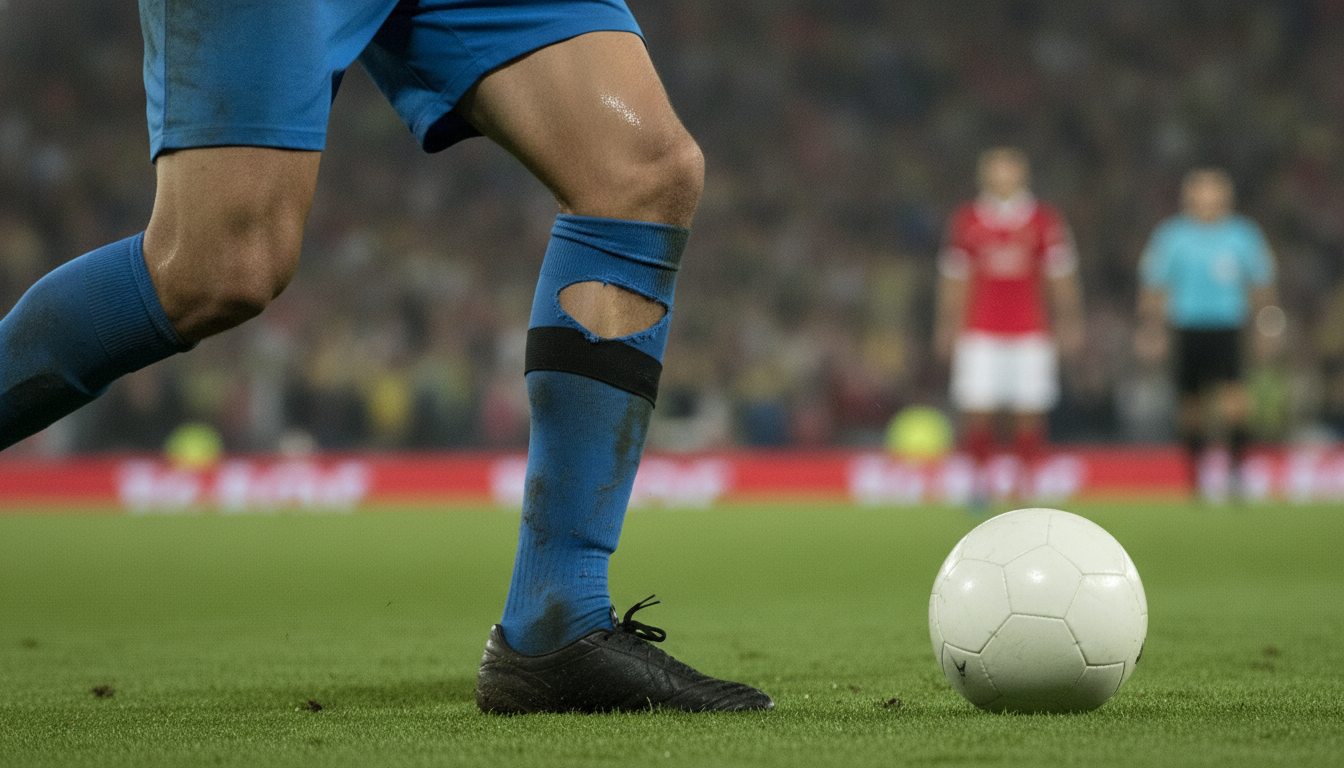
Why Do Footballers Wear Torn Socks?
Why Do Footballers Wear Torn Socks?
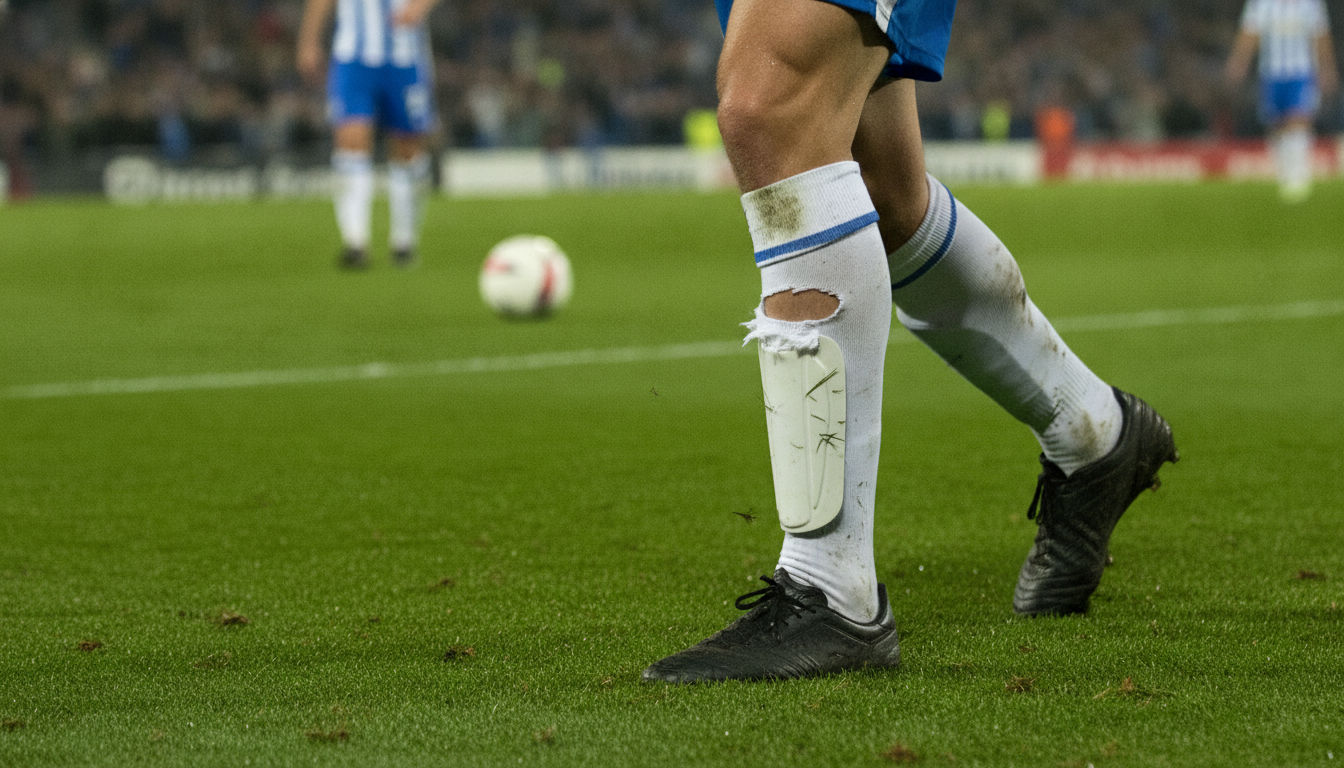
A player peels off his shin guard at half-time and the sock underneath is slit open at the calf, hanging loose around tape and a second, tighter sock beneath it, a look that's become as familiar as the boots themselves.

Watch a match closely and you'll spot it: a defender jogging back after a corner with his sock flapping open at the back of the leg, or a forward rolling his down to the ankle so it bunches like a leg warmer. It looks like wear and tear, the kind of thing that happens after ninety minutes of sliding tackles and studs. Mostly it isn't. Mostly, someone took scissors to it before kick-off.
Players cut, slit or roll down their socks on purpose, and the reason is comfort, not damage. Underneath that outer sock there is often a second, thinner grip sock, strips of tape holding the shin guard in place, or extra padding around the ankle. A full, tight sock pulled over all of that can dig in, restrict circulation, or simply feel wrong against the skin. Cutting a slit up the back, or rolling the top down so it sits lower on the calf, takes the pressure off without giving up any of the padding underneath.
There's no equipment rule stopping this. A sock only has to roughly stay in place and cover the shin guard, how it fits above that line, whether it's rolled, folded or sliced open, is left entirely to the player. That's why you see so much variation: some players wear their socks pulled all the way up and pristine, others have them scrunched at the ankle from the first whistle, and others still cut a neat slit at kick-off and never touch them again. It isn't a shared system with a shared reason. It's closer to habit, something a player settles on early in their career, sometimes for comfort, sometimes because it's simply what they've always done, and it sticks.
The superstition angle is real for some. A cut or rolled sock that felt right during a good run of form can become part of a routine a player doesn't want to break, in the same way boots get kept a season too long or shin guards get taped a particular way. But it's rarely explained that way by the players themselves, mostly they just say the tight sock was uncomfortable and this fixes it.
The edge case is the one that trips most viewers up: a lot of what looks like torn fabric on a television replay is not torn at all. It's a deliberate, often quite neat cut made with scissors in the dressing room, or simply a sock rolled down so the slack fabric bunches and creases in a way that reads as damage from a distance. Genuine rips from studs or contact do happen, but they're the exception, not the source of the look. The scruffy, torn-sock aesthetic that's become common on pitches everywhere is mostly manufactured, quietly, before the players ever step out.


The day's football, in your inbox at 7 AM. Nothing else.
Pick of the night's matches, what the transfer window's doing, and the one column you should read today. No ads. No tips. No operators.
One-click unsubscribe. We do not share emails.
Comments
Loading comments…