
 FEN0
FEN0 ROMA1
ROMA1 PSV0
PSV0 SHK1
SHK1 LIV2
LIV2 ATM1
ATM1 NAP0
NAP0 ARS1
ARS1 PSG6
PSG6 SLB1
SLB1 SCP3
SCP3 GAL1
GAL1 BAR5
BAR5 FEY1
FEY1 VFB3
VFB3 VIK1
VIK1 MSU3
MSU3 SIW0
SIW0 RAN
RAN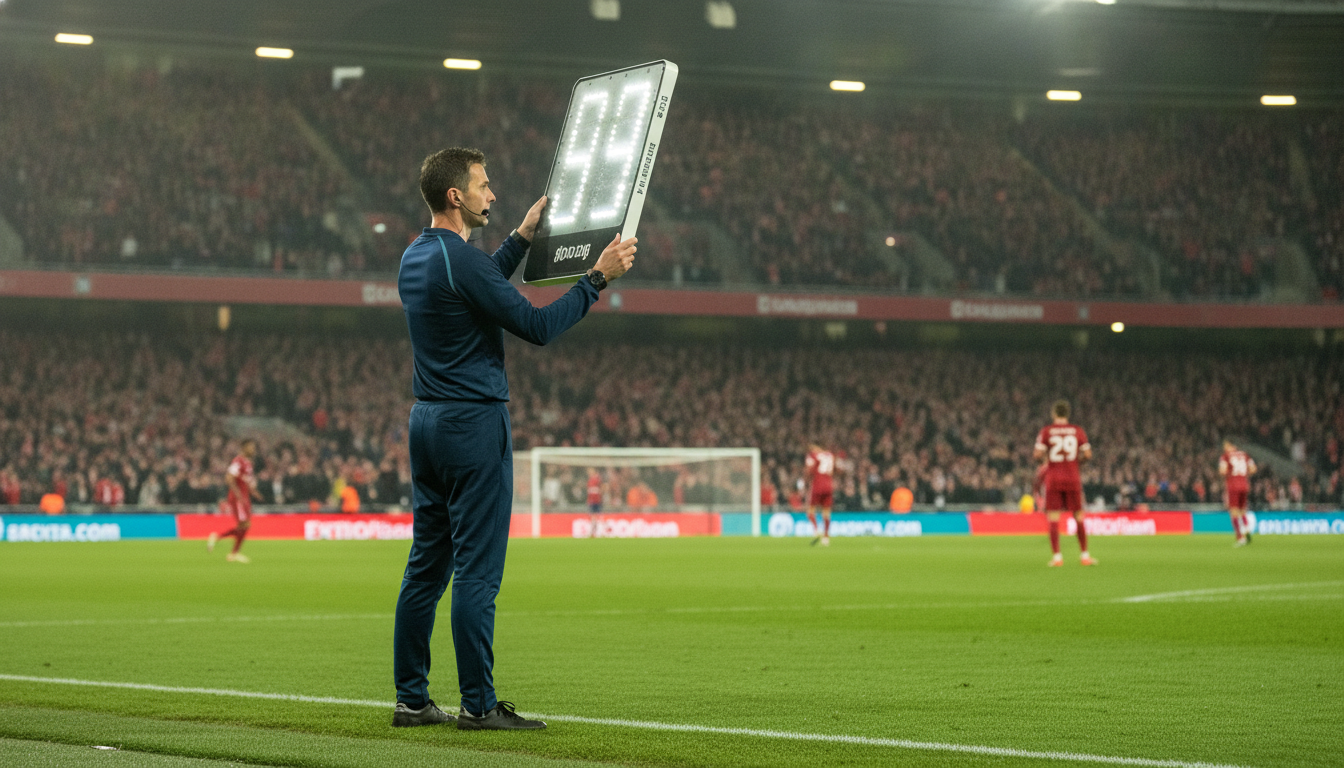
Why Do Referees Add Time in Soccer?
Why Do Referees Add Time in Soccer?
That board the fourth official holds up at the end of each half isn't a guess, it's a running tally of every minute the ball wasn't actually being played.

Watch the touchline in the last minute of a half and you'll see the fourth official lift an electronic board showing a number, often five, six, sometimes more. The referee glances at his watch, then waves play on. Nobody stops the clock during a football match the way they do in basketball or American football, so this board is the only formal correction for all the dead time that happened while the clock kept running.
The reason is simple: a 45-minute half is supposed to mean 45 minutes of actual football, not 45 minutes minus every goal celebration, injury, and substitution. Added time exists to put back the minutes that got eaten up by stoppages, a player down needing treatment, a sub jogging off painfully slowly, a keeper taking his time on a goal kick, a VAR check that holds up the restart.
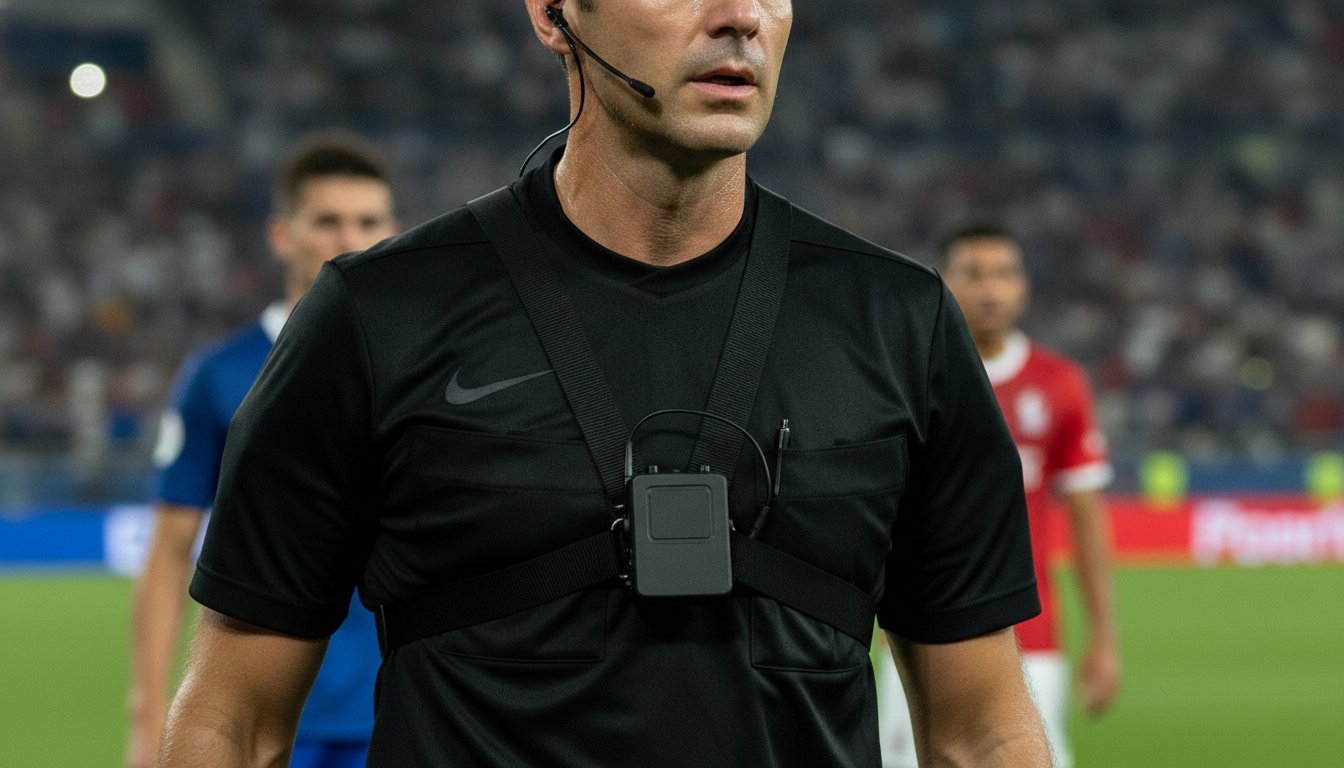
The referee is the one keeping count, usually with help from the fourth official and the assistant referees, who radio in rough totals for things like goal celebrations or long injury breaks. It isn't a precise science, nobody is running a stopwatch on the exact second the ball went out of play for a throw-in, but the principle is that the added minutes should roughly match the time lost.
What's changed recently, especially in the Premier League, is how strictly referees are told to apply that principle. Officials have been instructed to be far more exacting about logging every delay and adding it all back, rather than rounding down or being lenient the way they might once have been. The result is stoppage time that regularly stretches well past what fans are used to, a half that might once have got three or four added minutes now sometimes gets eight, nine or more, because celebrations, substitutions and video reviews are being counted in full rather than estimated generously in the game's favor.
A goal in the 90th minute is often the biggest single driver. A team scoring late will celebrate for the better part of a minute, hugging, running to the corner flag, high-fiving the bench, and that entire stretch gets logged and added back before the restart. Multiply that by a few celebrations, a couple of substitutions where players walk off slowly, and a VAR check for a penalty decision, and a half can easily pick up several extra minutes without anything unusual happening.
The exception fans often don't expect is that added time isn't fixed once the board goes up. If something happens after that number is shown, another injury, another substitution, another VAR review, the referee can and does keep playing past it. The board is an estimate of the minimum time remaining, not a hard cutoff, which is why a half advertised as "5 added" can sometimes run for eight or nine minutes if the ball keeps going out of play or the video assistant gets involved again in that added period.


The day's football, in your inbox at 7 AM. Nothing else.
Pick of the night's matches, what the transfer window's doing, and the one column you should read today. No ads. No tips. No operators.
One-click unsubscribe. We do not share emails.
Comments
Loading comments…