
 MDV0
MDV0 LIB6
LIB6 UZB4
UZB4 SYR1
SYR1 COD
COD UGA
UGA KOR
KOR VEN
VEN CHN
CHN PLE
PLE MRI
MRI SRI
SRI COL
COL PAR
PAR VAN
VAN FIJ
FIJ IND
IND BRA
BRA RUS
RUS NAM
NAM CAN
CAN PER
PER DJI
DJI CIV
CIV CMR
CMR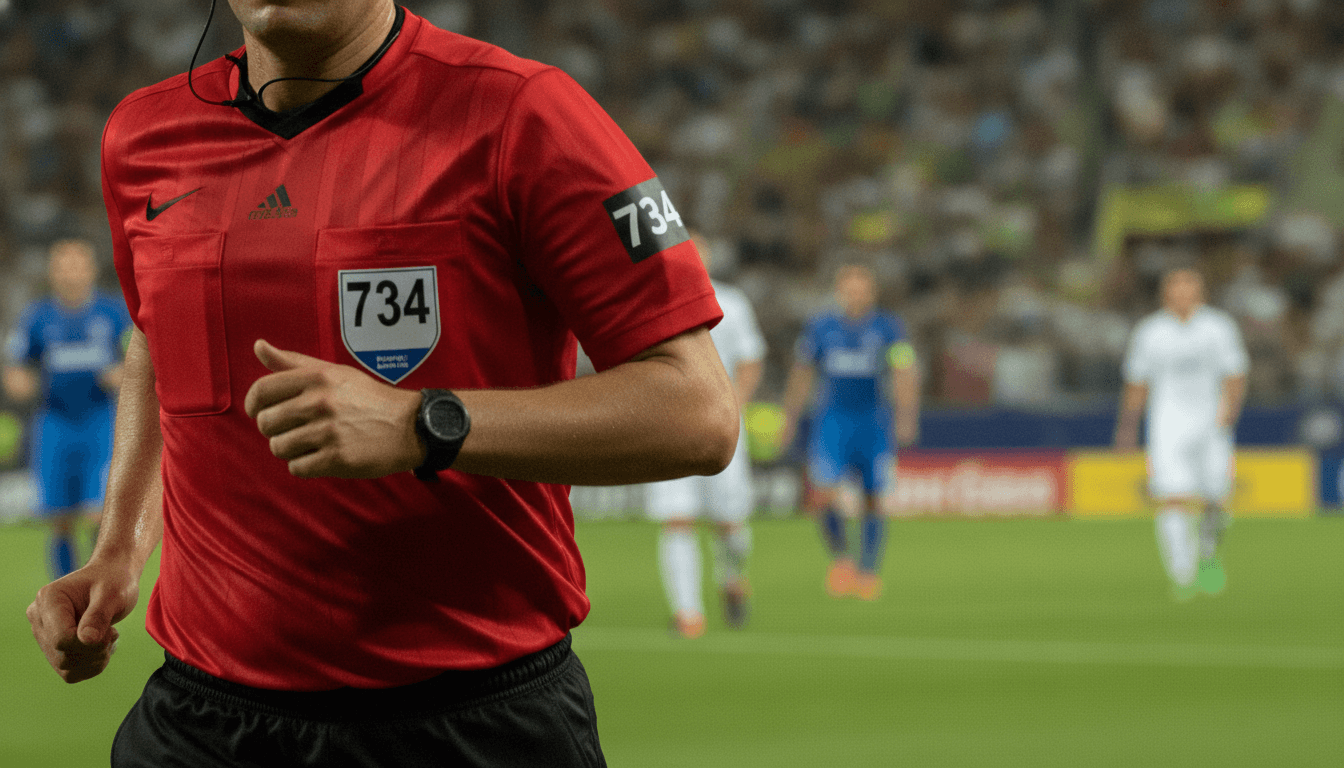
Why do referees have numbers?
Look closely at a referee's shirt on television and you'll spot a number, tucked away much like a player's squad number. It's not a mark of rank, it's there so people watching can tell one official from another.
Written with AI and checked automatically before publishing. How we work
Watch a match closely and you'll see it: a small number stitched onto the back or chest of the referee's shirt, sitting alongside the assistants who also wear their own. It looks like it should mean something important, the way a player's number might hint at their role on the pitch. A viewer spots it during a replay or a close-up on the fourth official and starts wondering what it's for.
The answer is simple. The number is an identification tool. It helps broadcasters, officials, and fans tell match officials apart from one another, especially when there's more than one referee-type figure on screen at once, the main referee, two assistants running the touchlines, a fourth official on the sideline. Without something to distinguish them quickly, commentators and graphics teams would have a harder time making clear who's who in the moment.
That's really all it does. There's no hidden system behind it that ranks one official above another. The number doesn't tell you how experienced the referee is, how many matches they've taken charge of, or where they sit in any pecking order among officials. It functions the same way a jersey number does for identification purposes in other contexts, a quick visual label, nothing more.
This is worth sitting with because it runs against the instinct many viewers have. Football is full of numbers that do carry meaning: a player wearing a certain shirt number might signal a particular position or a bit of tradition at their club. So it's natural to assume a referee's number works the same way, marking them out as senior or junior, first-choice or backup. But officiating doesn't use numbers that way. The number on a referee's back is closer to a name tag than a league table position.
The one thing readers might not expect is just how functional the whole system is. There's no drama in it, no hierarchy to decode, no story about who earned which digit. It exists purely so that broadcasters can caption a replay correctly, so that a fan trying to work out which assistant flagged for offside can look at the number instead of squinting at a face from a distance, and so that officials themselves are easy to reference in coverage. It's a practical fix for a practical problem, telling similarly dressed people apart during a fast-moving game, rather than a badge of standing within refereeing itself.




The day's football, in your inbox at 7 AM. Nothing else.
Pick of the night's matches, what the transfer window's doing, and the one column you should read today. No ads. No tips. No operators.
One-click unsubscribe. We do not share emails.
Comments
Loading comments…