
 FUL1
FUL1 MAN1
MAN1 BOU0
BOU0 LIV1
LIV1 LEE0
LEE0 CRY0
CRY0 MNC5
MNC5 SUN3
SUN3 NOR3
NOR3 BOL4
BOL4 WOL1
WOL1 WBA0
WBA0 BHA1
BHA1 AVL1
AVL1 CRY0
CRY0 TOT7
TOT7 WHU0
WHU0 EVE1
EVE1 CEL0
CEL0 RAN1
RAN1 NCD
NCD SOL
SOL FIJ
FIJ VAN
VAN DMA
DMA AIA
AIA
Photo: ESPN FC
60 million watched the World Cup final in North America
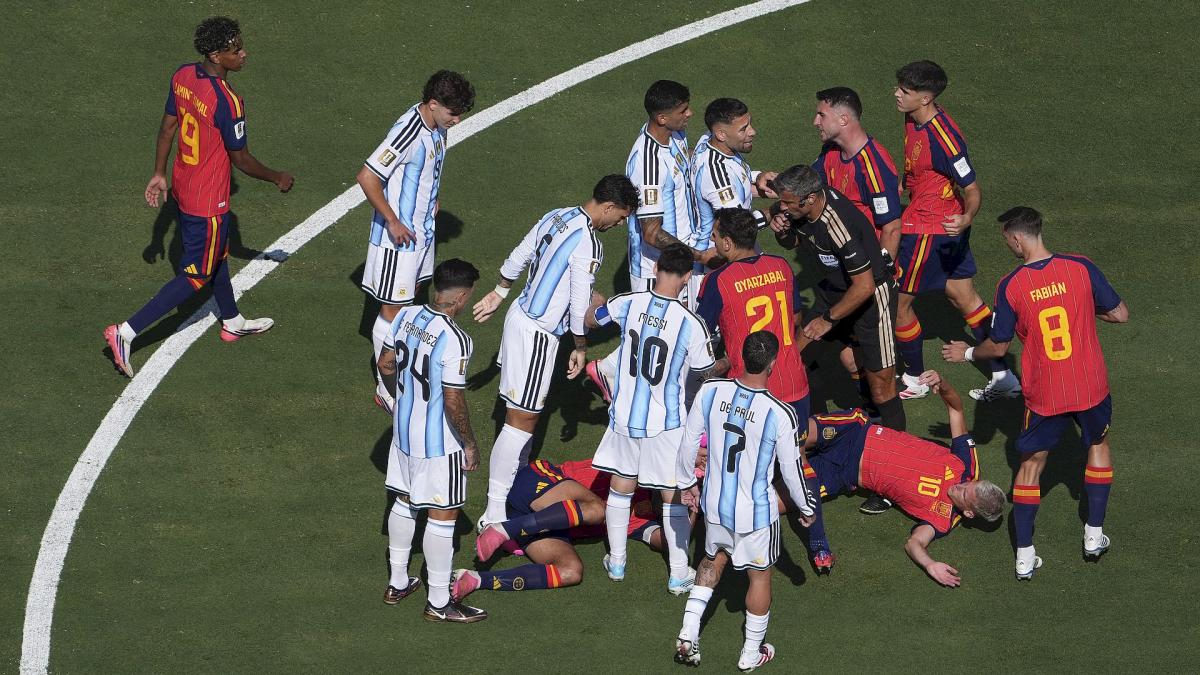
Spain beat Argentina 1-0 on 19 July to win the 2026 FIFA World Cup. That result will live in the record books. So will what happened on the other side of the screen — because ESPN FC and The Athletic both report the final peaked at over 60 million viewers across North America, a figure that reframes what football means on this continent.

The number that changes the conversation
Sixty million. Peak viewership. One match. On a continent where, for decades, football was the sport that was always "growing" without quite arriving — that figure lands differently.
ESPN FC reports the 60 million peak across the US, Canada, and Mexico, a figure The Athletic also cited in its post-final coverage. The exact breakdown by country and broadcaster has not been published by either outlet. The claim of a record is asserted by the sources but not benchmarked against specific previous figures in the available reporting. What is clear: no World Cup final broadcast in North America has generated this kind of conversation around its numbers.
Why this final, why now
Spain against Argentina was always going to pull. Two of the sport's great footballing cultures, a reigning European champion against the reigning world champion, played out on North American soil for the first time. The tournament's expanded 48-team format and its spread across the US, Canada, and Mexico meant local fans had spent weeks building a relationship with stadiums, atmospheres, and storylines that were genuinely theirs.
Hosting matters. When the sport comes to you — when MetLife, the Rose Bowl, the Estadio Azteca are the venues rather than somewhere you're watching at 3am — casual interest converts into actual viewership. The 2026 World Cup was designed to do exactly this, and the final suggests it worked.
What it means beyond the scoreline
For FIFA, for broadcasters, for the MLS clubs and national federations who have spent years arguing that North America is a sleeping giant for the sport, a 60 million peak is the kind of data point that ends arguments. It doesn't just validate the decision to bring the World Cup here — it sets a new floor for what football can expect from the region going forward.
For years, "football is growing in America" was a projection dressed up as a fact. On 19 July 2026, it got a number.
Turner Sports and Apple TV+ — both of whom hold significant North American football rights heading into the next cycle — will have seen those figures. The rights conversation for 2030 just got a lot more expensive.
Sources1 source
Flagside's editors read every piece we publish. We work from the football press, write our own copy rather than reprinting anyone's, and check each article for accuracy and sourcing. Every outlet that fed into this piece is named under Sources.


The day's football, in your inbox at 7 AM. Nothing else.
Pick of the night's matches, what the transfer window's doing, and the one column you should read today. No ads. No tips. No operators.
One-click unsubscribe. We do not share emails.
Comments
Loading comments…