 NEW2
NEW2 LIV2
LIV2 BHA4
BHA4 AVL0
AVL0 MNC2
MNC2 BOU1
BOU1 WBA3
WBA3 BUR1
BUR1 FUL
FUL CHE
CHE CAR
CAR NOR
NOR DON
DON MID
MID BAR
BAR CAX
CAX BLK
BLK SHU
SHU BLP
BLP LCN
LCN CAM
CAM MIL
MIL FLE
FLE SHR
SHR IPS
IPS LEI
LEI PLY
PLY COV
COV
Piero Hincapie in action for Ecuador at the 2026 World Cup.
The mouth-covering red card rule: what it actually says
Two players have been sent off under it, one has not — and most of what has been written about the rule is wrong in the same two ways.

IFAB approved the rule on 28 April 2026 at a meeting in Vancouver. The vote was unanimous, following a request from FIFA. The wording matters: at the discretion of the competition organiser, any player covering their mouth in a confrontational situation with an opponent may be sanctioned with a red card.
Three qualifiers. All three are routinely dropped.
First, it applies at the discretion of the competition organiser — it is not a universal law of the game that switches on everywhere. Second, it applies in a confrontational situation with an opponent — covering your mouth is not itself an offence. Third, the referee may sanction; there is no automatic outcome.
One mainstream explainer stated that players 'will be automatically sent off if they cover their mouths while speaking with opponents or referees.' That sentence is wrong twice: the sanction is not automatic, and the rule as written concerns an opponent, not a referee.
The rule exists because of a Champions League match in February 2026 between Benfica and Real Madrid. Benfica's Gianluca Prestianni covered his mouth while speaking to Vinicius Junior. Because his mouth was covered, what was said could not be established from cameras or lip-reading. UEFA banned Prestianni for six matches. Some coverage calls the rule the 'Vinicius Law'; others call it the 'Prestianni rule'.
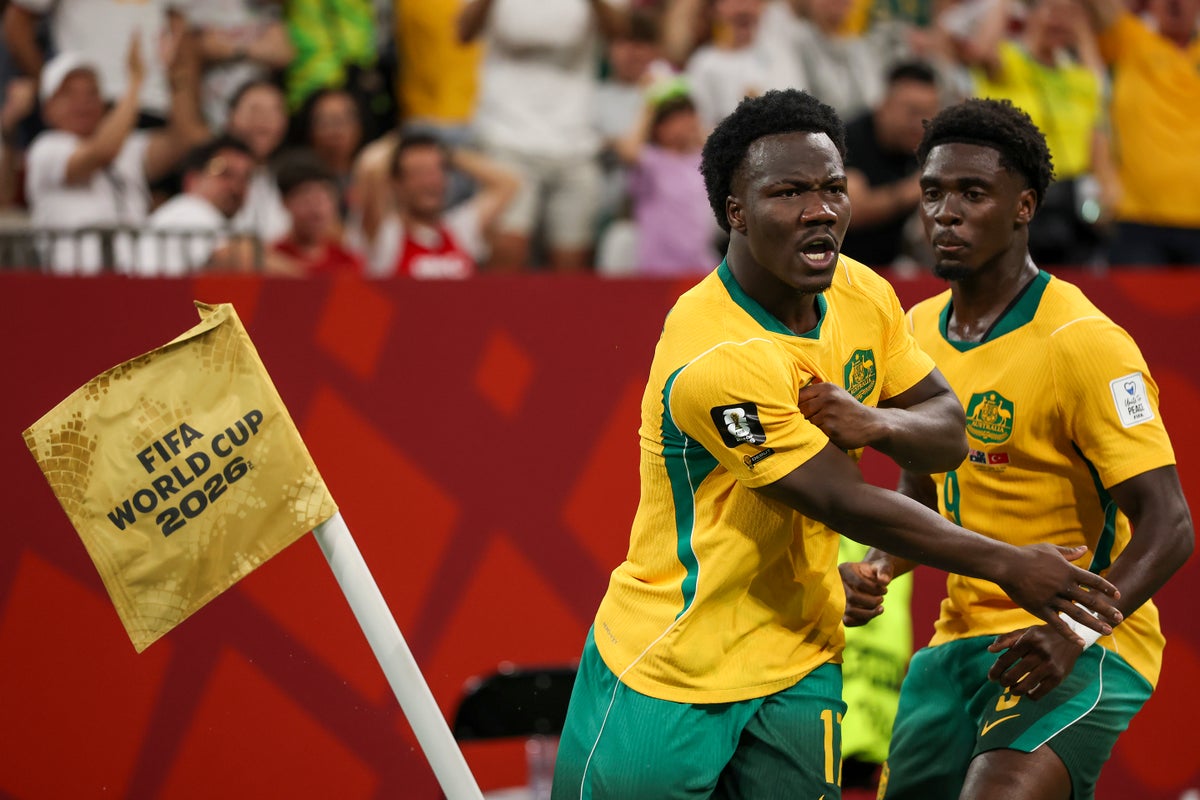
The first dismissal under it came on 20 June 2026. Paraguay's Miguel Almiron was sent off in first-half stoppage time by referee Ivan Barton during a Group D match against Turkiye — the first player anywhere dismissed under the rule.
The second came on 30 June 2026. Ecuador's Piero Hincapie was sent off in stoppage time by referee Slavko Vincic after an exchange with Mexico's Santiago Gimenez, in the round of 32 at the Estadio Azteca in Mexico City. Mexico won 2-0, through goals by Julian Quinones and Raul Jimenez, and advanced to the round of 16. Kick-off was delayed by storms, which is why some outlets datelined the match 1 July; ESPN's match page and the FIFA match centre both give 30 June.
The clearest demonstration that the rule is not automatic came on 23 June 2026. In England's goalless draw with Ghana in Boston, Jude Bellingham was filmed covering his mouth while speaking to Ghana captain Jordan Ayew. He was not sanctioned. FIFA's head of refereeing Pierluigi Collina explained: 'Players can continue to cover their mouth with an arm and the shirt because they may chat with friends.' The exchange was not judged confrontational. The rule did not apply — because the rule, as written, requires confrontation. Same gesture, different context, different outcome.
The 2026 tournament has 48 teams and includes both a round of 32 and a round of 16. They are different rounds. Hincapie's dismissal was in the round of 32.
Sources6 sources
ESPN, Goal, Bolavip, Al Jazeera, Wikipedia — 2026 FIFA World Cup officiating controversies, Bryan Berlination (Wikimedia Commons)
- [1] https://www.espn.com/soccer/story/_/id/48619835/red-cards-cover-mouth-players-2026-world-cup-vinicius-junior
- [2] https://www.goal.com/en/lists/jude-bellingham-red-card-covering-mouth-jordan-ayew-england-world-cup-draw-ghana/blt08ffd852479b38ea
- [3] https://bolavip.com/en/world-cup/why-did-piero-hincapie-get-a-red-card-in-ecuador-vs-mexico-at-the-2026-world-cup
- [4] https://www.aljazeera.com/sports/2026/7/13/fifa-world-cup-five-biggest-controversies-of-the-2026-tournament
- [5] https://en.wikipedia.org/wiki/2026_FIFA_World_Cup_officiating_controversies
- [6] CC BY-SA 4.0
Flagside's editors read every piece we publish. We work from the football press, write our own copy rather than reprinting anyone's, and check each article for accuracy and sourcing. Every outlet that fed into this piece is named under Sources.

The day's football, in your inbox at 7 AM. Nothing else.
Pick of the night's matches, what the transfer window's doing, and the one column you should read today. No ads. No tips. No operators.
One-click unsubscribe. We do not share emails.
Comments
Loading comments…