
 CRY1
CRY1 MNC4
MNC4 FUL3
FUL3 WIM0
WIM0 CHE2
CHE2 LTN0
LTN0 WXM1
WXM1 BIR2
BIR2 AND3
AND3 KAI0
KAI0 FER4
FER4 TRAB0
TRAB0 AGF1
AGF1 SLB3
SLB3 CSKA0
CSKA0 OFI2
OFI2 THUN2
THUN2 LECH2
LECH2 BES0
BES0 LIL2
LIL2 OMON4
OMON4 STVV2
STVV2 SLZ3
SLZ3 MJA0
MJA0 PLZ5
PLZ5 RSB1
RSB1
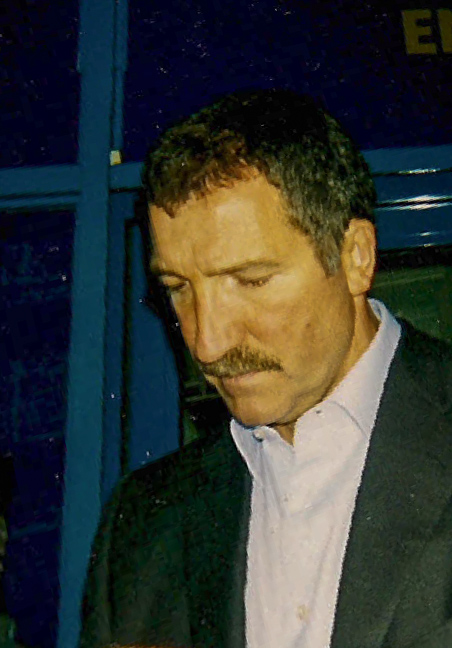
Photo: User:Responsible? via Wikimedia Commons (Public domain)
Michael Owen: the one player every fanbase ended up resenting
Most footballers carry one fanbase that turned on them. Michael Owen managed to collect the full set. From Anfield to Old Trafford, from the Bernabéu to St James' Park, the pattern repeated itself with a consistency that goes beyond bad luck and points to something structural about how Owen operated as a professional.

The Liverpool departure set the template
Owen came through at Liverpool as a teenager and announced himself to the world at the 1998 World Cup with a goal that still gets replayed. For a few years he was genuinely one of the best strikers on the planet, quick in a way that defenders found genuinely unsolvable and clinical enough to win the Ballon d'Or.
Then he left for Real Madrid. That, in itself, was not the problem. Players leave clubs. What stuck in Liverpool supporters' throats was the manner: a contract allowed to run down, a departure that felt more like an escape than a transfer, and a sense that Owen had been angling for the exit while the club waited. The goodwill he had built over years dissolved faster than most expected.
Real Madrid: the invisible man
At the Bernabéu, Owen was joining a squad already stacked with attacking talent. He did not force his way into it. His time in Madrid was defined largely by absence from the starting eleven, and by the time he left, he had done little to convince anyone that he had been worth the investment. Madrid fans are not sentimental about players who do not perform, and Owen gave them little reason to be.
Newcastle: the one that still stings
The Newcastle chapter is the one that supporters of that club still bring up. Owen returned to England with Newcastle, who paid a significant fee and handed him wages that were, by any measure, extraordinary for a player whose pace had visibly declined. He spent years on the treatment table. When he was fit, he was a fraction of what he had been. When his contract expired, he left for Manchester United on a free transfer.
That last part is what made it unforgivable on Tyneside. A club that had stretched financially to sign him, that had paid him through seasons of injury, watched him walk to their rivals at no cost. The relationship between Owen and Newcastle supporters never recovered, and there is no sign it ever will.
Manchester United: the wrong shirt, the wrong timing
At United, Owen was already past his peak and everyone knew it. He was a squad player, a backup option, and he was signed to cover rather than to lead. The fanbase tolerated rather than embraced him. He scored a famous late winner in a derby against Manchester City, which earned him a brief moment of warmth, but it was the warmth you extend to a useful substitute rather than to a player you have any real feeling for.
What United supporters could not forgive was the background noise: Owen had spent years making clear that he was a Liverpool man, that Anfield was home, and yet here he was in a red shirt at Old Trafford. It felt transactional in a way that sat badly.
Stoke: the final stop
By the time Owen reached Stoke, the conversation had largely moved on. He was winding down, and Stoke were a functional Premier League side built on physicality and directness. Owen was neither physical nor direct by that point. He contributed little, left quietly, and retired. Stoke supporters had no particular grievance, but they had no particular warmth either. The abiding feeling was indifference, which in its own way is as damning as hostility.
What actually explains it
The through-line is not that Owen was a bad person or even a bad professional in any straightforward sense. The through-line is that he always appeared to be optimising for himself, and that supporters noticed. The contract run-downs, the wage demands, the injury absences, the moves that looked financially motivated rather than driven by ambition or loyalty.
Football supporters will forgive almost anything if they believe a player cares. They will forgive poor form, they will forgive the odd bad game, they will even forgive a transfer if it is handled with honesty. What they find harder to forgive is the sense that a player was somewhere other than where his heart was, collecting a wage and waiting for the next move.
Owen gave that impression at almost every club he played for after his Liverpool peak. Whether it was accurate or not almost does not matter. The perception followed him everywhere he went, and at every club it arrived before he did.


The day's football, in your inbox at 7 AM. Nothing else.
Pick of the night's matches, what the transfer window's doing, and the one column you should read today. No ads. No tips. No operators.
One-click unsubscribe. We do not share emails.
Comments
Loading comments…