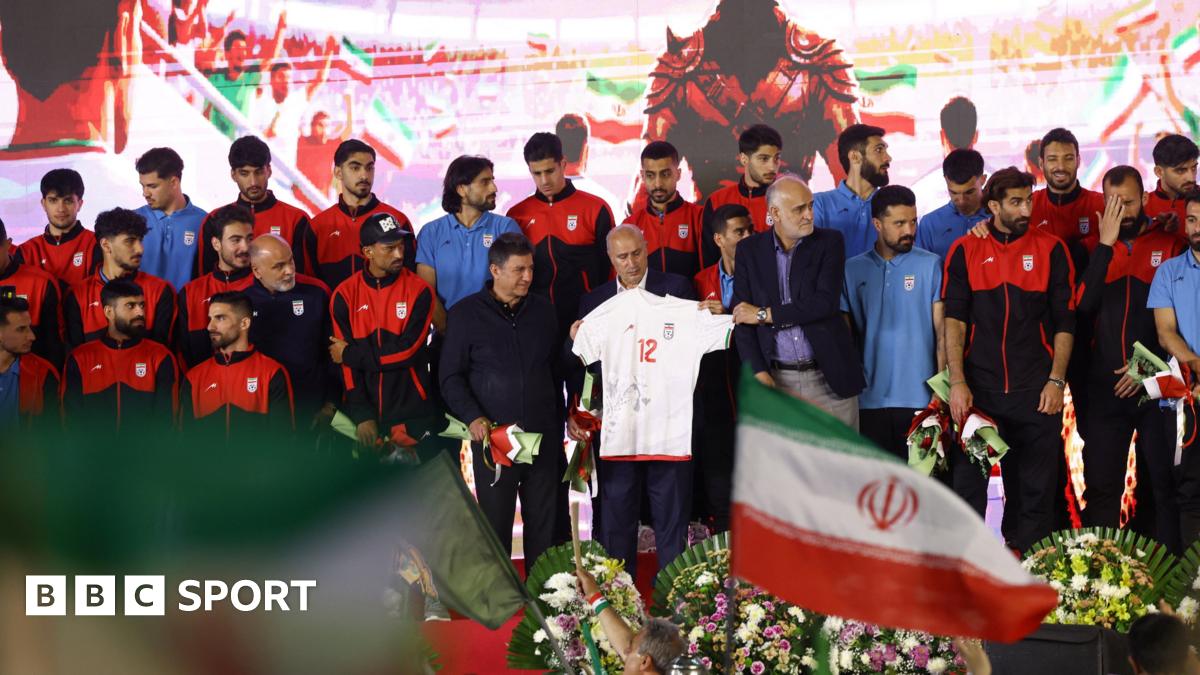
The 2026 FIFA World Cup is less than a month away, and Iran's players still don't have visas to enter the United States. Iranian Football Association president Mehdi Taj confirmed the situation publicly this week — and the fact that he's saying it out loud tells you everything about how serious it has become.
Mehdi Taj's public confirmation, reported by BBC Sport, is not the kind of thing a football association president says casually. When the head of a national FA goes on record to say his players cannot yet enter the host country — with the tournament weeks away — it means internal channels have not worked, and the message is now being sent somewhere louder.
Iran are in the competition. They qualified. The squad exists. The fixtures are scheduled. What doesn't exist yet, apparently, is the paperwork that lets them through the door.
US-Iran relations have been strained for decades — that is not a controversial observation, it is the backdrop to almost every diplomatic interaction between the two countries. Whether the visa delay is a bureaucratic backlog, a deliberate slowdown, or something being resolved quietly in the background is not yet clear. No timeline for resolution has been reported, and no US government statement has addressed it directly.
What is clear is that the optics are uncomfortable. A host nation that cannot — or will not — grant entry visas to a qualified World Cup team, with the opening ceremony approaching fast, is a story FIFA cannot ignore.
This is the part that matters most for the sport. FIFA awarded the 2026 tournament to the United States, Canada and Mexico on the understanding that all 48 qualified nations would be able to participate. The governing body has obligations to every member association — including Iran. If a team cannot physically enter the host country, FIFA faces a genuine governance problem, not just a diplomatic one.
FIFA has not yet made a public statement on the visa situation, according to current reports. That silence will not last long if this remains unresolved into June.
Iran's group-stage fixtures are fixed. Training camps need to be set up. Staff, support personnel and players all need clearance. The longer this drags, the harder it becomes to argue the delay is purely administrative.
Mehdi Taj going public is a pressure move — directed at FIFA, at US authorities, and at the international football community. Whether it works depends on whether anyone with the power to accelerate the process is paying attention.
The World Cup is supposed to be above this. It rarely is.
The 2026 FIFA World Cup is less than a month away, and Iran's players still don't have visas to enter the United States. Iranian Football Association president Mehdi Taj confirmed the situation publicly this week
Sources
BBC Sport — Football
Flagside articles are original write-ups synthesized from multiple sources. We cite every outlet that fed into the piece.
Pick of the night's matches, what the transfer window's doing, and the one column you should read today. No ads. No tips. No operators.
One-click unsubscribe. We do not share emails.
“Stays on World Cup — different angle, same beat.”
Steve Clarke has named Scotland's 26-man squad for the 2026 World Cup — and he hasn't played it safe. A 43-year-old goalkeeper who barely featured this season is on the plane. A young winger with a fr
“Stays on World Cup — different angle, same beat.”
Steve Clarke has named Scotland's 26-man squad for the 2026 World Cup — and he hasn't played it safe. A 43-year-old goalkeeper who barely featured this season is on the plane. A young winger with a fr