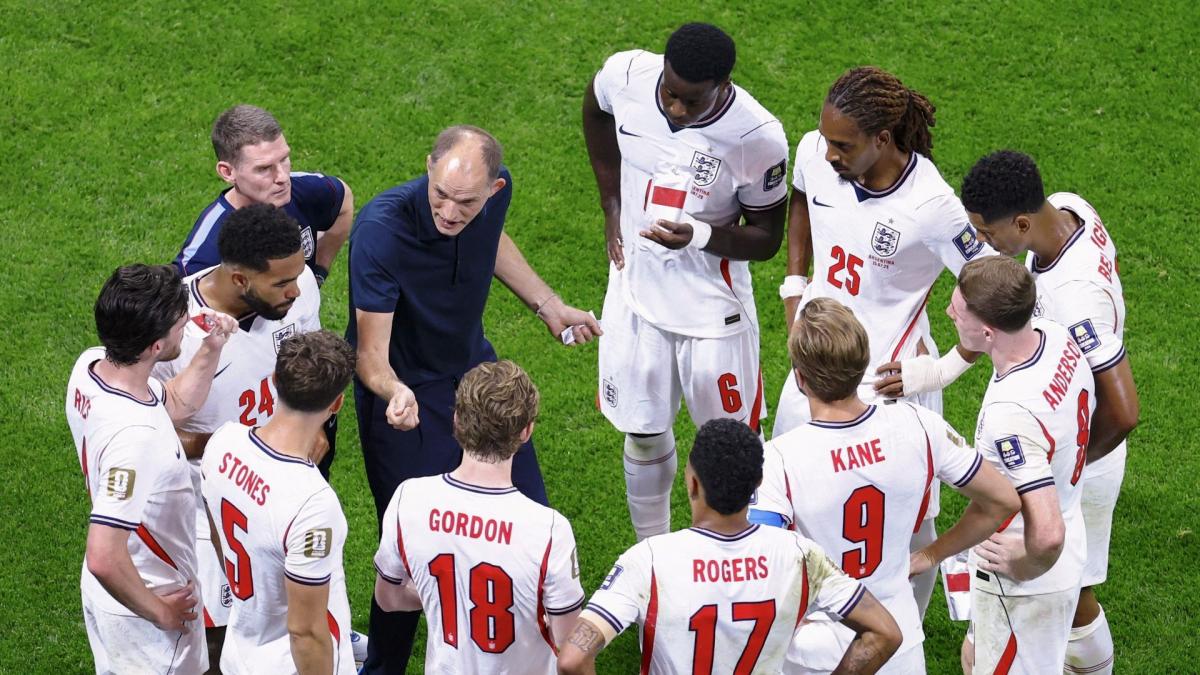
England had the lead. Then, for 19 minutes, they essentially stopped playing football — and the data behind what happened next is the kind of thing that ends coaching careers and haunts FA boardrooms for a decade.
Post-match analysis of England's 2026 World Cup semi-final exit to Argentina — confirmed by data cited in The Guardian — has produced a set of statistics that are difficult to read if you're English and almost impossible to explain if you're the coaching staff. At some point after holding a lead, England's defensive structure didn't bend. It dissolved.
Four successful passes in 19 minutes. That's the number that keeps surfacing. Not four in a difficult spell — four in a near-quarter-of-an-hour stretch of a World Cup semi-final, against a side that knew exactly how to exploit a team retreating into itself. Argentina didn't need to do anything extraordinary. England simply stopped functioning.
The passing figure is damning enough on its own, but the tackle data makes it worse. According to the Guardian's analysis, England completed no successful tackles after the 63rd minute. Zero. In a game they were trying to protect a lead in, they couldn't win a single physical duel in the final stretch — and when a team can't tackle, the next line of defence is the foul. England couldn't manage that either. Their inability to disrupt Argentina's rhythm through any means — positional, physical, cynical — left them completely exposed.
What that combination describes isn't a team that was outclassed. It describes a team that stopped competing. Whether that's a fitness issue, a tactical collapse, a psychological shutdown, or some combination of all three is the question the post-mortem will need to answer — and it's a question the numbers alone can't fully resolve.
There's a version of this story where England's semi-final exit is simply bad luck — a great Argentina side, a difficult draw, the margins of tournament football. The data makes that version very hard to tell. You can lose a World Cup semi-final with your head held high. You cannot easily explain four passes in 19 minutes.
For the coaching staff, the specific shape of this collapse — the complete shutdown of both passing and pressing after a defined moment in the match — points to something structural. Teams don't randomly forget how to pass. Something changed at or around the 63rd minute, and whatever that was, Argentina found it and pulled the thread until everything unravelled.
England have been here before, of course — tournament exits with a narrative attached, a number or a moment that becomes shorthand for what went wrong. This one has its number. Four passes. Nineteen minutes. A lead that didn't last.
England had the lead. Then, for 19 minutes, they essentially stopped playing football — and the data behind what happened next is the kind of thing that ends coaching careers and haunts FA boardrooms for a decade.
Sources
The Guardian — Football
Flagside articles are original write-ups synthesised from multiple sources. We cite every outlet that fed into the piece.
Pick of the night's matches, what the transfer window's doing, and the one column you should read today. No ads. No tips. No operators.
One-click unsubscribe. We do not share emails.
“Stays on World Cup — different angle, same beat.”
 INT
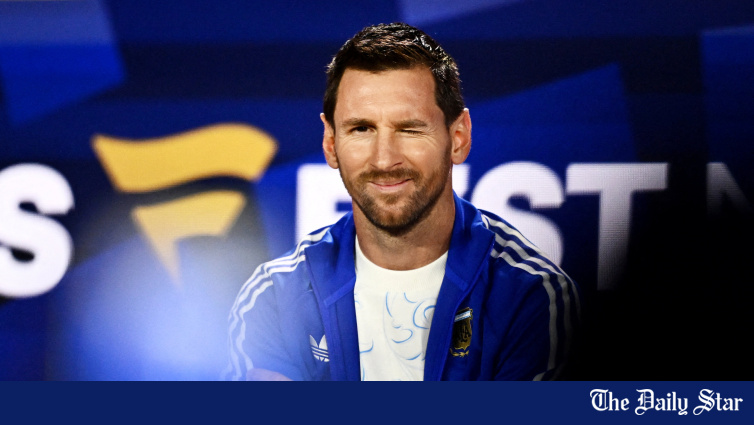
INTLionel Messi falou depois da classificação da Argentina para mais uma final de Copa do Mundo, e o craque foi direto ao ponto: a torcida alviceleste empurrou a equipe durante a semifinal contra a Ingla
“Stays on World Cup — different angle, same beat.”
INTLionel Messi falou depois da classificação da Argentina para mais uma final de Copa do Mundo, e o craque foi direto ao ponto: a torcida alviceleste empurrou a equipe durante a semifinal contra a Ingla