
 BEL0
BEL0 FRA0
FRA0 NIR0
NIR0 HUN0
HUN0 ROU1
ROU1 BIH3
BIH3 SWE1
SWE1 POL0
POL0 TUR0
TUR0 ITA3
ITA3 CHE1
CHE1 ARS0
ARS0 BIR3
BIR3 CRY3
CRY3 LIV2
LIV2 EVE0
EVE0 TOT4
TOT4 AVL0
AVL0 MAN2
MAN2 WHU1
WHU1 ARM2
ARM2 MNE3
MNE3 GEO0
GEO0 UKR0
UKR0 LVA0
LVA0 CYP0
CYP0 GER0
GER0 GRE1
GRE1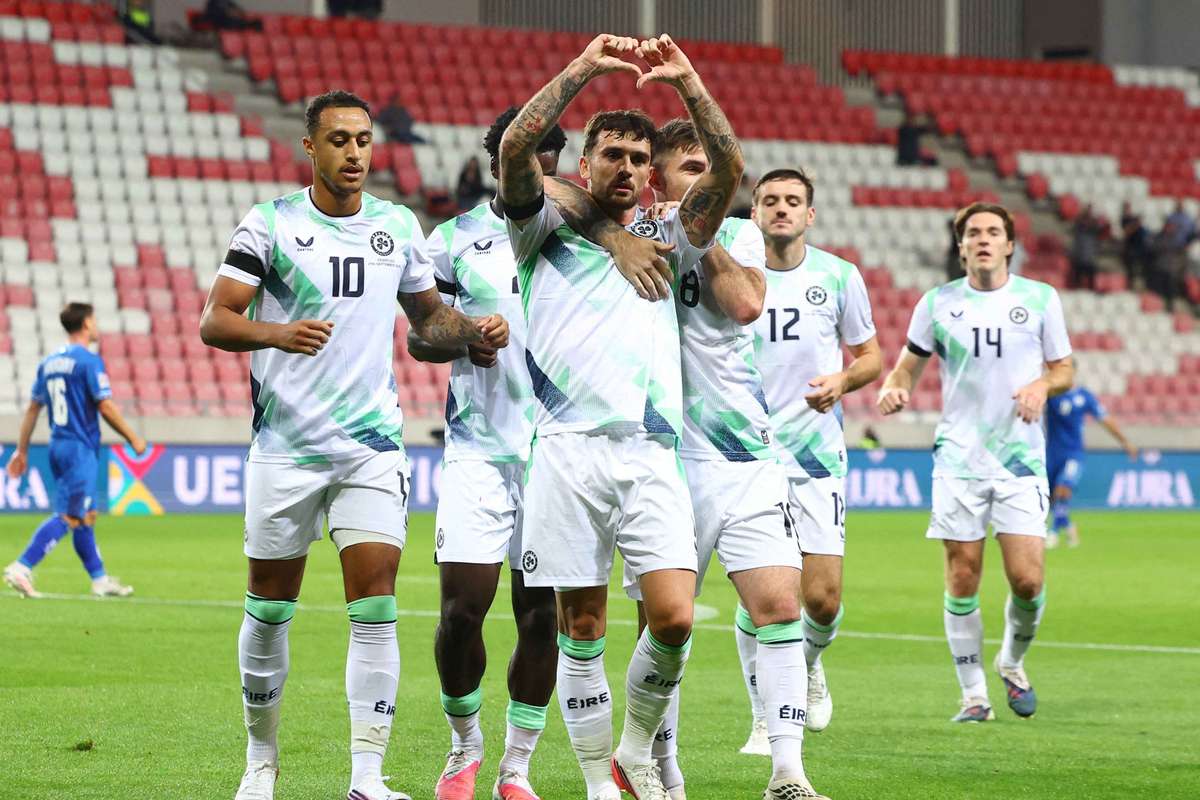
Photo: tribalfootball.com
Why Ireland couldn't skip the Israel game
The Republic of Ireland played Israel in the Nations League on Sunday, and according to FAI president Paul Cooke, not playing was never really an option. Cooke has revealed the association was warned it could face unspecified sanctions from UEFA if it pulled out of the fixture, a comment that says plenty about how little room national federations actually have when politics collides with the calendar.
Written with AI and checked automatically before publishing. How we work
Cooke's admission, reported by BBC Sport, is short on detail but heavy on implication. He didn't name the sanctions UEFA had in mind, and he didn't say whether the threat was verbal, written, or somewhere in between. What he did make clear is that the FAI weighed the option of not fielding a team against Israel and decided the risk wasn't worth taking.
A fixture nobody wanted to make a statement out of
Nations League games rarely carry this kind of weight before kick-off. But Israel's participation in international football has been a live issue for governing bodies well beyond this one match, and Ireland is far from the only association that has had to think carefully about how to handle it. Cooke's comments suggest the FAI considered its options and concluded that UEFA's fixture obligations left little space for a unilateral withdrawal, whatever the reasoning behind it might have been.
UEFA holds the leverage
This is the part that matters most. UEFA's rulebook doesn't really distinguish between a boycott made on principle and one made for safety reasons: a missed fixture is a missed fixture, and the governing body has shown before that it will punish teams who don't fulfil them. Cooke's warning that sanctions were "undetermined" is arguably more revealing than if he'd named a specific punishment. Vagueness is its own kind of pressure. An association weighing a boycott has to plan for the worst version of a penalty it can't even see coming.
The game went ahead
Ireland played the match on Sunday as scheduled. Cooke's comments came afterwards, framed as an explanation for why the association never seriously considered pulling out, rather than as a complaint about the outcome. There's no suggestion in his remarks that safety concerns, rather than political ones, drove the initial hesitation, and BBC Sport's report doesn't expand on what exactly prompted the FAI to weigh the question in the first place.
What's clear is that Ireland isn't the only federation that has had to have this conversation quietly, and Cooke's willingness to say it out loud, even without naming what the FAI was actually threatened with, is unusual. Most associations that go through this kind of calculation don't talk about it afterwards at all.
Sources1 source
We name and link every outlet this article draws on, and rewrite their reporting in our own words rather than reprinting it.


The day's football, in your inbox at 7 AM. Nothing else.
Pick of the night's matches, what the transfer window's doing, and the one column you should read today. No ads. No tips. No operators.
One-click unsubscribe. We do not share emails.
Comments
Loading comments…