
What happens if a football player needs the toilet?
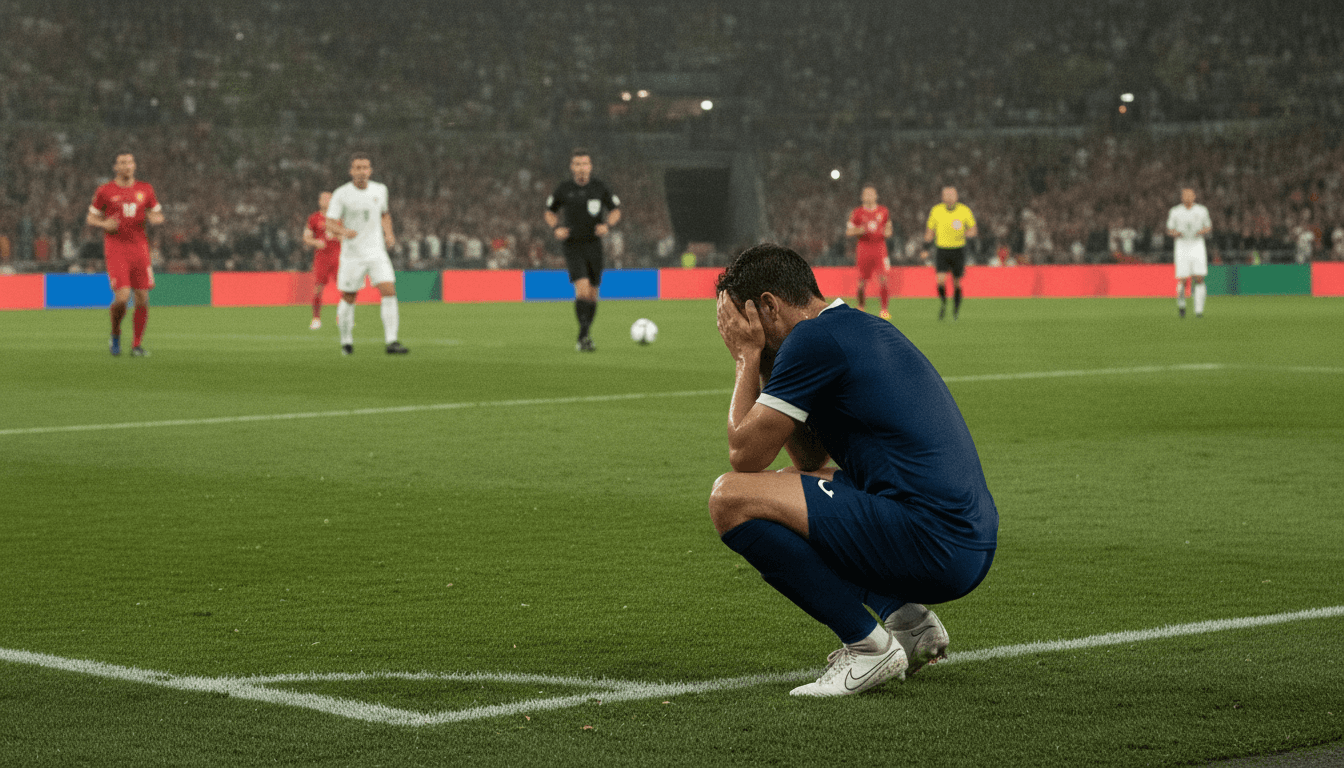
Picture it: ninety minutes in, a player breaks off from a throw-in or a stoppage, ducks out of sight behind the hoardings at the edge of the pitch, and reappears moments later as if nothing happened. That brief disappearing act is usually exactly what it looks like.
There is no official toilet break in football. The game runs in two halves with an interval between them, and that's the only built-in pause players can rely on. If a player needs to go during play itself, there's no mechanism that stops the match for them, no signal to the referee, nothing written into how the game is run. They are simply expected to manage.
Most of the time that's easy enough. Dressing rooms have toilets, and players use them before kick-off, at half-time, and before extra time if a match goes that far. Nerves, fluids taken on before and during a game, and the sheer length of ninety-plus minutes mean the urge can still strike at an inconvenient moment, though.
When it does, the options are limited. A player can try to hold on until the next natural break in play, or, if the need is too pressing for that, find the nearest spot out of the direct eyeline of the crowd and cameras. That is almost always behind the advertising boards that ring the edge of the pitch, which offer the only cover available on a stadium perimeter. It's not glamorous and it's not private, television cameras being what they are, but it is the only practical option during live play.
This is why the question comes up at all: footage of a player crouching behind the boards, or sprinting off and back in a matter of seconds, circulates and people want to know what's actually going on. There's no rule being bent or broken, no special dispensation being granted. It's simply a player dealing with a very ordinary human problem in the only moment and the only space they have available to them.
The exception, such as it is, comes down to timing and position. A player who needs to go during a stoppage near the touchline has an easy dash to the boards and back before play resumes. A player who's caught short in the middle of open play, with the ball live and team-mates relying on them, has no good option at all beyond gritting their teeth until the whistle next goes. Managers and medical staff don't intervene in this; it isn't treated as an injury or a tactical matter, just something players sort out for themselves, in the only way the shape of a football pitch allows.
More on Other football
See more




“Another angle on the same week.”
 MORE
What Happens When a Football Club Goes Into Administration?
A club's badge stays on the shirts and the fixtures still go ahead, but somewhere behind the scenes the owners have lost control of the cheque book. Here's what actually changes when the administrators walk in.
The day's football, in your inbox at 7 AM. Nothing else.
Pick of the night's matches, what the transfer window's doing, and the one column you should read today. No ads. No tips. No operators.
One-click unsubscribe. We do not share emails.
Comments
Loading comments…