



Why MLS runs spring to autumn and how it handles FIFA windows
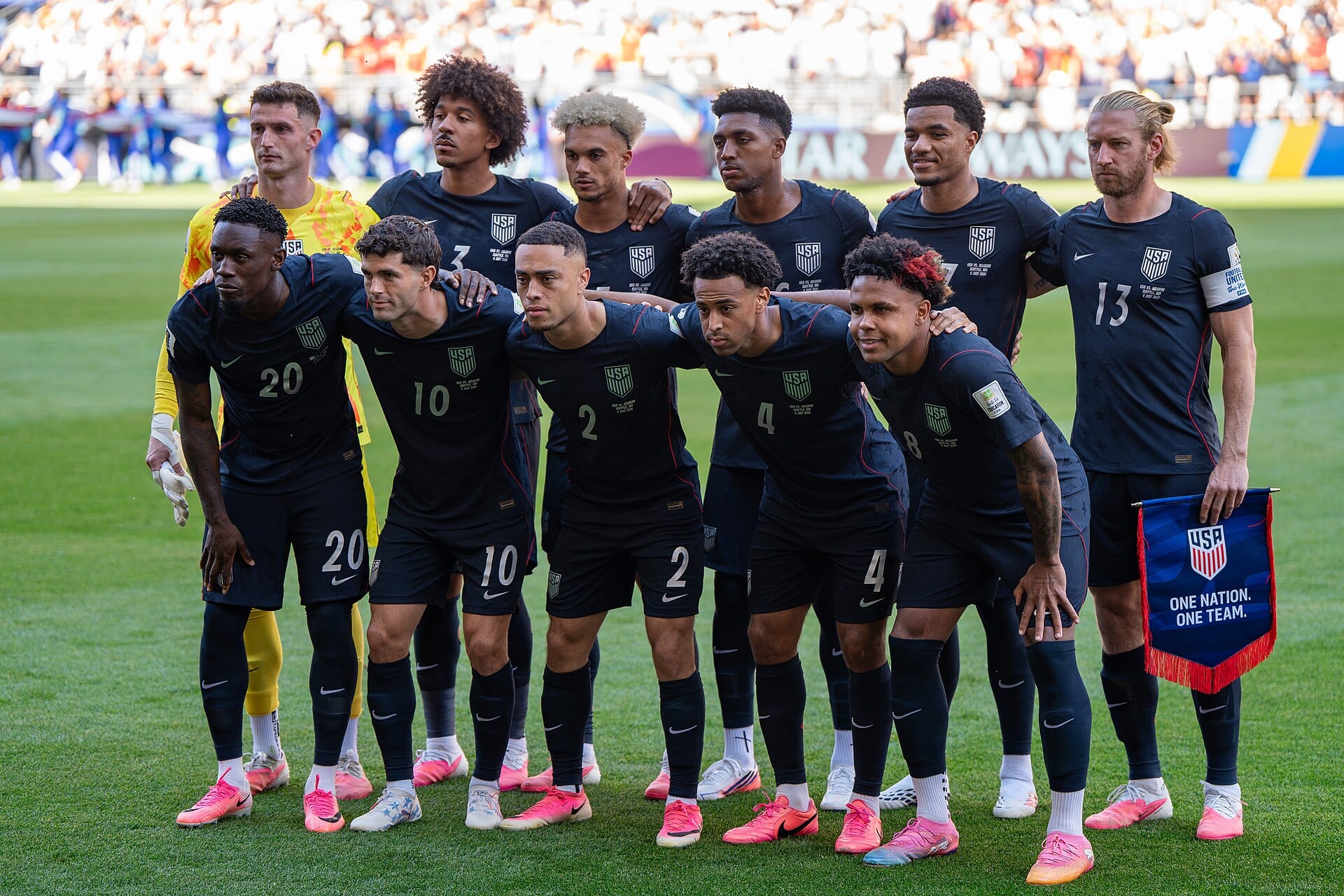
Archive photo: United States v Venezuela, 2019. Photo: Hayden Schiff from Cincinnati, USA / Wikimedia Commons (CC BY 2.0) · Source
The short answer
MLS runs spring to autumn because its season is built for North America. The rest of the football calendar is built for Europe, and MLS has no power to move FIFA's international windows. So the league schedules around them, and the playoffs, which run from October to early December, have to fit the space that is left.
A spring-to-autumn league
Most of Europe's big leagues start in late summer and finish in May. MLS does the reverse. It kicks off in late winter, plays through the summer, and settles the title in early winter. The reasons are not mysterious.
The first is weather. MLS stretches from Miami to Montreal, from Houston to Minnesota. A January fixture in Toronto or Montreal is not a football match, it is a snow-clearing operation. A calendar running through the depths of a Canadian or Midwestern winter would mean frozen pitches, postponements and empty seats.
The second is the market. American sport has a crowded autumn and winter. The NFL and college football own the weekends, and the NBA and NHL fill the evenings. A spring and summer season puts MLS where the competition is thinnest, with baseball the main rival for attention.
The third is habit. Domestic leagues across the Americas have long run on calendars that suit their own climate and fan base. Plenty of leagues ignore Europe's schedule. MLS is one of them.
Where it meets FIFA
FIFA's international windows are fixed for everyone, with breaks in the autumn and spring and major tournaments in the summer. For a European league those windows interrupt a season that is only just getting going. For MLS the autumn windows sit close to the end of the campaign.
The MLS regular season ends in autumn. Then come the MLS Cup playoffs, a knockout tournament split across the Eastern and Western Conferences that decides the champion. That puts the business end of the American season in the same stretch of the year as the autumn international windows.
The league's answer is planning, not stoppage: it fits its fixtures and playoff rounds around FIFA's dates, and clubs know in advance when their internationals will be away.
Why the windows cost more there than in Europe
In the Premier League an international break is an irritation. One round of fixtures out of thirty-eight gets moved and the table barely notices. In MLS the playoffs are a compressed run of single games and short series, so losing a player to international duty, or to a knock on the road, weighs more heavily.
That is why MLS protects its playoffs so carefully. There is no relegation in MLS, so the regular season has no drama at the bottom. The only prize for finishing top over the whole campaign is the Supporters' Shield. The MLS Cup is the thing everyone actually plays for, and the playoffs are where the league makes its biggest television and ticket noise.
The summer problem
The same clash applies at tournament time. A spring-to-autumn league is in full swing during June and July, when World Cups, the Gold Cup and the Copa América are played. The 2026 World Cup was co-hosted by the United States, Canada and Mexico, three MLS-country markets, which put the league's calendar and the sport's biggest tournament in the same summer.
Is the calendar fixed?
No. MLS has argued with itself for years about lining up with Europe, and the case is real. The transfer windows would match, there would be fewer awkward overlaps, and selling players to Europe or buying from it would be easier. The case against is just as real: the snow does not move, and neither does the NFL. Any switch means a long winter break in the cold cities, much like the Bundesliga has always had, plus a fight for screen time in the autumn.
The verdict
MLS did not overlook the calendar clash, it accepted it. The league chose a season its weather and its market could support, and it fits the MLS Cup playoffs into the space between FIFA's autumn windows and early December.
More on Other football
See more


Should MLS switch to a European-style calendar?
“Another angle on the same week.”
Burnley, 22nd, host a Blackburn side on 21 points
Burnley, 22nd in the Championship with 10 points from 15 games, host 13th-placed Blackburn Rovers at Turf Moor on Sunday at 12:00. The table says Blackburn should win; the market says otherwise.
The day's football, in your inbox at 7 AM. Nothing else.
Pick of the night's matches, what the transfer window's doing, and the one column you should read today. No ads. No tips. No operators.
One-click unsubscribe. We do not share emails.
Comments
Loading comments…