
 RAC0
RAC0 ALA0
ALA0 RAN1
RAN1 SEV1
SEV1 VAL0
VAL0 STE1
STE1 SEK1
SEK1 BOU
BOU BRE
BRE AVL
AVL NFO
NFO CHE
CHE HUL
HUL CRY
CRY IPS
IPS LIV
LIV FUL
FUL TOT
TOT EVE
EVE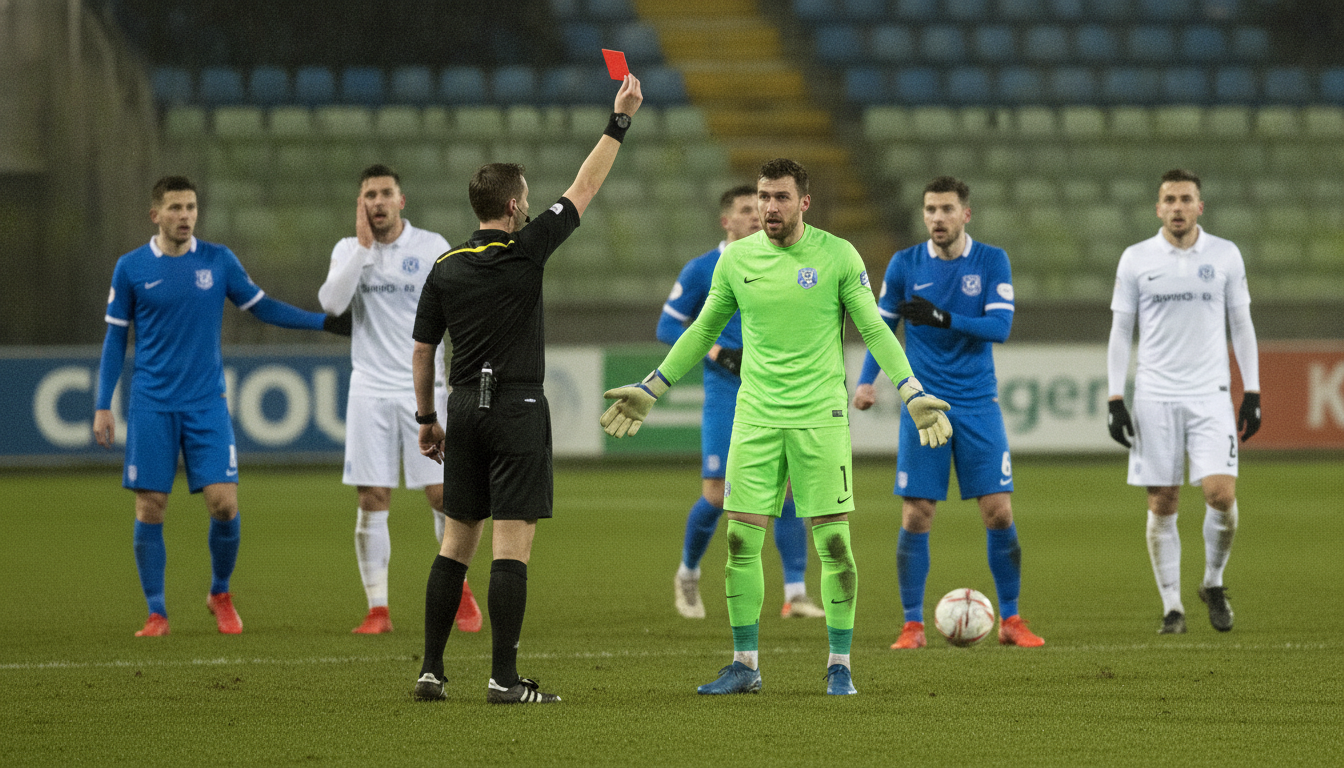
Can a goalkeeper be given a red card?
Can a goalkeeper be given a red card?
A striker breaks clean through, the goalkeeper charges out and takes him down outside the box, and the referee is already reaching for a card. Goalkeepers are not exempt from red cards, and the Laws of the Game spell out exactly when one goes off.

Picture the scene: the last defender is beaten, the striker has only the goalkeeper to beat, and instead of getting a hand to the ball the keeper takes the man out. Play stops. The referee doesn't reach for yellow. Out comes red, and the goalkeeper walks, leaving a substitute keeper, or an outfield player pulling on gloves, to finish the game with ten men.
So yes, a goalkeeper can absolutely be sent off. Nothing about wearing gloves and a different-coloured shirt puts a goalkeeper outside the normal rules of dismissal. The Laws of the Game treat the goalkeeper as a player like any other for disciplinary purposes, and there are several specific ways it happens on a football pitch.
The clearest is denying an obvious goal-scoring opportunity through a reckless challenge, the sliding, out-of-the-box lunge described above. IFAB's Law 3, which covers the players, states it plainly: "The referee stops play and awards a direct free kick to the attacking team. The goalkeeper is sent off (red card) for denying the opponent an obvious goal-scoring opportunity." No ambiguity, no separate goalkeeper clause softening it, deny a clear chance recklessly, and the card is red.
Serious foul play is its own category, separate from the goal-scoring-opportunity rule, and it covers things like a sliding tackle that endangers an opponent's safety even when no clear chance was on. IFAB's Law 16, dealing with the goal kick, puts it in four words: "The defender is sent off (red card) for serious foul play." The wording doesn't specify goalkeeper, but a keeper coming to claim a ball with a reckless, high-risk challenge falls straight under it.
Then there's violent conduct, striking a spectator or an opponent, for instance, which sits under Law 3 again: "The player is sent off for violent conduct (red card)." This one has nothing to do with the ball being in play or a chance on goal. A goalkeeper losing his temper and throwing a punch, at any point, any distance from goal, goes the same way as an outfield player would.
The one most people never think to ask about is the slowest, least dramatic route to the same result. A goalkeeper who wastes time, holding the ball too long, delaying a goal kick, stalling a restart, can first be shown a yellow card for time-wasting. If it happens again, or the delay continues, the second caution means a second yellow, and a second yellow is always a red. No dramatic collision, no sliding challenge, no raised fists, just a keeper standing on the ball for too long, twice, and walking off exactly as if he'd committed serious foul play.
What all four routes share is that none of them bend the rule to make an exception for the goalkeeper's position. The goal-scoring-opportunity law even singles the goalkeeper out by name in its wording, rather than around it. Wear the gloves, and the same red card is still hanging over every decision made in the box.
Sources1 source
IFAB Laws of the Game — Law 3: The Players, IFAB Laws of the Game — Law 16: The Goal Kick, IFAB Laws of the Game — Law 3: The Players
Flagside's editors read every piece we publish. We work from the football press, write our own copy rather than reprinting anyone's, and check each article for accuracy and sourcing. Every outlet that fed into this piece is named under Sources.

The day's football, in your inbox at 7 AM. Nothing else.
Pick of the night's matches, what the transfer window's doing, and the one column you should read today. No ads. No tips. No operators.
One-click unsubscribe. We do not share emails.
Comments
Loading comments…