
 DMA1
DMA1 AIA0
AIA0 FIJ0
FIJ0 VAN1
VAN1 NCD0
NCD0 SOL2
SOL2 AZE
AZE TJK
TJK GIB
GIB STP
STP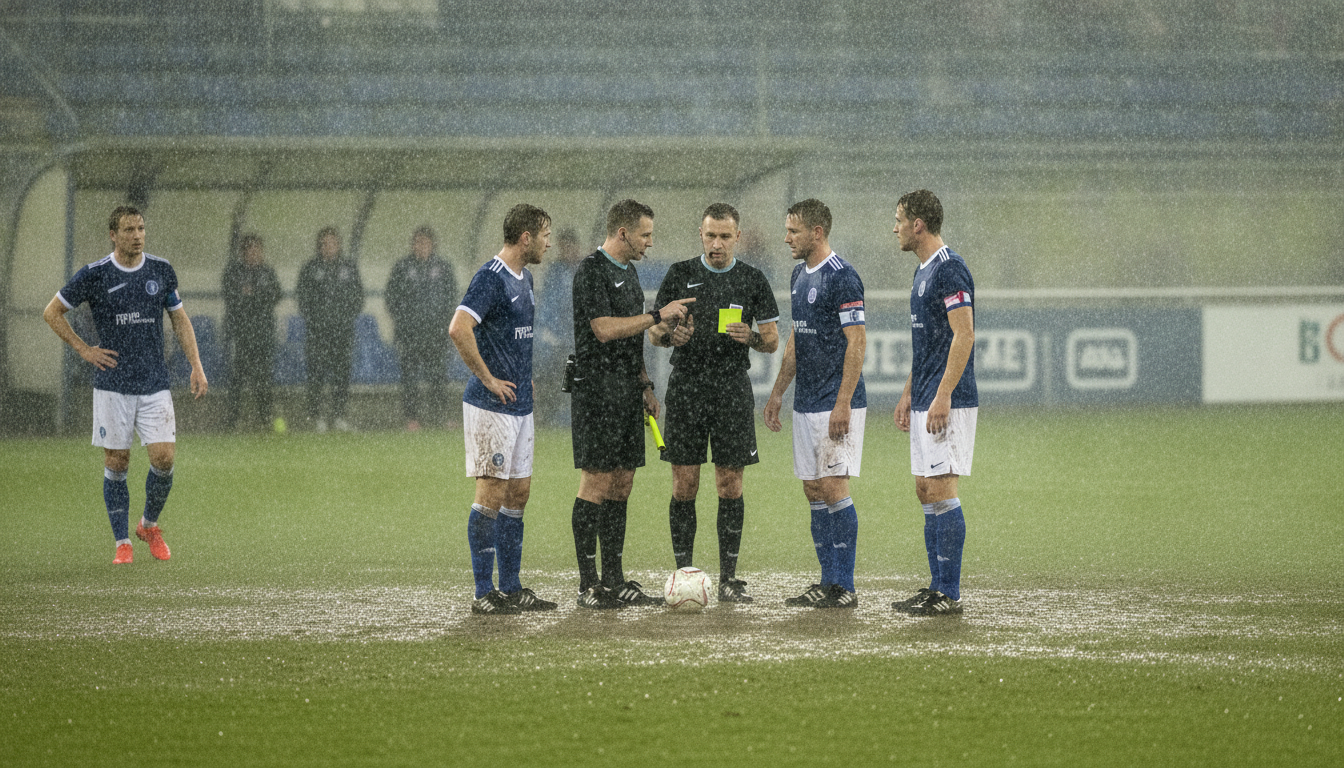
What Happens If a Football Match Is Abandoned Due to Weather?
What Happens If a Football Match Is Abandoned Due to Weather?
Hail hammering the pitch, the referee waving both arms, players jogging off under floodlights while stewards check the surface, abandonments don't happen quietly, and what happens next isn't always what fans assume.

Picture it: the rain has gone from heavy to sideways, there's standing water pooling on the six-yard box, and the referee stops play, walks to the touchline and talks to both benches before signalling the players off for good. That's an abandonment, not a delay, the game is over for the day, not paused.
So what happens to the result? It doesn't stand, and the scoreline at the point of abandonment doesn't carry over. The match is played again from 0-0, in full, on another date. That's the default position under the Laws of the Game, and it's written in plain terms: "An abandoned match is replayed unless the competition rules or organisers determine otherwise." The wording matters, it's not automatic in every single case, because the competition running the match can set its own approach. But absent that, a fresh 90 minutes is the assumption baked into the law itself.
The power to call it off in the first place sits with one person: the referee. Law 7 of the IFAB Laws of the Game, the law that governs how long a match lasts and what disrupts it, gives the official direct authority over conditions, not just conduct. It states plainly that "the referee may also decide to stop, suspend or abandon the match if the condition of the field, its surrounds or the weather conditions do not allow the game to be continued." There's no checklist of wind speeds or millimetres of rainfall attached to that sentence. It's a judgement call, made pitch-side, by the referee alone, and it can be about the playing surface, the stands and approach areas around it, or the weather itself, any one of the three is enough on its own.
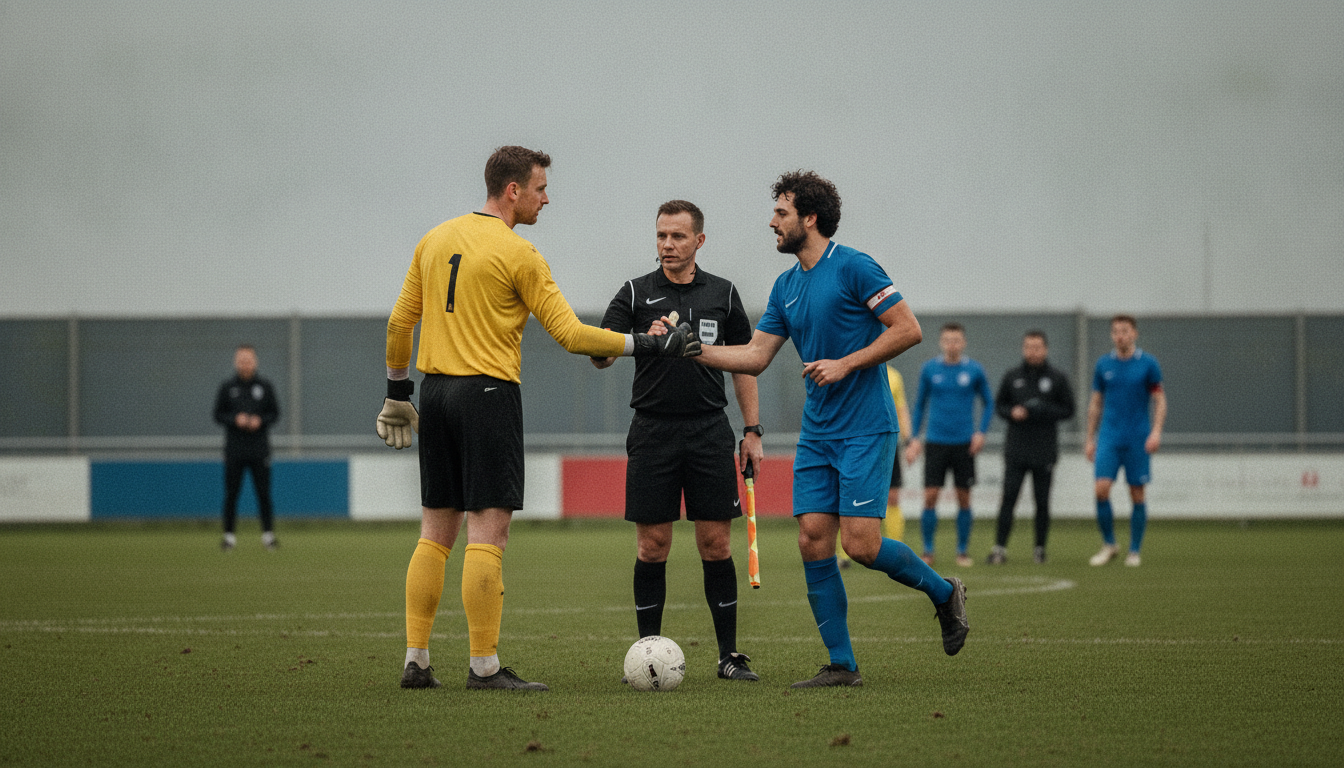
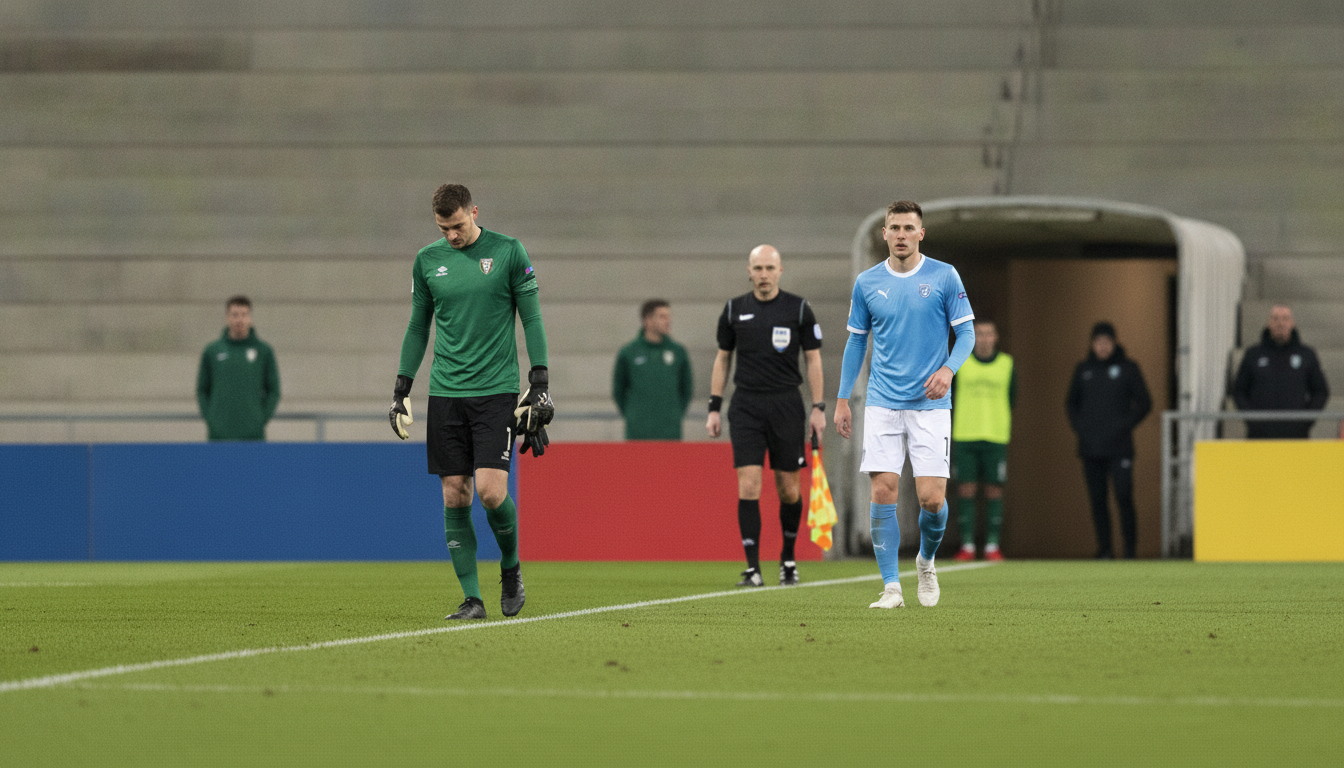
What a lot of people don't expect is that Law 7's abandonment rules also cover a completely different scenario that has nothing to do with the sky opening: a team simply running out of players. If a side is reduced below seven, through red cards, injuries, whatever the cause, the match can't continue, and it gets abandoned. But that outcome is treated differently to weather. The same law spells it out: "In principle, where a team is responsible for a match being abandoned because it has fewer than seven players, the match will be forfeited by that team." No replay, no fresh 0-0. The team that caused the shortage simply loses.
That contrast is the sharpest thing in Law 7. Weather is nobody's fault, so the law's instinct is to give both sides a clean restart, replay it, and let the game happen properly. A team dropping below seven players is treated as something a side did to itself, so the punishment is a forfeit rather than a second chance. Same law, same word, abandoned, two entirely different consequences, depending on why the players left the field.
For a supporter standing in a soaked stand watching the floodlights reflect off a flooded penalty area, the practical upshot is simple: today doesn't count. Whatever the score was when the referee blew that final whistle, expect a phone call about a new date, and a match that starts, as far as the record books are concerned, from nothing.
Sources1 source
IFAB Laws of the Game — Law 7: The Duration of the Match, IFAB Laws of the Game — Law 7: The Duration of the Match
Flagside's editors read every piece we publish. We work from the football press, write our own copy rather than reprinting anyone's, and check each article for accuracy and sourcing. Every outlet that fed into this piece is named under Sources.

The day's football, in your inbox at 7 AM. Nothing else.
Pick of the night's matches, what the transfer window's doing, and the one column you should read today. No ads. No tips. No operators.
One-click unsubscribe. We do not share emails.
Comments
Loading comments…