
 MAN0
MAN0 MNC1
MNC1 COV0
COV0 BHA5
BHA5 SUN0
SUN0 ARS2
ARS2 TOT0
TOT0 EVE0
EVE0 BOU2
BOU2 BRE2
BRE2 AVL1
AVL1 NFO2
NFO2 CHE2
CHE2 HUL2
HUL2 CRY2
CRY2 IPS3
IPS3 LIV0
LIV0 FUL0
FUL0 SHU0
SHU0 WOL1
WOL1 BLK3
BLK3 MIL1
MIL1 CHA0
CHA0 POR0
POR0 MID4
MID4 NOR3
NOR3 PNE0
PNE0 LCN1
LCN1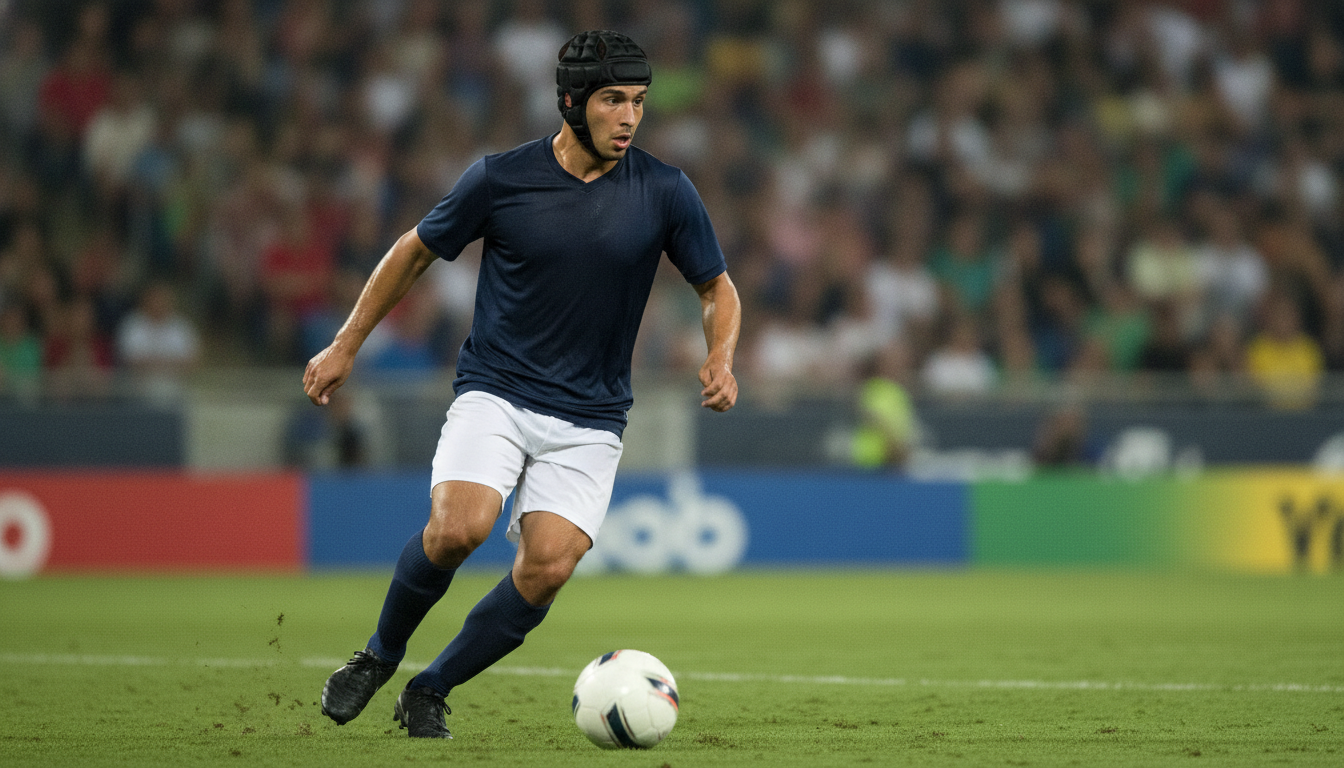
How long can a football helmet be used?
How long can a football helmet be used?
Some goalkeepers keep wearing a padded head covering long after the injury that caused it has healed: here's why there's no clock running on that.

Picture a goalkeeper jogging out before kick-off with a thin padded cap pulled over the top of his head, the kind that covers the crown and sides but leaves the face open. He goes up for a corner, takes a knock, gets back to his feet, and keeps wearing it the following week too. This is not a rigid helmet. It is a soft, protective headguard, usually worn after a skull injury, and the most well-known example is a goalkeeper like Petr Čech, who wore his for years, through the rest of his career, after fracturing his skull.
There is no fixed length of time a player is allowed to wear one. There is no expiry date stamped on it and no rule that says it must come off after a season, a year, or any set point. Whether it stays on is a personal and medical decision, made between the player and his doctors, based on how the injury has healed and how comfortable he feels playing without extra protection.
That is why some players wear the headguard for a short recovery period and then drop it once cleared, while others, like Čech, simply carry on wearing it for the rest of their careers even though the original fracture healed long before. The skull injury that causes this kind of protection is serious enough that some goalkeepers and their medical teams decide the extra layer is worth keeping permanently, not because a body still requires it, but because the risk of a repeat blow to an already vulnerable area is one they would rather not take again. Others feel differently and take it off once medical staff say the bone has healed and the head is no longer more exposed than before.
The padding inside a football headguard does wear out, though. Even if a player intends to keep wearing this kind of protection indefinitely, the foam or padded layer loses some of its cushioning ability over time and through repeated contact, so it needs replacing periodically. The player himself might carry on wearing the same style of headguard for a decade, but the actual piece of equipment on his head is not the same one he started with. It gets swapped out as the material degrades, long before the wearer decides he no longer needs it at all.
So there are really two separate questions hiding inside the one people ask. How long does a player choose to wear this kind of protection: that has no limit and is entirely down to him and his medical team. And how long does any single headguard last before it needs changing: that is a shorter, practical answer, driven by wear on the padding rather than any decision about the injury itself. A goalkeeper's face on television might look exactly the same match after match, year after year, while the actual object covering his head has been replaced several times over.
The day's football, in your inbox at 7 AM. Nothing else.
Pick of the night's matches, what the transfer window's doing, and the one column you should read today. No ads. No tips. No operators.
One-click unsubscribe. We do not share emails.
Comments
Loading comments…