



Is it allowed to tackle in football? Yes, within three limits
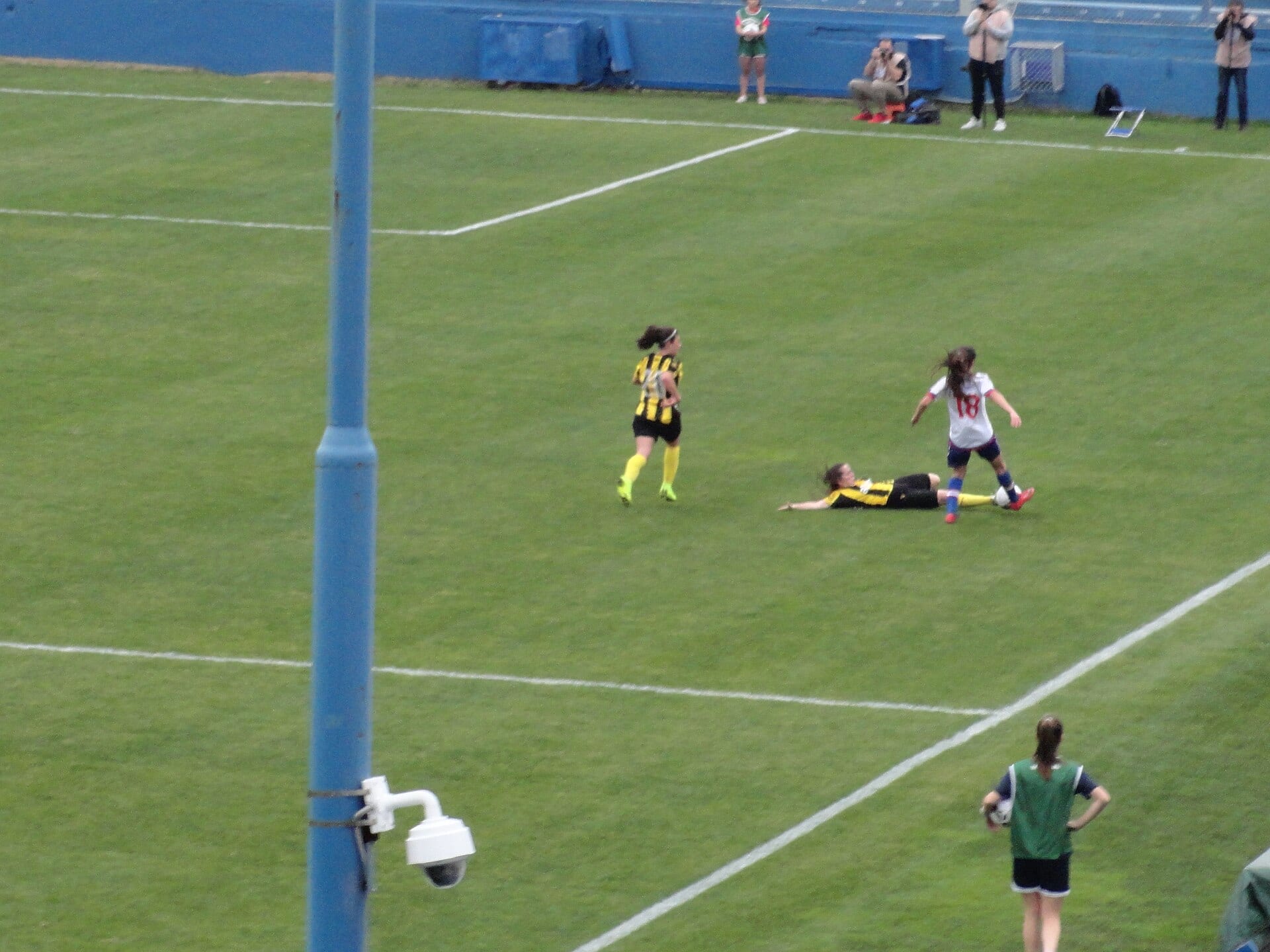
Archive photo: Hudson v Stowe, 2023. Photo: K.M. Klemencic / Wikimedia Commons (Public domain) · Source
Picture an attacker running at goal with the ball at their feet. A defender closes in, plants one foot and stretches the other leg across to poke the ball away. Sometimes they stay on their feet. Sometimes they go to ground in a slide, studs skimming the grass. Either way, the aim is to win the ball cleanly before the attacker can shoot or pass.
That is a tackle, and yes, it is allowed. It is one of the most basic ways to win the ball back in football. Nothing in the rules bans it.
What the rules do is set limits. The relevant section is Law 12 of the IFAB Laws of the Game, titled Fouls and Misconduct. It lists tackles and challenges among the actions a referee can penalise, but only when the referee judges the tackle to be careless, reckless or using excessive force. A tackle that is none of those three is just football.
The three words climb in seriousness, and each comes with its own punishment. Law 12 defines them precisely, and most people who argue about tackles in the pub have never read the definitions.
The lowest level is careless. Law 12 puts it like this: "Careless is when a player shows a lack of attention or consideration when making a challenge or acts without precaution." This is the mistimed tackle, where a defender arrives a fraction late and clips the attacker's ankle instead of the ball. The other team gets a direct free kick, and that is all. No card is needed.
The middle level is reckless: "Reckless is when a player acts with disregard to the danger to, or consequences for, an opponent and must be cautioned". Law 12 requires a caution here: a reckless tackle means a direct free kick and a yellow card, and the referee has no discretion to let it go unpunished. The key idea is that the player knew, or should have known, the tackle could hurt someone and went ahead anyway.
The top level is excessive force: "Using excessive force is when a player exceeds the necessary use of force and/or endangers the safety of an opponent and must be sent off". The punishment is a direct free kick and a red card. The phrase "necessary use of force" admits something many fans forget: the Laws accept that winning the ball takes some force. The offence is going beyond what the job needed, or putting an opponent's safety at risk.
How contact fits in
Law 12 also says: "If an offence involves contact, it is penalised by a direct free kick." This is not a fourth limit. It describes how the three limits are punished when contact is involved. Read quickly, it sounds as if any tackle that touches an opponent is a foul, but the sentence only applies to an offence, which means a challenge the referee has already judged careless, reckless or using excessive force. Contact alone does not make a foul. If a defender wins the ball and then catches the attacker on the follow-through, the referee decides whether that challenge was careless, reckless or excessive, and only then is it penalised.
That matters for the most common touchline complaint, "he touched him, ref!" Touching an opponent is part of the game. The question the referee asks is whether the tackle was careless, reckless or excessive, and the answer decides between play on, a free kick, a yellow card or a red one.
Sources1 source
IFAB Laws of the Game — Law 12: Fouls and Misconduct, IFAB Laws of the Game — Law 12: Fouls and Misconduct, IFAB Laws of the Game — Law 12: Fouls and Misconduct, IFAB Laws of the Game — Law 12: Fouls and Misconduct
We name and link every outlet this article draws on, and rewrite their reporting in our own words rather than reprinting it.
More on Other football
See more

Top stories
- INT
Senegal are AFCON champions again after CAS reverses CAF
- UCL
De Bruyne starts against City as Napoli miss eight
- TRANSFERS
Bayern meet Musiala's camp: Eberl says talks were only about his recovery
- UCL
Como, fourth in the table, host 29th-placed AEK Athens
- UCL
Galatasaray's five wins meet Aston Villa's winless run
“Another angle on the same week.”
 MORE
Is tripping allowed in football? What Law 12 says
A leg goes across, an ankle gets clipped and the attacker hits the grass. Tripping is a foul under Law 12: a direct free kick, a penalty if it happens in the defender's own box, and possibly a card.
The day's football, in your inbox at 7 AM. Nothing else.
Pick of the night's matches, what the transfer window's doing, and the one column you should read today. No ads. No tips. No operators.
One-click unsubscribe. We do not share emails.
Comments
Loading comments…