


Is tripping allowed in football? What Law 12 says
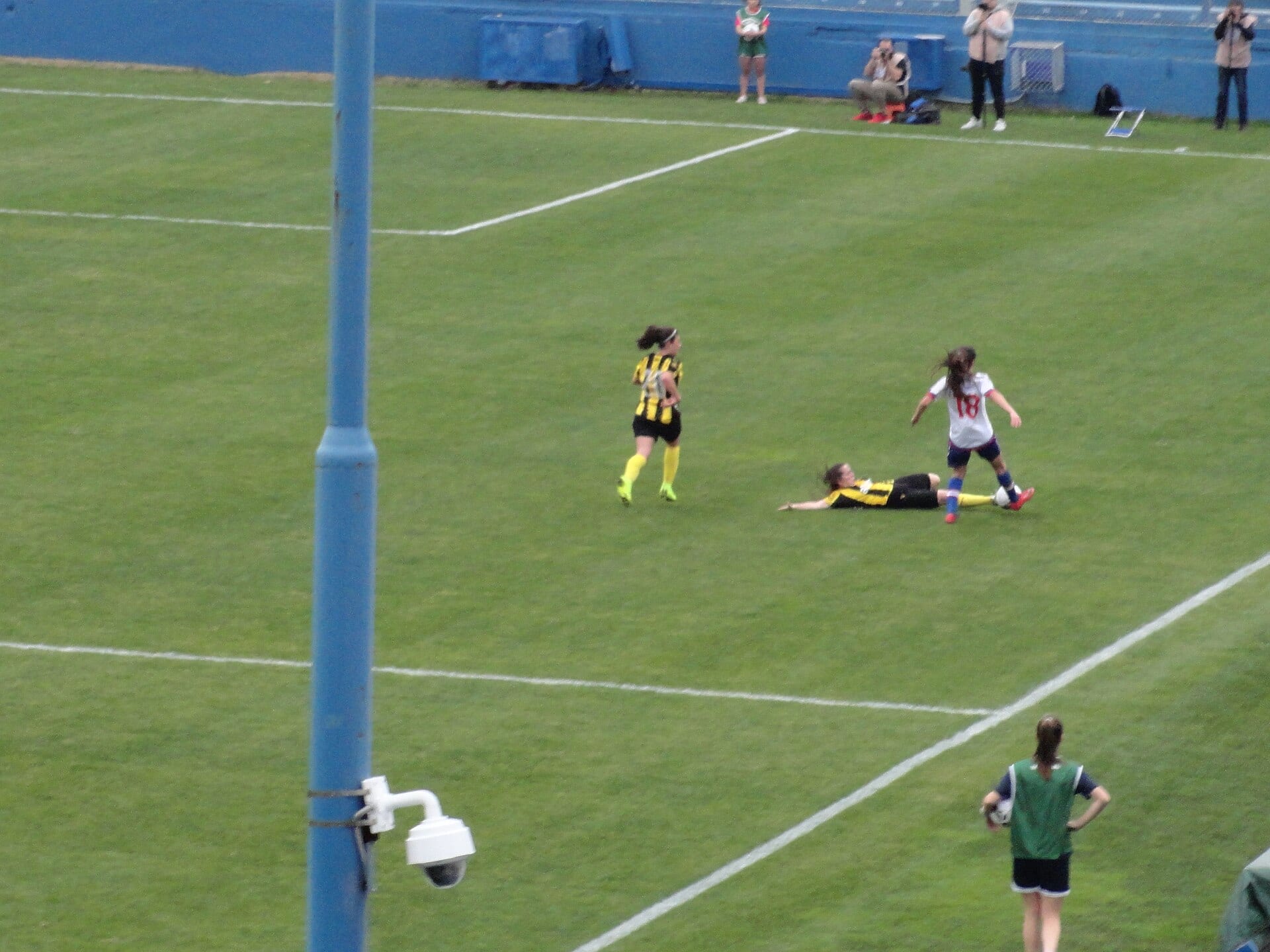
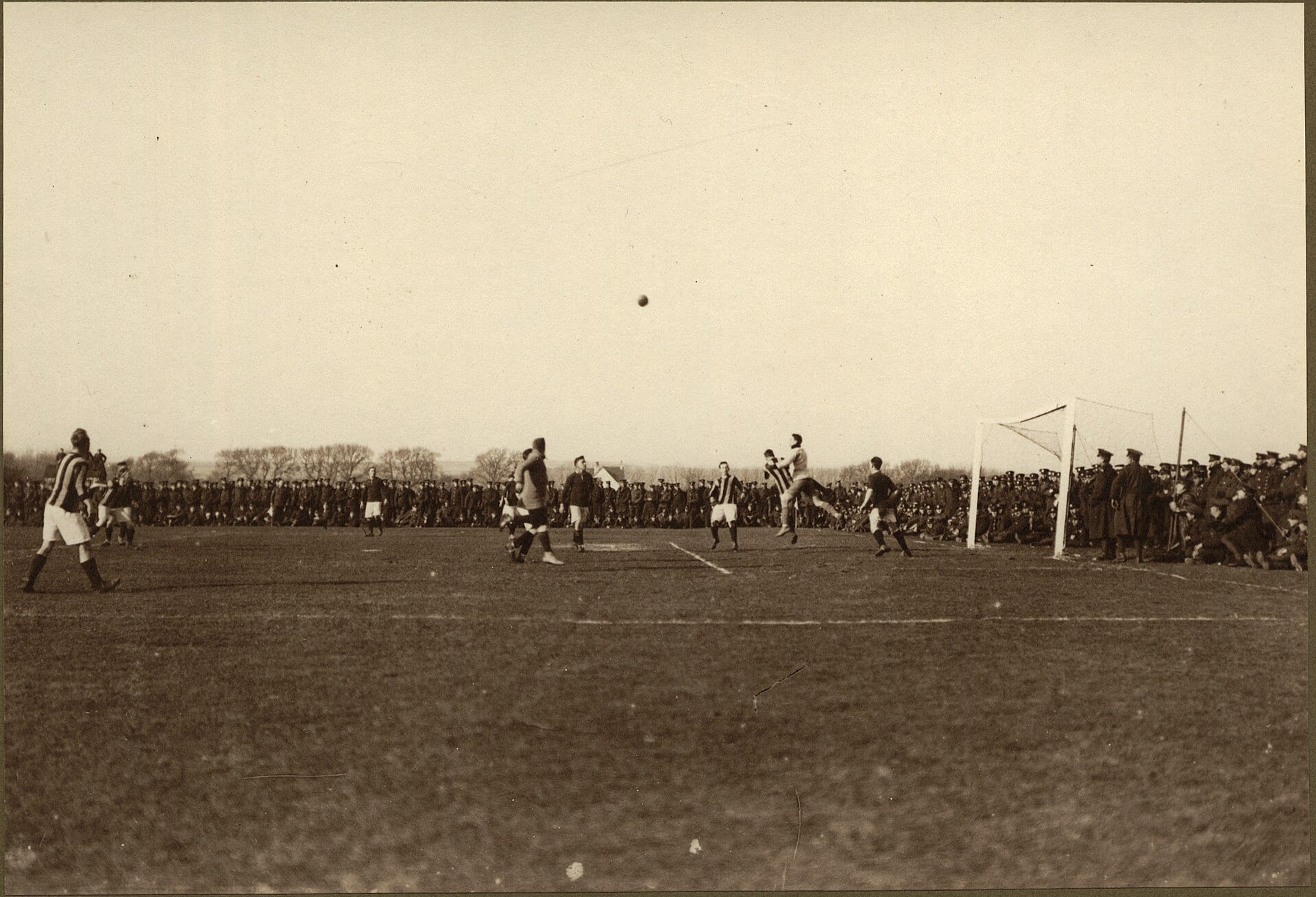
Archive photo: Nacional v Peñarol, 2019. Photo: NaBUru38 / Wikimedia Commons (CC BY-SA 4.0) · Source
An attacker breaks into the penalty area with the ball at his feet. A defender, beaten for pace, sticks out a leg. It catches the attacker's ankle, he goes sprawling, and the referee points to the spot.
No, tripping is not allowed in football. The Laws of the Game, written by the IFAB, treat tripping an opponent as an offence. It sits in Law 12, the law on fouls and misconduct. If a defender deliberately trips an attacker inside their own penalty area, the referee gives a penalty kick.
The wording in Law 12 is sharper than the plain idea of "no tripping". The example it uses is not a single clean foul. It describes a defender who first pushes the attacker and then trips him, and it tells the referee how to handle both: "The referee applies advantage for the push and awards a penalty kick for the tripping offence which occurred inside the penalty area."
That sentence holds two decisions. First, the push. The referee does not have to blow for it. Applying advantage means play carries on, because the attacker is still going forward and stopping the game would only help the side that broke the rules. Second, the trip. When the same defender then brings the attacker down, the referee punishes that one, and the punishment is a penalty.
The words "which occurred inside the penalty area" settle the award. Inside the defender's own box, it is a penalty kick. The advantage was applied to the push, so the trip is what gets punished, and the penalty is tied to the place of the trip.
The penalty is not always the end of it. Law 12 goes on: "If the tripping offence stopped a promising attack or denied the attacker an obvious goal-scoring opportunity, the defender receives the appropriate disciplinary sanction."
That is one route to a card, but not the only one. A trip can also be a caution or a sending-off on its own terms if the referee judges it reckless or committed with excessive force. A trip in midfield with no attack to stop can still bring a card on that basis.
The denial of an obvious goal-scoring opportunity (DOGSO) has its own split inside the box. If the defender was challenging for the ball, the trip is normally a yellow card, because the penalty is seen as restoring the chance. If it was not an attempt to play the ball, the defender is sent off with a red card. Two trips that look alike on the pitch can therefore end with different outcomes for the player.
The Law 12 list of offences that lead to a direct free kick is cut off in the documents we have, so they do not set out every rule on tripping. What they do show is plain: tripping is an offence, a deliberate trip by a defender in his own box gives a penalty, and a referee can let play run on after a push and still punish the trip that follows.
Sources1 source
IFAB Laws of the Game — Law 12: Fouls and Misconduct, IFAB Laws of the Game — Law 12: Fouls and Misconduct
We name and link every outlet this article draws on, and rewrite their reporting in our own words rather than reprinting it.
More on Other football
See more

Top stories
- INT
Senegal are AFCON champions again after CAS reverses CAF
- UCL
De Bruyne starts against City as Napoli miss eight
- TRANSFERS
Bayern meet Musiala's camp: Eberl says talks were only about his recovery
- UCL
Como, fourth in the table, host 29th-placed AEK Athens
- UCL
Galatasaray's five wins meet Aston Villa's winless run
“Another angle on the same week.”
 MORE
Is it allowed to tackle in football? Yes, within three limits
A defender slides in, the ball squirts loose, and the crowd roars. Nobody is breaking the rules by tackling. Law 12 of the Laws of the Game only steps in when a tackle is careless, reckless or uses excessive force:…
The day's football, in your inbox at 7 AM. Nothing else.
Pick of the night's matches, what the transfer window's doing, and the one column you should read today. No ads. No tips. No operators.
One-click unsubscribe. We do not share emails.
Comments
Loading comments…