
 MIL0
MIL0 NEW1
NEW1 BOU4
BOU4 LCN0
LCN0 CRY3
CRY3 MID0
MID0 LEY1
LEY1 BRD3
BRD3 SUN1
SUN1 HUL0
HUL0 BOL2
BOL2 WHU3
WHU3 BLK1
BLK1 SHU2
SHU2 CAR1
CAR1 STK1
STK1 SOU3
SOU3 SWA1
SWA1 WAT2
WAT2 PNE1
PNE1 WXM1
WXM1 BUR1
BUR1 DOR3
DOR3 VIL2
VIL2 FCP0
FCP0 MNC2
MNC2 LILL2
LILL2 BET3
BET3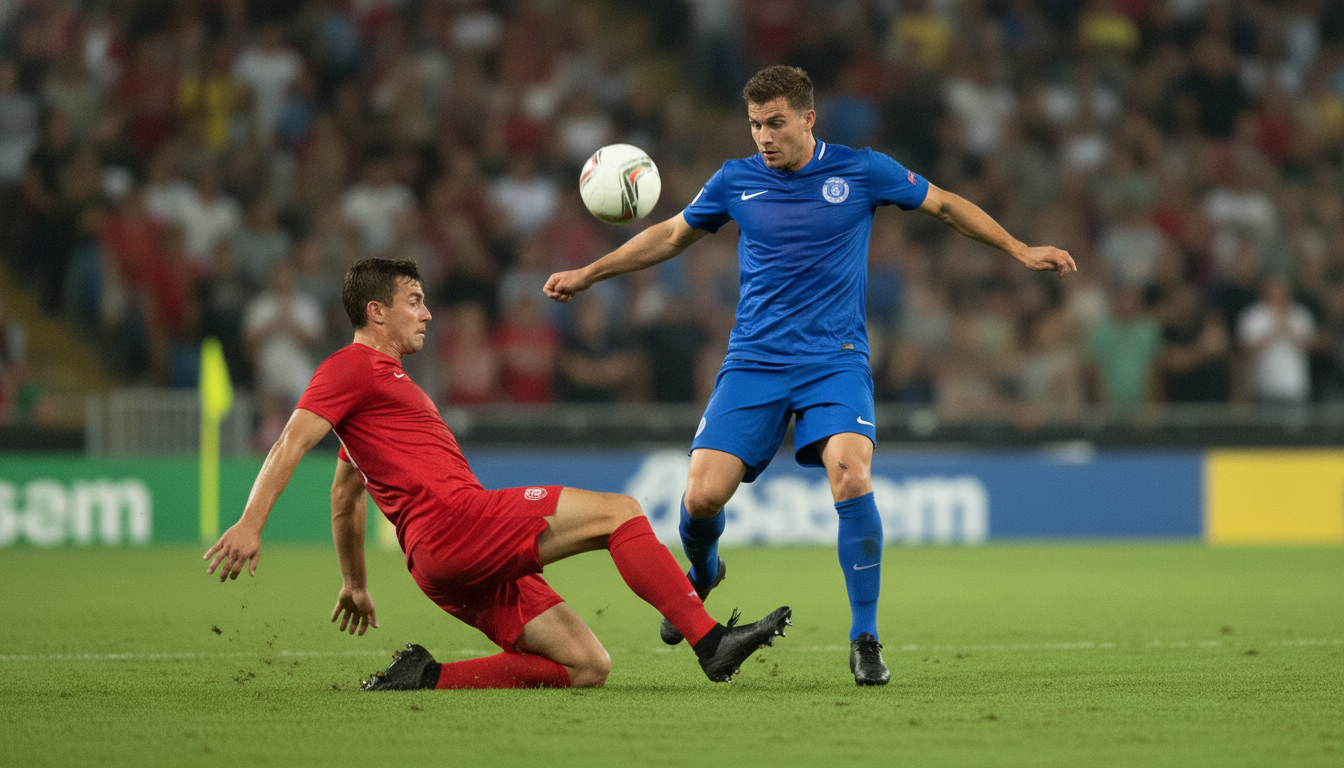
Is Showboating Allowed in Football?
Is Showboating Allowed in Football?
A striker flicks the ball over a defender's head, controls it on the far side, and jogs off grinning while his team is already three goals up. Is that actually allowed, or just tolerated?

Picture the moment properly: a player who has the game won puts a foot on the ball, waits for the defender to step in, then rolls a rainbow flick over his head or slides it through his legs for a nutmeg. Maybe he backheels a pass to himself. The crowd groans or cheers depending on which side they're on. Nobody blows a whistle.
That's because there is no rule against it. Showboating, flicks, tricks, nutmegs, backheels, any of it, are all legal moves whatever the scoreline. A referee cannot book a player simply for doing a piece of skill or a piece of showmanship on the ball. If the ball stays in play and no foul happens, the trick itself is just football.
The question usually gets asked after watching exactly that kind of moment: a player humiliating an opponent with a flashy piece of skill, often when his team is already coasting to a win. It looks like it should be against the rules because it feels unsporting, but feeling unsporting and breaking a rule are different things.
What's actually happening is cultural rather than official. Football has an unwritten code, roughly the same idea as not running up the score in other sports, where showboating against a beaten opponent is seen as disrespectful. Pundits will call it humiliating, rival fans will call it disrespectful, a manager might even pull the player aside afterwards. None of that is a sanction from the referee. It's players and observers applying their own sense of manners to a game that has no manners written into it.
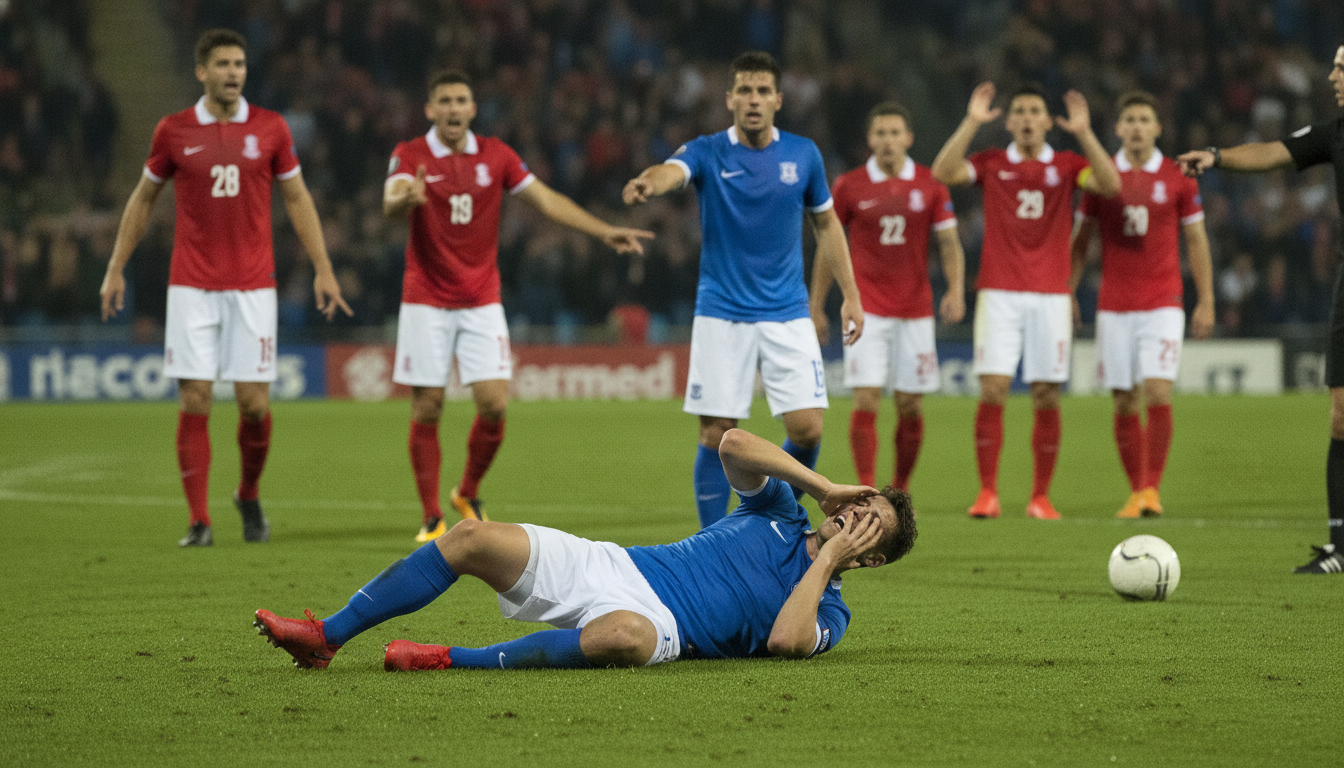
Where this catches people out is in what happens next. Showboating often makes the opponent who's been embarrassed react with anger, sometimes lashing out with a rash tackle. When that happens, it's the tackle that gets punished, not the trick that provoked it. The referee is judging the foul in front of him, not weighing up who started it emotionally. A player who nutmegs someone and gets kicked for it will usually see his opponent booked, while he walks away with nothing on his own card, because he broke no rule to begin with.
That asymmetry is really the whole answer. The trick is legal no matter how disrespectful it looks or how far ahead the scoreline already is. The response to the trick is judged separately, on its own terms, as a normal foul. So a team can be 4-0 up in the final minutes and a player can still legally rainbow-flick a defender for fun, draw boos from the stands, get a talking-to from his own captain, and face zero disciplinary consequence from the officials. The only route to a card in that sequence runs through the other player's temper, not through the showboating itself.
This is why the debate around showboating never really settles. Fans argue it endlessly because it sits entirely in the space of opinion, sportsmanship, and tradition, with nothing official to point to that says where the line is. One set of supporters will call a trick disrespectful, another will call it entertainment, and the referee, correctly, has no view on either.


The day's football, in your inbox at 7 AM. Nothing else.
Pick of the night's matches, what the transfer window's doing, and the one column you should read today. No ads. No tips. No operators.
One-click unsubscribe. We do not share emails.
Comments
Loading comments…