
 BUR1
BUR1 WOL2
WOL2 BOU3
BOU3 STG0
STG0 SLB4
SLB4 CEL1
CEL1 CEL1
CEL1 JUV2
JUV2 DZG1
DZG1 AND0
AND0 FER2
FER2 PLZ1
PLZ1 JAG3
JAG3 ARA1
ARA1 OLM0
OLM0 OLY1
OLY1 NEC1
NEC1 LEV1
LEV1 REN2
REN2 OFI1
OFI1 TSG2
TSG2 BES3
BES3 AZ2
AZ2 HBE1
HBE1 LECH0
LECH0 B044
B044 LYON3
LYON3 CRY2
CRY2
Valencia's long fall from grace
Valencia once stood toe to toe with Real Madrid and Bayern Munich in Champions League finals and won La Liga twice inside a few seasons. Now the club is staring at a relegation battle it has not faced in generations, and the collapse was not sudden: it was built over two decades of debt, bad ownership and a stadium that was never finished.
Written with AI and checked automatically before publishing. How we work
The peak nobody saw coming would end this badly
Under Héctor Cúper and then Rafa Benítez, Valencia were briefly the best counterweight to the Real Madrid and Barcelona duopoly that Spanish football has ever produced. They reached successive Champions League finals around the turn of the millennium, losing to Real Madrid and then Bayern Munich, and under Benítez they won two La Liga titles and a UEFA Cup in the early 2000s playing some of the most ruthless, well-drilled football on the continent. For a club without the budget of the Spanish giants, it was a golden age that still defines how older fans think of Valencia.
The stadium that broke the bank
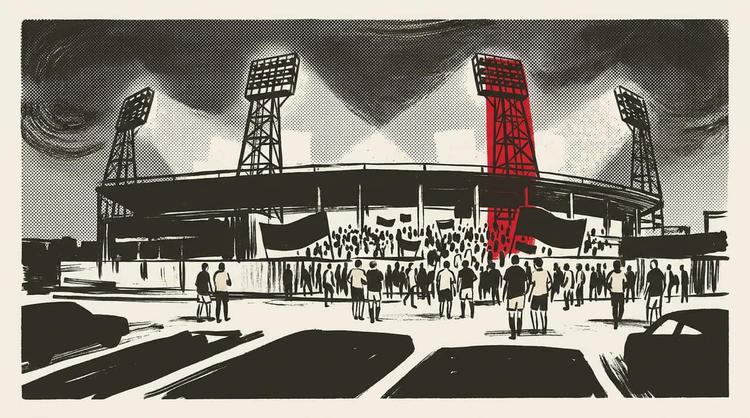
The seeds of the decline were planted in the mid-2000s, when Valencia committed to building a new Mestalla, a vast replacement for their old home. Construction started, the global financial crisis hit Spain especially hard, and the project ground to a halt with the stadium only partially built. The unfinished shell has sat on the edge of the city for years, a physical monument to a club that overreached financially while still trying to compete at the top of La Liga and in Europe.
Selling the furniture to survive
To service the debt that came with the stadium and years of financial mismanagement, Valencia turned their academy and transfer market into a cash machine. David Villa, David Silva, Juan Mata and Jordi Alba all left for major fees across a handful of years, each sale softening a financial blow rather than funding ambition. The pattern repeated itself for over a decade: develop or recruit talent, sell it on, patch the books, and watch the team get slightly weaker each time. A club that once built a side good enough to reach two European finals became a feeder operation for richer leagues.
Peter Lim and a decade of chaos
In 2014, Singaporean businessman Peter Lim bought a controlling stake in the club through his Meriton Holdings vehicle, promising to finish the stadium and restore Valencia to the top table. Instead, the Lim era has been defined by an exhausting churn of managers, sporting directors and transfer strategies that rarely survived a full season, along with strained relations with the fanbase that have spilled into open protest outside Mestalla and outside Lim's own businesses in the city. The new stadium remains unfinished more than a decade after he arrived. Sporting continuity, the thing that made the Benítez years work, has been almost impossible to build.
From Europa League regulars to relegation fodder
For a stretch after the Lim takeover, Valencia still clung on to the Champions League and Europa League picture, propped up by the quality of a squad assembled before the worst of the financial squeeze. That cushion has gone. Each summer has brought further departures of the club's best players, thin replacements, and squads increasingly built around loans and free transfers rather than coherent recruitment. The club has flirted with relegation trouble in recent seasons, and now finds itself genuinely at risk of going down, something that has not happened since the mid-1980s, long before the club's European pedigree was built at all.
Why this collapse is different from a bad season
Relegation battles happen to famous clubs all the time, and most climb straight back. What makes Valencia's situation heavier is that every lever a big club normally pulls to arrest a decline, a strong academy pipeline, stable ownership, a modern stadium generating matchday revenue, has been compromised for years rather than months. The unfinished Mestalla is a literal unbuilt asset that could be generating income Valencia desperately need. The ownership that was supposed to stabilise things has instead been a source of the instability. A club that once had the footballing identity to go toe to toe with Europe's best now has to solve a financial and structural problem before it can even think about rebuilding a footballing one.
Can Valencia climb back out of this relegation fight once they stabilise ownership and finances?


The day's football, in your inbox at 7 AM. Nothing else.
Pick of the night's matches, what the transfer window's doing, and the one column you should read today. No ads. No tips. No operators.
One-click unsubscribe. We do not share emails.
Comments
Loading comments…