
 ARS
ARS LEE
LEE AVL
AVL BRE
BRE CHE
CHE BOU
BOU IPS
IPS FUL
FUL SUN
SUN BHA
BHA MAN
MAN TOT
TOT WHU
WHU QPR
QPR CHA
CHA BRC
BRC SWA
SWA NOR
NOR WBA
WBA BIR
BIR BLK
BLK CAR
CAR BOL
BOL STK
STK DER
DER WXM
WXM MID
MID WOL
WOL
Vini Jr., Espanyol, and why the simulation debate keeps coming back
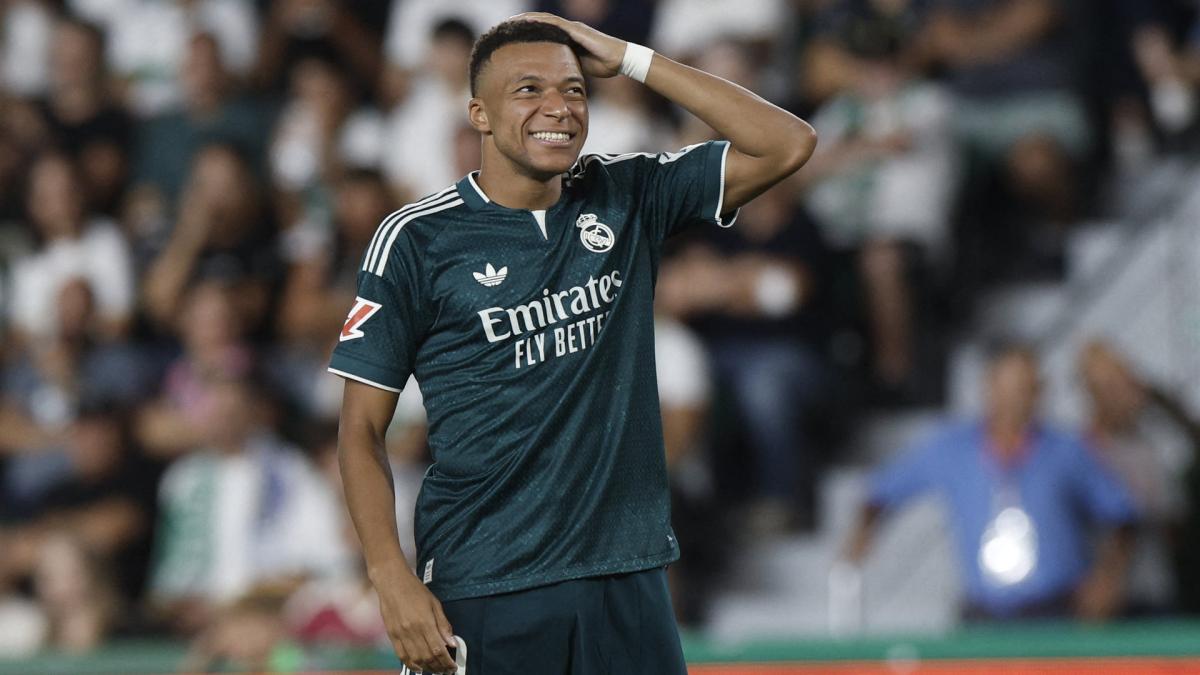
Vinicius Junior is fast enough to make defenders panic, skilful enough to draw contact almost every time he runs at someone, and controversial enough that every time he goes to ground the argument starts again. The 'Fallen d'Floor' label that has followed him through La Liga is not just rival-fan noise. It points at a real tension in how the game handles a player who genuinely gets fouled a lot and also, on occasion, helps the referee along.
Written with AI and checked automatically before publishing. How we work
Why Vinicius attracts this debate more than almost anyone
The starting point matters. Vinicius is a direct winger who runs at defenders at pace, which means defenders foul him. That is not a controversial claim. A player who beats people in the box and in wide areas is going to draw contact, and contact at speed looks dramatic. Some of what gets called simulation on Vinicius is simply what a foul on a fast player looks like.
But the debate has lasted long enough, and accumulated enough specific moments, that dismissing it entirely does not hold up. There are clips, replays, and match incidents that sit in a greyer area: contact that was real but minimal, contact that was anticipated and leaned into, or moments where the fall came before the touch. Espanyol matches have produced several of these moments over the years, partly because Espanyol defenders have not always been subtle about how they approach him, and partly because the fixture has a history of needle.
What actually constitutes simulation
The Laws of the Game define simulation as an attempt to deceive the referee by feigning injury or pretending to have been fouled. The punishment is a yellow card. In practice, referees apply this narrowly, because the alternative, booking players every time a fall looks exaggerated, would empty the pitch. The result is a threshold that is hard to define and easy to argue about.
The honest version of the Vinicius debate is this: he occupies a space where the contact is often real, the reaction is often amplified, and the amplification is sometimes enough to change a referee's decision. That is not unique to him. It is a skill, in the cynical sense, that attackers across the game have used for as long as football has had penalty areas. What makes Vinicius different is the scale. He plays in the biggest club in the world, in the biggest matches, and the decisions that go his way carry more weight.
The Espanyol context
Espanyol sit in a particular position relative to Real Madrid. They are a Barcelona club that is not Barcelona, which means they carry a specific kind of resentment toward the Castilian superclub. Matches between the two have often been physical, and Espanyol players have not always been coy about targeting Vinicius. That context cuts both ways: it means he faces harder challenges than in some other fixtures, and it also means that when he goes down, the crowd and the cameras are already primed.
Espanyol's recent history has been turbulent. They have yo-yoed between La Liga and the second division, and their current recruitment setup is focused on stabilising rather than competing at the top end. That gap in resources and ambition between the two clubs makes the Vinicius dynamic even more loaded: a superstar winger against a side that knows it cannot match him technically and may look for other ways to contain him.
Why this matters beyond one player
The simulation question is really a question about how football polices the boundary between skill and deception. VAR has made some of this cleaner: obvious dives in the penalty area get overturned, and retrospective bookings for simulation have become more common. But VAR cannot resolve the grey area, because the grey area is not about what happened, it is about intent, and intent is not visible on a replay.
What the Vinicius debate exposes is that football has not found a satisfying answer to the player who is genuinely hard to foul cleanly, genuinely gets fouled a lot, and also knows how to use that reputation. The 'Fallen d'Floor' nickname is a shorthand for that frustration. It is not entirely fair, because it collapses a complicated picture into a punchline. But it is not entirely wrong either, which is why it sticks.
Where the line actually is
The fairest read is that Vinicius Junior is a player who gets fouled, who sometimes exaggerates, and who plays in an environment, Real Madrid, La Liga, the Champions League, where the stakes on every decision are enormous. The Espanyol fixtures concentrate all of that: physical defending, a hostile crowd, and a player whose relationship with referees has never been straightforward.
The label will not go away because the behaviour that earns it will not go away. That is true of Vinicius and of the game more broadly. Simulation exists because it works, and it works because the laws are hard to enforce at the margins. Until that changes, the argument runs on.


The day's football, in your inbox at 7 AM. Nothing else.
Pick of the night's matches, what the transfer window's doing, and the one column you should read today. No ads. No tips. No operators.
One-click unsubscribe. We do not share emails.
Comments
Loading comments…