
 BOL0
BOL0 PAR2
PAR2 CHE1
CHE1 ARS0
ARS0 BIR3
BIR3 CRY3
CRY3 LIV2
LIV2 EVE0
EVE0 TOT4
TOT4 AVL0
AVL0 MAN2
MAN2 WHU1
WHU1 LCL2
LCL2 BHA0
BHA0 CHA0
CHA0 MNC1
MNC1 GER0
GER0 GRE1
GRE1 ISR0
ISR0 IRL3
IRL3 NOR1
NOR1 POR2
POR2 AUT3
AUT3 KOS1
KOS1 DEN2
DEN2 WAL0
WAL0 GIB0
GIB0 AND0
AND0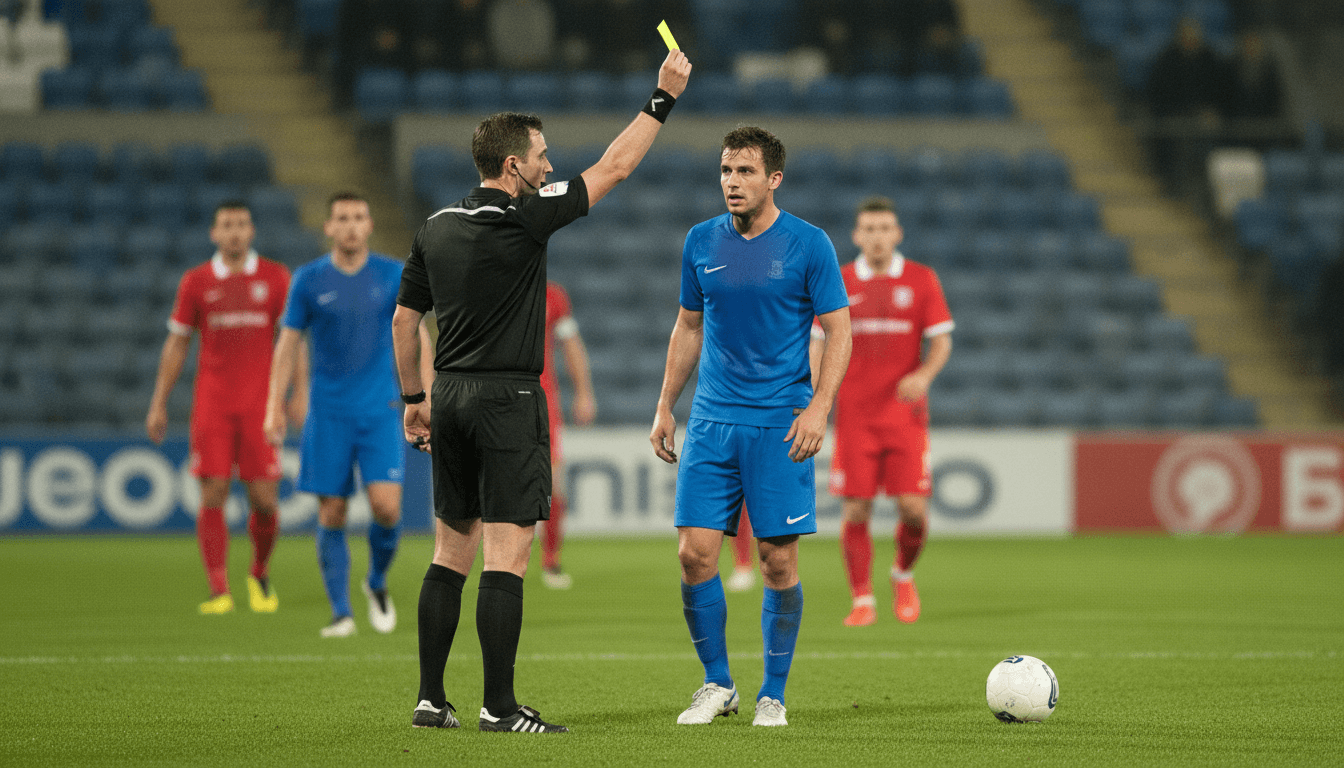
What Happens If a Footballer Gets a Yellow Card?
A player slides in late, misses the ball, and the referee reaches into his pocket and holds up a small yellow rectangle above his head. Here's what that gesture actually does to the game.
Written with AI and checked automatically before publishing. How we work
The referee stops play, walks over to the player, and holds a yellow card above his head so everyone in the stadium can see it. The player's name goes into a notebook. Nothing else happens immediately, he stays on the pitch, the game restarts, and he carries on playing.
A yellow card is a caution. It is a formal warning, not a punishment that removes the player from the match. The danger is what happens next: a player who receives a second yellow card in the same match is sent off with a red card and must leave the field immediately. One caution is a mark against your name. Two is an early walk down the tunnel and your team down to ten men.
Cautions get shown for a specific list of offences, and the Laws of the Game spell some of them out in language that is far more precise than most fans realise. Deliberately hauling down an opponent to stop a counter-attack is one. So is diving. The IFAB Laws of the Game, Law 12, state it plainly: "An attempt to deceive the referee by simulating a foul results in a caution (yellow card) for unsporting behaviour." No wriggle room there, simulation is not a grey area, it is written down as a caution offence in those exact words.
Handball gets its own carve-out too. The same law says a player "is cautioned (YC) if they handle the ball: to interfere with or stop a promising attack (except where the referee awards a penalty kick for a non-deliberate handball offence)". That bracketed exception is doing real work, it means a referee has to weigh up not just whether the hand touched the ball, but whether it was deliberate and whether a penalty is the more appropriate call instead of a card.
Dissent, arguing with the referee, surrounding him after a decision, the kind of thing that gets a captain jogging over to calm his players down, is also a cautionable offence. Persistent fouling across a match, delaying a restart by kicking the ball away or blocking a quick free kick, and failing to retreat the required distance at a free kick all fall under the same yellow-card umbrella.
The part almost nobody expects: a referee can show a yellow card during the half-time interval, after play has already stopped and the players are walking off. The Laws of the Game are explicit about this power. Law 12 sets out the reasoning directly: "According to Law 5, the referee has the power to show cards during the half-time interval. Therefore, the player must be cautioned (yellow card) for dissent." So a player who mouths off at the whistle for half-time, thinking the moment for punishment has passed because the ball isn't even in play, can still find a yellow card waiting for him as he heads for the dressing room.
A single yellow card by itself changes nothing about a player's ability to finish the match. It's only the accumulation, two cautions in one game, or enough cautions across a tournament or league season to trigger a suspension, that turns a warning into an actual absence. The card itself is a piece of paper. What it represents is the referee's record that this player is now one more mistake away from trouble.
Sources1 source
IFAB Laws of the Game — Law 12: Fouls and Misconduct, IFAB Laws of the Game — Law 12: Fouls and Misconduct, IFAB Laws of the Game — Law 12: Fouls and Misconduct
We name and link every outlet this article draws on, and rewrite their reporting in our own words rather than reprinting it.
%22%20%2F%3E%0A%20%20%3Crect%20width%3D%22100%25%22%20height%3D%22100%25%22%20fill%3D%22url(%23glow)%22%20%2F%3E%0A%20%20%3Cg%20transform%3D%22rotate(5%2C%20600%2C%20337.5)%22%3E%0A%20%20%20%20%3Crect%20x%3D%22-200%22%20y%3D%22418.5%22%20width%3D%221600%22%20height%3D%222%22%20fill%3D%22%23E4002B%22%20opacity%3D%220.132%22%20%2F%3E%0A%20%20%20%20%3Crect%20x%3D%22-200%22%20y%3D%22499.5%22%20width%3D%221600%22%20height%3D%221%22%20fill%3D%22%23E4002B%22%20opacity%3D%220.132%22%20%2F%3E%0A%20%20%3C%2Fg%3E%0A%20%20%3Ccircle%20cx%3D%22744%22%20cy%3D%22129%22%20r%3D%22205%22%20fill%3D%22%23E4002B%22%20opacity%3D%220.129%22%20%2F%3E%0A%20%20%3Ccircle%20cx%3D%221071%22%20cy%3D%223%22%20r%3D%2290%22%20fill%3D%22%23E4002B%22%20opacity%3D%220.126%22%20%2F%3E%0A%20%20%3Ccircle%20cx%3D%22646%22%20cy%3D%22341%22%20r%3D%22154%22%20fill%3D%22%23E4002B%22%20opacity%3D%220.097%22%20%2F%3E%0A%20%20%3Ccircle%20cx%3D%22792%22%20cy%3D%2217%22%20r%3D%22313%22%20fill%3D%22%23E4002B%22%20opacity%3D%220.127%22%20%2F%3E%0A%20%20%3Ccircle%20cx%3D%22659%22%20cy%3D%22240%22%20r%3D%22129%22%20fill%3D%22%23E4002B%22%20opacity%3D%220.123%22%20%2F%3E%0A%20%20%3Ccircle%20cx%3D%221082%22%20cy%3D%22521%22%20r%3D%22178%22%20fill%3D%22%23E4002B%22%20opacity%3D%220.092%22%20%2F%3E%0A%20%20%3Ctext%20x%3D%2248%22%20y%3D%2264%22%0A%20%20%20%20%20%20%20%20font-family%3D%22'Taurus%20Grotesk'%2C%20system-ui%2C%20sans-serif%22%0A%20%20%20%20%20%20%20%20font-size%3D%2214%22%20font-weight%3D%22500%22%20letter-spacing%3D%222.5%22%0A%20%20%20%20%20%20%20%20fill%3D%22%23E4002B%22%20opacity%3D%220.85%22%3EOTHER%20FOOTBALL%3C%2Ftext%3E%0A%20%20%3Ctext%20x%3D%2248%22%20y%3D%22611%22%0A%20%20%20%20%20%20%20%20font-family%3D%22'Suomi%20Veto%20Lugati'%2C%20'Anton'%2C%20'Oswald'%2C%20Impact%2C%20sans-serif%22%0A%20%20%20%20%20%20%20%20font-style%3D%22italic%22%20font-weight%3D%22700%22%0A%20%20%20%20%20%20%20%20font-size%3D%2264%22%20letter-spacing%3D%22-0.01em%22%0A%20%20%20%20%20%20%20%20fill%3D%22%23FFFFFF%22%20opacity%3D%220.96%22%3EHow%20Long%20Can%20a%20Football%20Match%20Last%3F%3C%2Ftext%3E%0A%20%20%3Ctext%20x%3D%221152%22%20y%3D%22647%22%0A%20%20%20%20%20%20%20%20text-anchor%3D%22end%22%0A%20%20%20%20%20%20%20%20font-family%3D%22'Taurus%20Grotesk'%2C%20system-ui%2C%20sans-serif%22%0A%20%20%20%20%20%20%20%20font-size%3D%2211%22%20font-weight%3D%22500%22%20letter-spacing%3D%222%22%0A%20%20%20%20%20%20%20%20fill%3D%22%23FFFFFF%22%20opacity%3D%220.45%22%3EFLAGSIDE.FOOTBALL%3C%2Ftext%3E%0A%3C%2Fsvg%3E)
The day's football, in your inbox at 7 AM. Nothing else.
Pick of the night's matches, what the transfer window's doing, and the one column you should read today. No ads. No tips. No operators.
One-click unsubscribe. We do not share emails.
Comments
Loading comments…