

How many players are there in a football team?
Count the shirts on the pitch at kick-off and you get eleven a side, but the rulebook also sets a floor, and that number is less obvious.
Written with AI and checked automatically before publishing. How we work
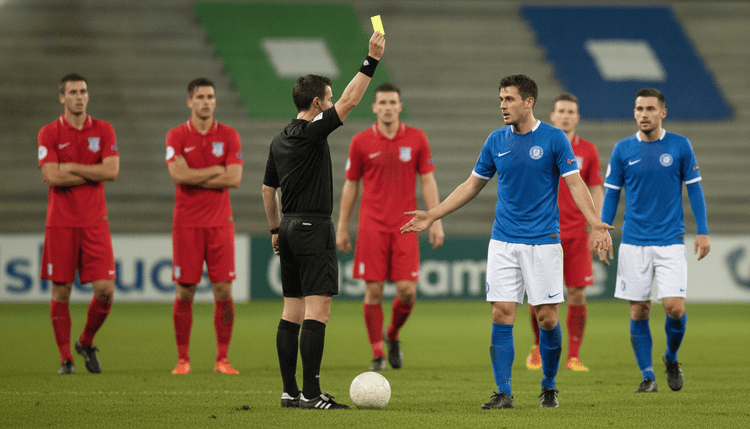
Picture the two lines facing each other before kick-off: eleven players down one side, eleven down the other, one of them pulling on different-coloured gloves. That's the full complement. A team is allowed a maximum of eleven players on the pitch at once, and one of those eleven has to be the goalkeeper, not an optional extra, a requirement.
The rule sits in the IFAB Laws of the Game, Law 3: The Players, and it's worded with the plainness of something that has never needed updating: "A match is played by two teams, each with a maximum of eleven players; one must be the goalkeeper." Note the word maximum, a team can play with fewer than eleven, through injury or a sending-off, but it can never field more.
Which raises the question nobody thinks to ask until a match is already short-handed: how few players can a team have before the game simply can't go on? Law 3 answers that too, with a specific number that surprises people, seven. "A match may not start or continue if either team has fewer than seven players (not including temporary dismissals or one-minute periods off the field of play in connection with the 'Time-limited substitution protocol' or the 'Off-field treatment and assessment protocol')." Drop to six, through red cards or injuries with no substitutes left, and the referee has to abandon the match.
That bracketed exception is doing real work. A player who has been sent to the sideline for a brief spell under one of those time-limited protocols, or who is off the pitch for a minute while getting treatment assessed, still counts toward the seven, they're not treated as permanently missing just because they're not physically out there at that second. The law is drawing a line between a player who is gone from the match and one who is merely stepped away from it for a moment.
Eleven and seven are the two fixed numbers in Law 3 itself, but they're not the whole picture of who can appear in a match. Substitutes sit on the bench and can be brought on during the game, and how many a team is allowed to use is left to competition rules rather than fixed by Law 3, a competition can set that number however it chooses. So the headline figure of eleven describes who's out there at any one moment, not the total pool of players involved in getting a result.
Sources1 source
IFAB Laws of the Game — Law 3: The Players, IFAB Laws of the Game — Law 3: The Players
We name and link every outlet this article draws on, and rewrite their reporting in our own words rather than reprinting it.



The day's football, in your inbox at 7 AM. Nothing else.
Pick of the night's matches, what the transfer window's doing, and the one column you should read today. No ads. No tips. No operators.
One-click unsubscribe. We do not share emails.
Comments
Loading comments…