
 ARS
ARS LEE
LEE AVL
AVL BRE
BRE CHE
CHE BOU
BOU IPS
IPS FUL
FUL SUN
SUN BHA
BHA MAN
MAN TOT
TOT WHU
WHU QPR
QPR CHA
CHA BRC
BRC SWA
SWA NOR
NOR WBA
WBA BIR
BIR BLK
BLK CAR
CAR BOL
BOL STK
STK DER
DER WXM
WXM MID
MID WOL
WOL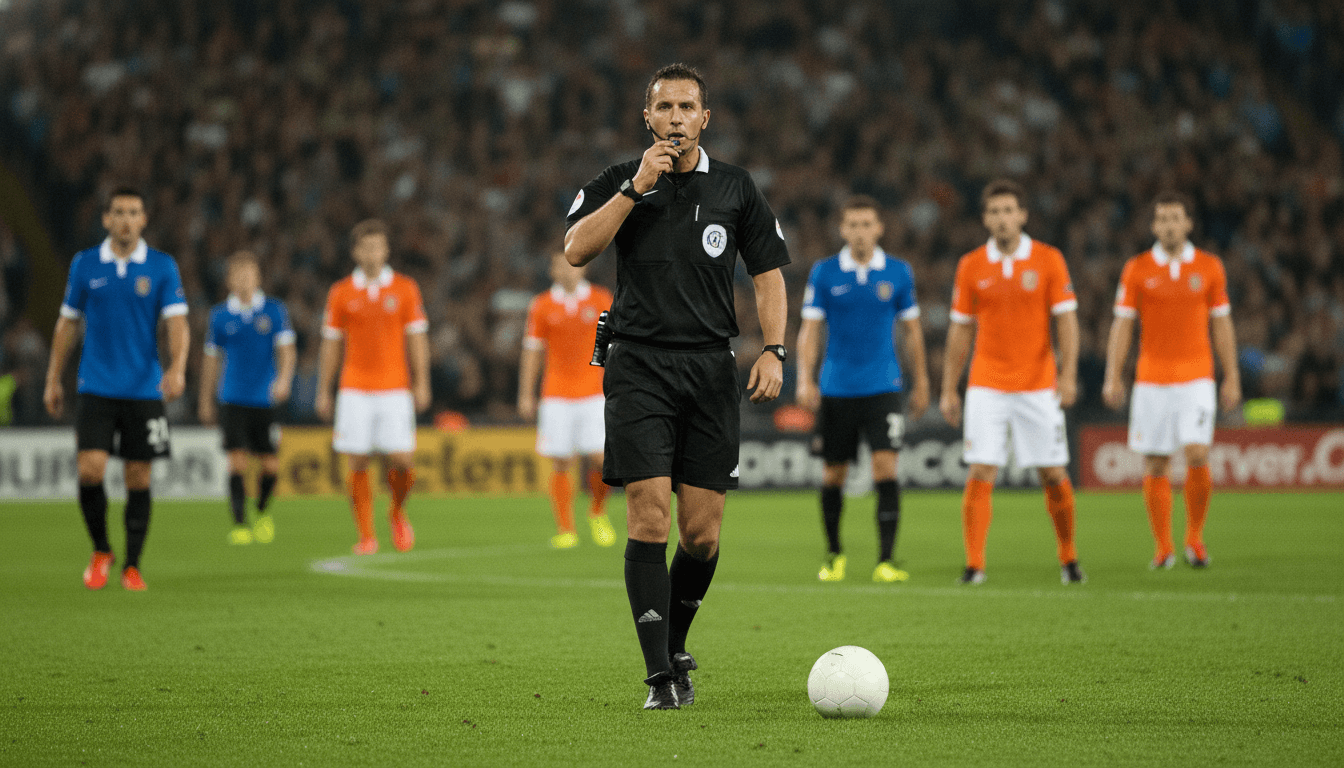
Why Do Referees Wear Black and White?
A referee jogs the touchline in a plain dark shirt, a thin strip of white at the collar, standing out from both sets of players without ever matching either side. The choice of colour goes back further than the collar trim suggests.
Written with AI and checked automatically before publishing. How we work
Picture the referee at a corner, waiting for the delivery, dressed head to toe in black with maybe a white trim at the neck or cuffs. Nothing about that shirt is fighting for attention with either team's kit. That is the whole point of it, and it has been the point for a long time.
Black became the standard referee colour because it was neutral. It did not belong to one team or the other, so nobody on the pitch could mistake the referee for a tenth or eleventh player in anyone's colours. On a pitch full of reds, blues, stripes and hoops, a plain black shirt reads instantly as something separate from the two teams, which is exactly what officials need: a player should be able to glance up mid-sprint and know in half a second who is a teammate, who is an opponent, and who is the referee.
Black carried a second advantage that had nothing to do with kit clashes. It looked formal. Early referees were drawing on the same visual language as other officials of the era, people whose authority was partly signalled by sober, severe dress. A referee in black looked like someone in charge, not someone playing. That impression mattered when the role of the referee as an independent figure of control was still being established, and a uniform that looked serious helped the job look serious too.
The white collar and white trim that often appear on a black referee shirt are not a leftover rule or a hidden signal. They are a design choice, the same way a club might pick piping on a sleeve. It breaks up a solid block of black, gives the shirt a bit of shape, and has stuck around because it looks good rather than because it means anything.
What surprises a lot of people is that referees today rarely wear black at all. Walk into most matches now and the official is just as likely to be in yellow, red, blue or green. Those colours are not random either: they are picked match by match, specifically so the referee's shirt does not clash with either team's kit. If both teams happen to be wearing dark colours, you will see a referee in bright yellow instead. If the kits are lighter, a darker shade works better. Black has not disappeared, but it has shifted from being the uniform to being one option among several, kept in reserve for matches where it is still the shade that stands apart from everyone else on the pitch.
So the shirt a referee wears on any given day is less about tradition and more about contrast. The job has not changed, the goal of standing out from both teams has not changed, but the colour chosen to do that job now depends entirely on what the two teams are wearing. Black just happens to be the version most people picture first, because for a long time it was the only version there was.



The day's football, in your inbox at 7 AM. Nothing else.
Pick of the night's matches, what the transfer window's doing, and the one column you should read today. No ads. No tips. No operators.
One-click unsubscribe. We do not share emails.
Comments
Loading comments…