
 BEL3
BEL3 TUR0
TUR0 BIH1
BIH1 SWE1
SWE1 FRO1
FRO1 SVK1
SVK1 FRA1
FRA1 ITA1
ITA1 HUN1
HUN1 GEO0
GEO0 POL6
POL6 ROU0
ROU0 UKR0
UKR0 NIR3
NIR3 CYP2
CYP2 ARM0
ARM0 LVA1
LVA1 MNE2
MNE2 KAZ1
KAZ1 MDA2
MDA2 COL0
COL0 PAR1
PAR1 MRI3
MRI3 SRI0
SRI0 COD0
COD0 UGA2
UGA2 CHN0
CHN0 PLE5
PLE5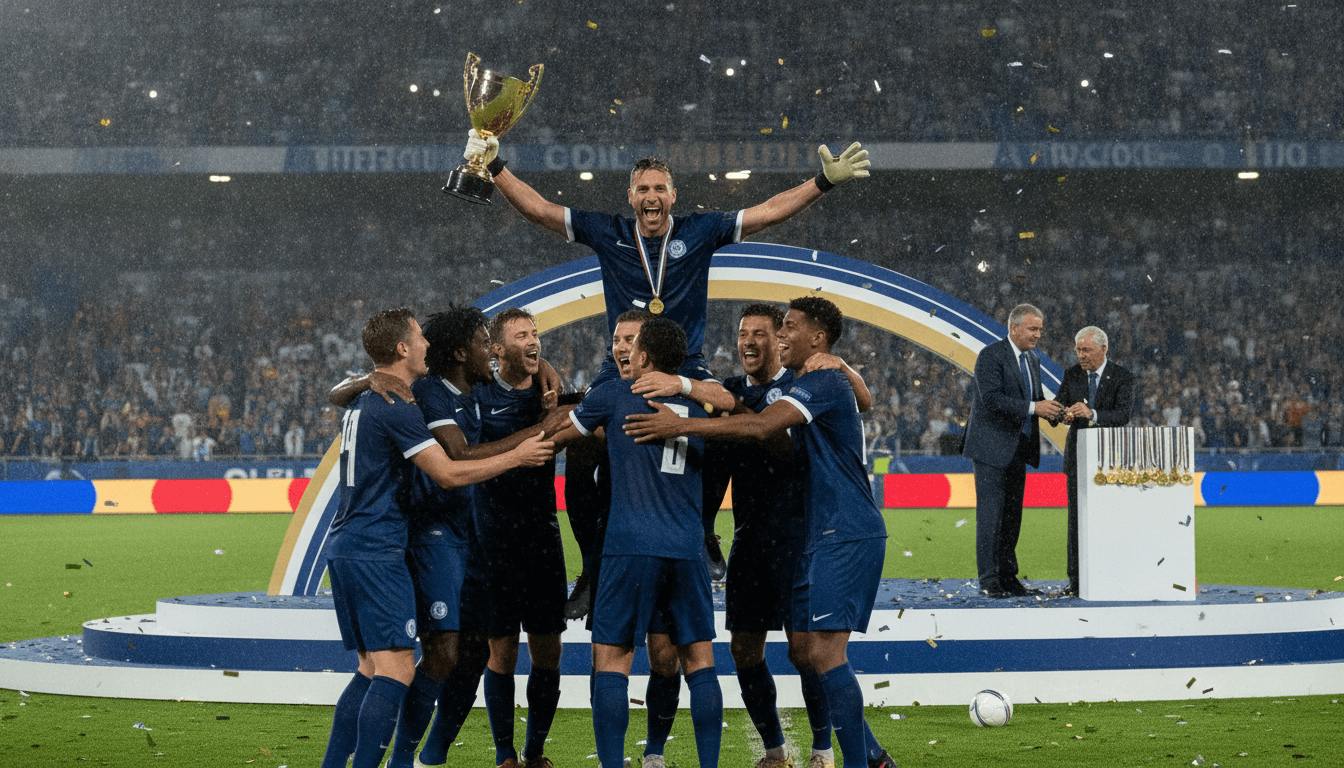
Do Footballers Get Paid for the World Cup?
A player lifts the trophy, smiling, surrounded by teammates, but no cheque changes hands on the pitch. Here's where the money for a World Cup actually goes.
Written with AI and checked automatically before publishing. How we work
Picture the scene after a World Cup final: players in team shirts, medals being hung round necks, somebody lifting a trophy under confetti. It looks like the payoff moment. It isn't. Nobody at that podium is being handed a wage for playing in the tournament.
The organisers of the World Cup don't pay players directly at all. There is no salary, no match fee, no per-game payment from the tournament itself going into a player's bank account. What the organisers do pay is prize money, and that money goes to the players' national football associations, not to the players.
What happens next depends entirely on the association. Each one decides for itself how much of that prize money, if any, gets passed down to the squad as a bonus. Some are generous, some less so, and the figures a team ends up with can look very different from one country to the next even if they went equally far in the tournament. There's no shared scale across national teams, because the decision sits with each federation rather than with the tournament organisers.
Separately, the organisers also pay money to the players' clubs, a release fee, essentially compensation for letting the club's players go and join up with their national team for weeks instead of being available for domestic football. That money goes to the clubs. It has nothing to do with what a player personally earns from playing at the World Cup.
So where does a player's actual income during the tournament come from? Mostly from the same place it always comes from: their club. A player's club contract doesn't pause because they've gone off to play for their country. Their normal salary keeps being paid throughout, exactly as it would if they were at home training with the club instead. The World Cup, financially, sits on top of that ordinary salary rather than replacing it.
The bonus from the national association is the part that actually changes depending on performance. That's the structure most fans don't picture when they imagine players "getting paid" for the World Cup, it isn't a tournament wage, it's a top-up bonus decided and funded by the player's own federation, on top of a club salary that was never interrupted in the first place.
The edge case worth knowing is that this bonus isn't guaranteed or standardised in any way. It depends on what each association negotiates with its own squad, and those negotiations happen separately for every nation. A player on a smaller federation's books can end up with a far smaller World Cup bonus than a player who went out in the same round but plays for a wealthier association, the prize money from the organisers is the same pool of money nationally, but what reaches the player is a private arrangement, not a fixed tournament rate.
The day's football, in your inbox at 7 AM. Nothing else.
Pick of the night's matches, what the transfer window's doing, and the one column you should read today. No ads. No tips. No operators.
One-click unsubscribe. We do not share emails.
Comments
Loading comments…