
 FUL2
FUL2 CHE3
CHE3 BIR1
BIR1 BRE6
BRE6 NFO0
NFO0 LEE2
LEE2 BAR3
BAR3 CAX2
CAX2 BLK1
BLK1 SHU2
SHU2 BLP1
BLP1 LCN4
LCN4 CAM0
CAM0 MIL1
MIL1 FLE4
FLE4 SHR0
SHR0 IPS3
IPS3 LEI1
LEI1 PLY2
PLY2 COV4
COV4 SHW0
SHW0 WOL2
WOL2 SOU1
SOU1 WHU4
WHU4 STE0
STE0 REA3
REA3 STK1
STK1 HUL1
HUL1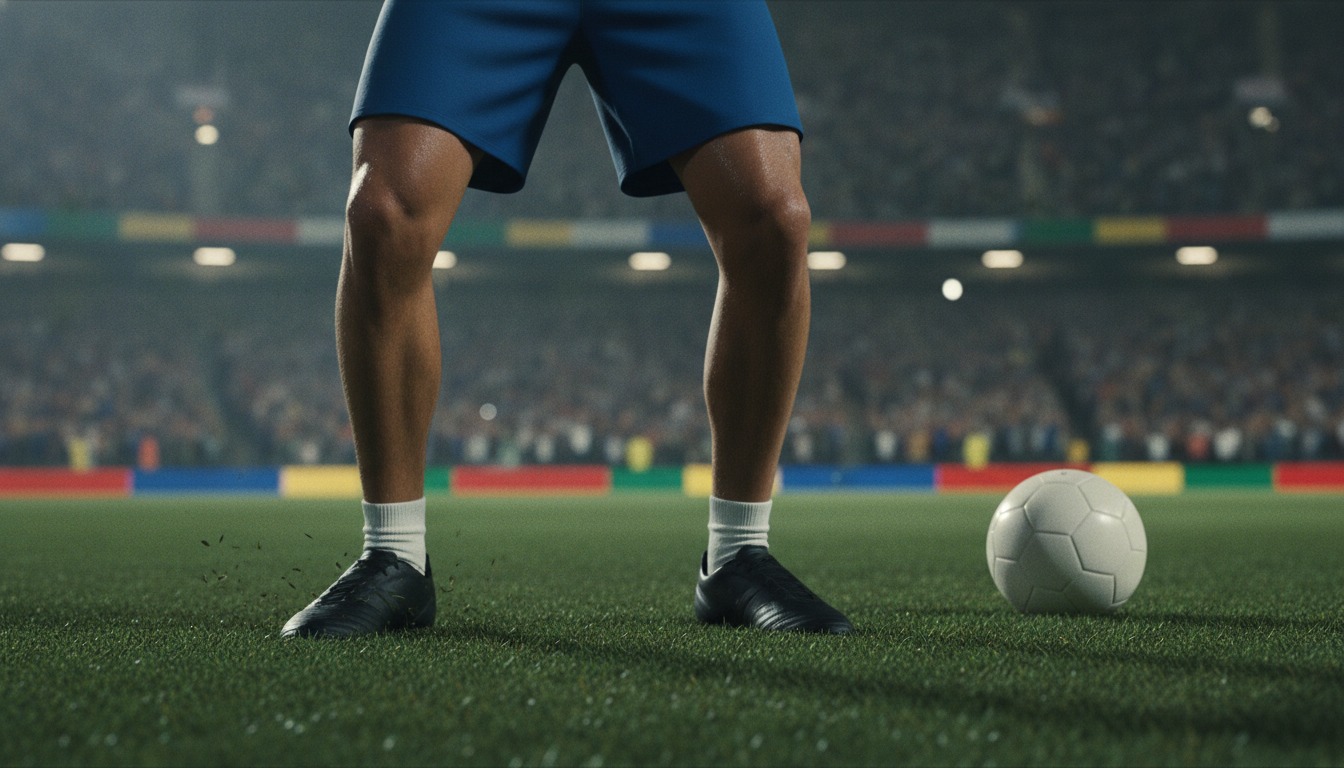
Why are footballers' legs curved?
Why are footballers' legs curved?
Look at a group of professional footballers standing in a tunnel and you will notice it: legs that curve outward at the knee, bowing away from each other even when the feet are together. It is not a coincidence, and it is not an injury.

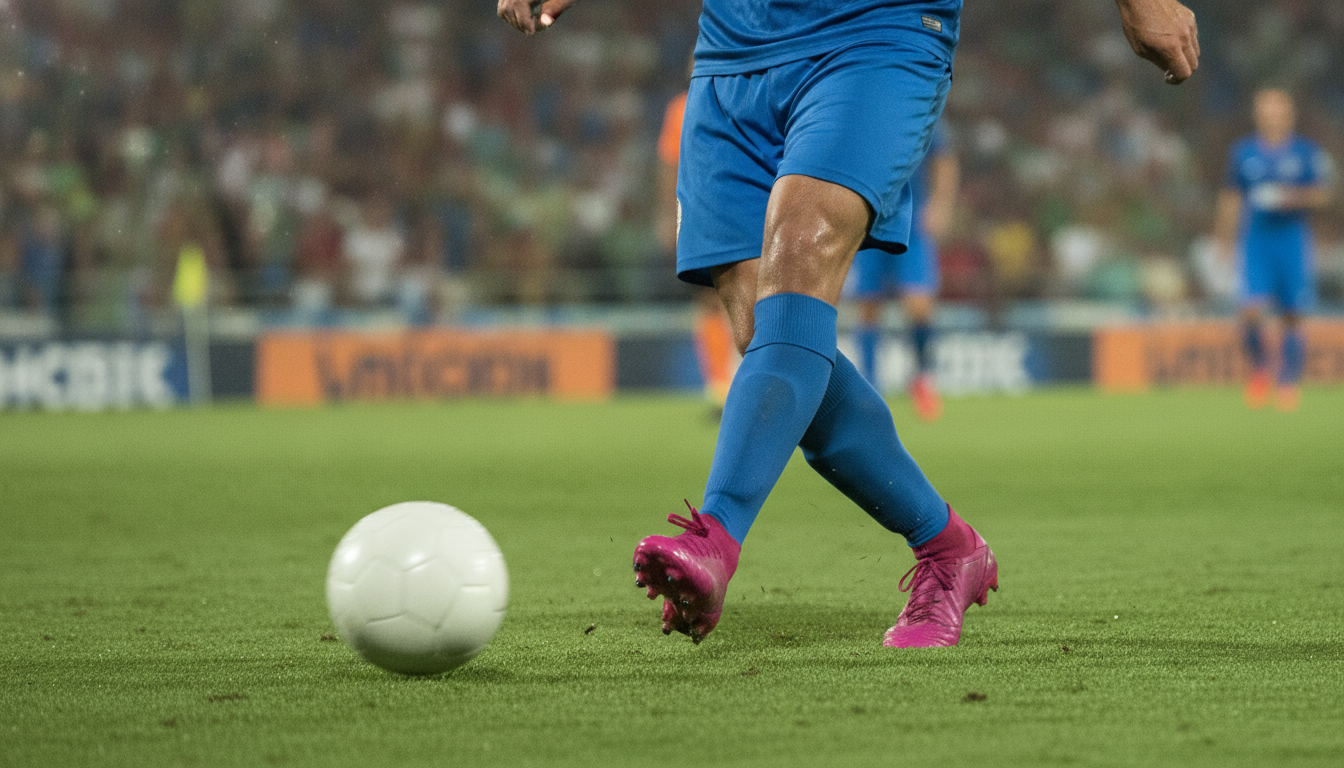
Stand behind a professional footballer and look at their legs from the knee down. On many players, there is a visible gap between the knees even when the feet are side by side — the shins and thighs curving outward in a gentle bow. It is one of the most consistent physical traits across the professional game.
The short answer is that years of heavy training during childhood and adolescence bend the bones as they grow.
Bones are not rigid finished structures in young players. They are still forming, and the growth plates — the soft tissue near the ends of bones where new bone is produced — are sensitive to the forces placed on them. Kicking a ball repeatedly, and doing so thousands of times from a very young age, puts asymmetric stress on those plates. The load is not even. It pushes harder on one side of the bone than the other, and over years of development, the bone grows to reflect that. The result is genu varum, the medical term for bowed legs, which is a commonly recognised trait among professional footballers.
The earlier and more intensely a player trains during their growing years, the more pronounced this effect can be. A child who begins serious football at five or six and trains daily through their teens is putting those forces through their legs for the entire period when their bones are most responsive to outside pressure. The skeleton, in a very literal sense, is shaped by what it is asked to do.
Genetics also plays a part. Some people are predisposed to a degree of leg curvature regardless of what sport they play, and a player who was always going to have slightly bowed legs may find that football training amplifies what was already there. The two causes are not in competition — they work together, and it is rarely possible to say how much of any individual player's curvature comes from one source or the other.
What the curvature does not mean is that something has gone wrong. Bowed legs in footballers are not a sign of injury, malnutrition or poor development. Many players with pronounced curvature have long careers at the highest level. The shape is a record of how the body adapted to an enormous workload during the years it was still being built — not damage, but a kind of physical history.
The edge most people do not think to ask about is whether this works in reverse: could the curvature ever be an advantage? There is no settled answer, but some coaches and physios have suggested that a wider stance and lower centre of gravity — both associated with bowed legs — may help with balance and the ability to change direction quickly. That remains debated. What is not debated is that the shape is real, common, and starts forming long before a player ever steps onto a professional pitch.
The day's football, in your inbox at 7 AM. Nothing else.
Pick of the night's matches, what the transfer window's doing, and the one column you should read today. No ads. No tips. No operators.
One-click unsubscribe. We do not share emails.
Comments
Loading comments…