
 BUR1
BUR1 MID1
MID1 MIL0
MIL0 WXM3
WXM3 QPR2
QPR2 CAR1
CAR1 WBA1
WBA1 CHA1
CHA1 FALK1
FALK1 RAN2
RAN2 CEL3
CEL3 ABE0
ABE0 DUN1
DUN1 STJ1
STJ1 KIL0
KIL0 STM1
STM1 MOT3
MOT3 DUN0
DUN0 IPS
IPS LIV
LIV LCL
LCL MAN
MAN HIBS
HIBS HOM
HOM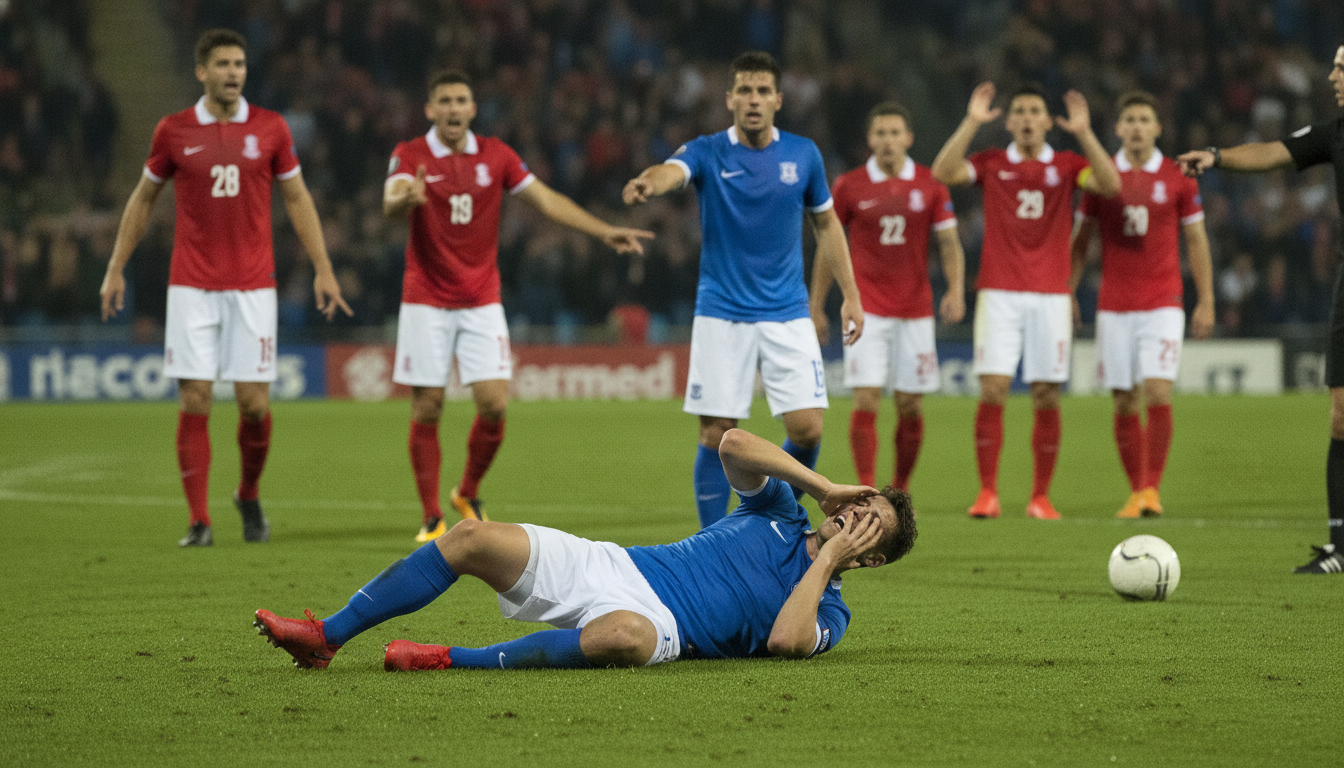
Why are footballers so dramatic when they fall?
Why are footballers so dramatic when they fall?
A striker clips a defender's ankle, and the defender goes down clutching his face like he's been shot. Here's why that happens so often.

A forward is running through on goal. A defender gets a hand to the ball but catches his shin too. The forward doesn't just stumble, he goes down like he's been hit by a car, rolling twice, both hands on his leg, mouth open in a silent scream. The referee's whistle goes. Penalty.
The answer is simple: it works, or players believe it does. Referees make decisions in real time, often without a clear view of contact, and a dramatic fall is a signal that says "something happened here, look closer." A player who stays on his feet after a foul is far less likely to get it given than one who goes down clutching a body part. So players learn to sell the moment, because the alternative is play carrying on and the foul going unpunished.
There are several different reasons this happens, and they're not all the same thing. The most obvious is winning a free kick or penalty, a player makes minimal contact look like a leg-breaker because the reward, a set piece or a spot kick, is worth the theatre. A second reason is getting an opponent booked or sent off. If a defender's challenge looks reckless enough, a card follows, and a team down to ten men is a huge advantage, so the player on the receiving end has an incentive to make it look as bad as possible.
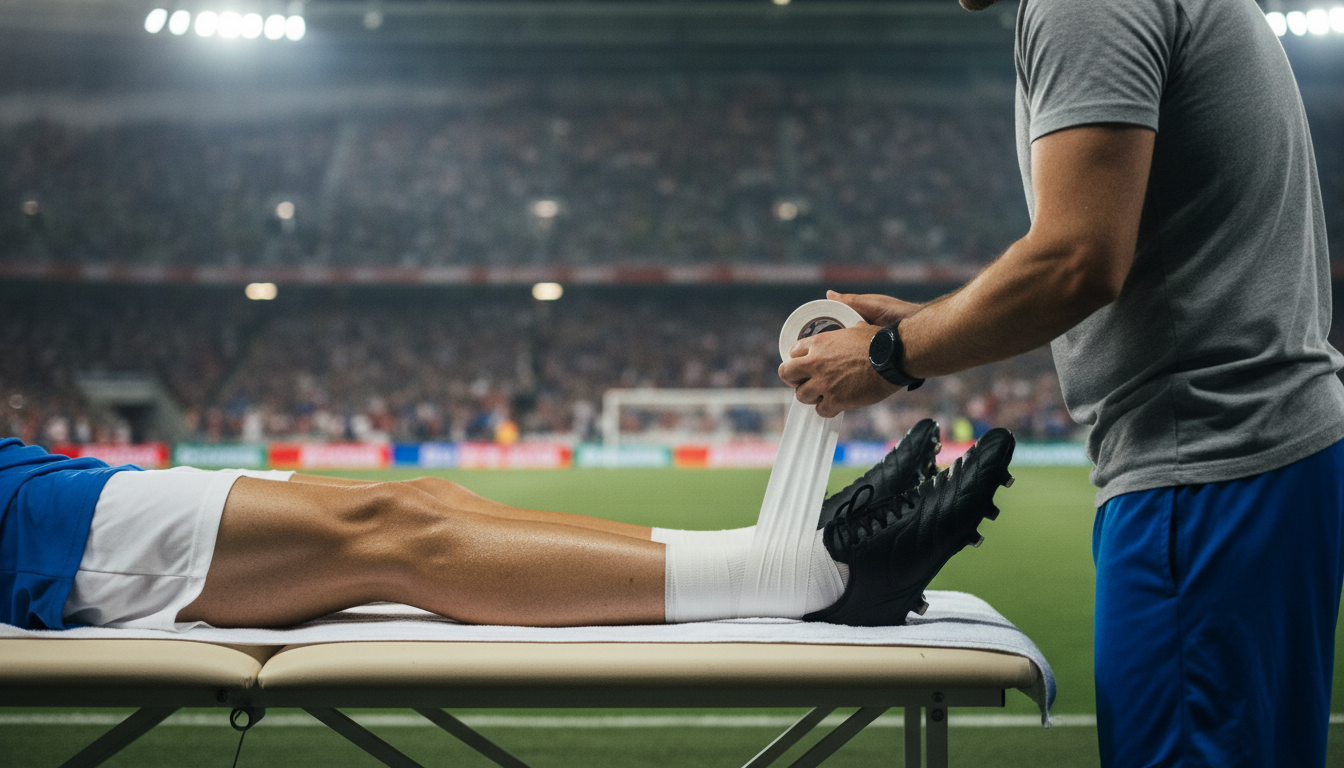
A third reason has nothing to do with fouls at all: time-wasting. A player in a winning position, deep into the second half, might stay down after the mildest knock, needing treatment, breaking the game's rhythm, running the clock down. It's a tactic as much as a reaction, the ball is dead, the opponent's momentum is dead, and a few minutes disappear.
But not every dramatic fall is calculated. Genuine collisions produce genuine shock, and adrenaline does strange things to how pain registers. A player kicked hard in a tackle can feel a jolt that's disproportionate to the actual damage, and the body's response, going down, curling up, gripping the injured area, looks identical whether the contact was serious or slight. Shock and adrenaline can make someone react far more dramatically than the injury on its own would explain, which means an honest reaction and a performed one can look exactly the same from the stands or on a replay.
That overlap is what makes this such a persistent argument in football. A defender insists he barely touched his man; the attacker insists he was fouled hard enough to go down; and often, both of them are telling the truth about how it felt to them in that instant. Slow-motion replays sometimes settle it, showing minimal contact against a wild-looking fall, and sometimes don't, because a genuinely painful knock can still look theatrical once a player's already hit the turf rolling.
This whole pattern has a name: simulation, more commonly just called diving. It's one of the most argued-over subjects in the sport, criticized by pundits, fans and opposing managers alike, precisely because it's so hard to prove intent from outside a player's own head. A tumble that wins a penalty in one match becomes the clip replayed for years as evidence of a reputation, fair or not. The gap between a player selling a foul and a player simply reacting to real pain is often invisible, which is exactly why the theatre keeps paying off.
The day's football, in your inbox at 7 AM. Nothing else.
Pick of the night's matches, what the transfer window's doing, and the one column you should read today. No ads. No tips. No operators.
One-click unsubscribe. We do not share emails.
Comments
Loading comments…