
 BIR1
BIR1 BRE6
BRE6 NFO0
NFO0 LEE2
LEE2 BAR3
BAR3 CAX2
CAX2 BLK1
BLK1 SHU2
SHU2 BLP1
BLP1 LCN4
LCN4 CAM0
CAM0 MIL1
MIL1 FLE4
FLE4 SHR0
SHR0 IPS3
IPS3 LEI1
LEI1 PLY2
PLY2 COV4
COV4 SHW0
SHW0 WOL2
WOL2 SOU1
SOU1 WHU4
WHU4 STE0
STE0 REA3
REA3 STK1
STK1 HUL1
HUL1 WAL0
WAL0 LEY0
LEY0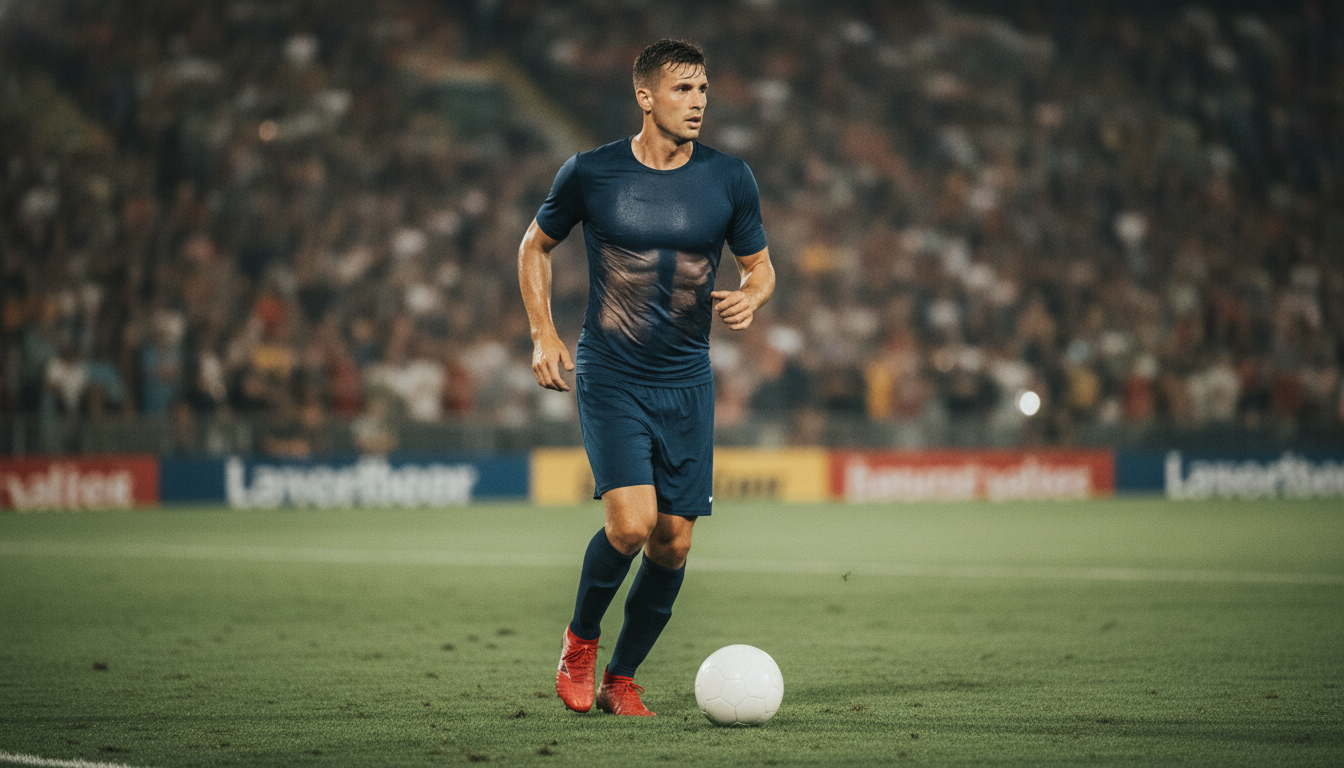
Why are footballers so skinny?
Why are footballers so skinny?
Strip off the shirt and most professional footballers look more like distance runners than gym athletes. There is a straightforward reason for that.

Stand pitchside during the warm-up and the first thing that strikes you is how little is there. Narrow waists, visible muscle definition, almost no softness anywhere. These are athletes who train every day and eat to a plan, and it shows.
The short answer is that carrying extra weight in football is a direct disadvantage. Players cover 10 to 13 kilometres every match, much of it at high speed. Every kilogram of unnecessary mass slows acceleration and brings fatigue forward. The body a footballer develops is the body the sport demands.
What reads as 'skinny' is almost always a very low body-fat percentage sitting on top of lean muscle. The overall frame is slight because there is almost no fat layer to fill it out, and because football does not reward the kind of bulk a weightlifter or rugby prop would carry. Bulk costs speed. Speed wins matches.
Diet and training are tightly controlled at professional clubs to keep players in that condition. Nutrition is planned around training load, recovery and match schedule. Players are not simply thin by nature — they are kept lean by design, and the programme is continuous across a season that runs for the better part of ten months.
The sport also selects for this shape over time. A teenager who is naturally agile and slender tends to progress further in football than one who is heavier, because the game keeps rewarding the qualities that come with a lean build: quick changes of direction, sustained running, rapid acceleration. By the time a player reaches the professional level, the ones who remain are largely those whose bodies suited the demands in the first place.
Not every position looks identical. Wide forwards and full-backs, who depend most heavily on pace over long stretches of a match, tend to be the leanest players on the pitch. Central defenders and holding midfielders sometimes carry slightly more muscle through the upper body, because their work involves more physical contact and less pure sprinting. The difference is subtle but visible if you look for it.
The comparison that makes most sense is a distance runner rather than a sprinter or a gym athlete. A sprinter builds explosive muscle mass. A gym athlete builds size. A distance runner strips everything back to what is needed and nothing more. A footballer sits somewhere close to that last category — lean enough to run far, strong enough to compete physically, but never carrying weight that does not earn its place.


The day's football, in your inbox at 7 AM. Nothing else.
Pick of the night's matches, what the transfer window's doing, and the one column you should read today. No ads. No tips. No operators.
One-click unsubscribe. We do not share emails.
Comments
Loading comments…