
 BUR1
BUR1 MID1
MID1 MIL0
MIL0 WXM3
WXM3 QPR2
QPR2 CAR1
CAR1 WBA1
WBA1 CHA1
CHA1 FALK1
FALK1 RAN2
RAN2 CEL3
CEL3 ABE0
ABE0 DUN1
DUN1 STJ1
STJ1 KIL0
KIL0 STM1
STM1 MOT3
MOT3 DUN0
DUN0 IPS
IPS LIV
LIV LCL
LCL MAN
MAN HIBS
HIBS HOM
HOM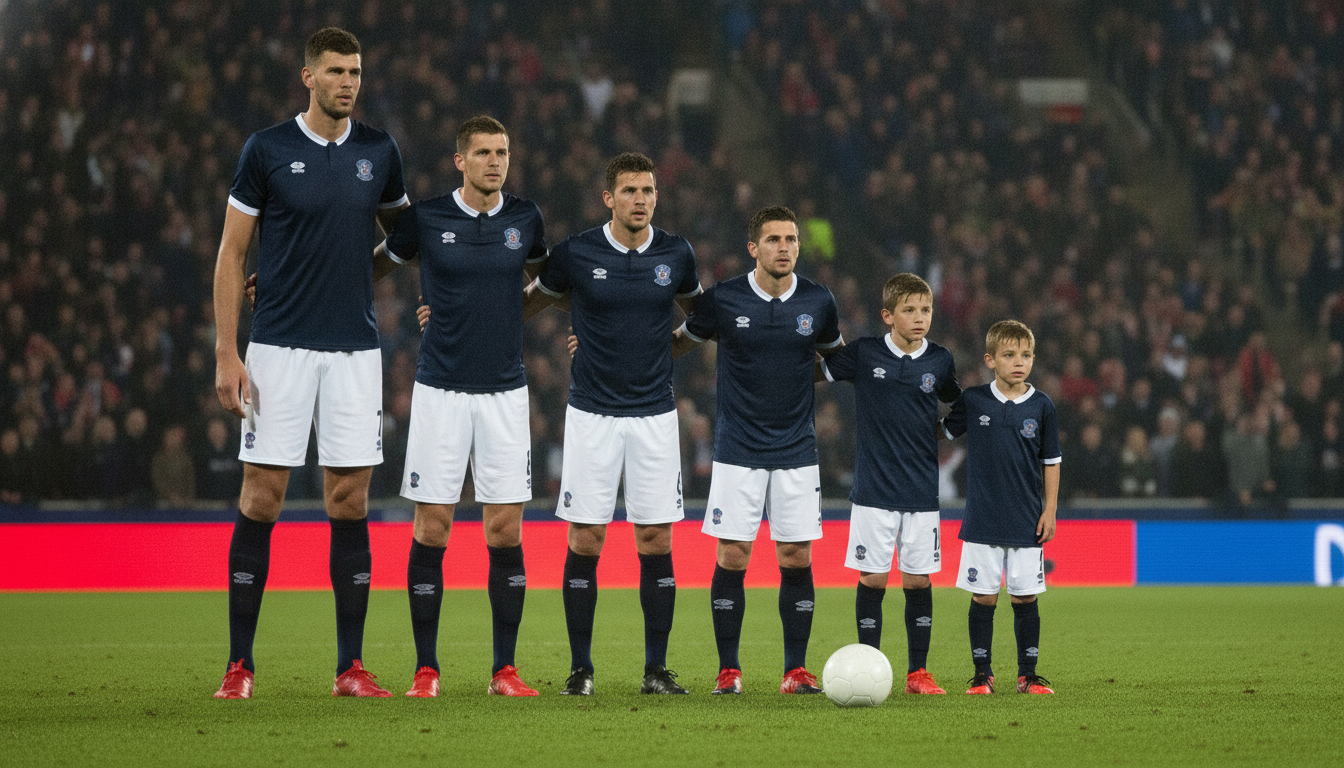
Why Are Footballers So Tall?
Why Are Footballers So Tall?
Watch a corner kick and the tallest men on the pitch crowd the six-yard box. Watch the winger who delivered it, and he might be a foot shorter. Height in football isn't universal, it's a job requirement for some positions and irrelevant for others.

Picture a goalkeeper standing under the crossbar, arms stretched to the woodwork, or a centre-back rising above two attackers to head a corner clear. That size isn't an accident. It's the reason those two players were picked for those two jobs in the first place.
Footballers aren't uniformly tall. Clubs recruit height for specific roles because it solves specific problems. Goalkeepers need reach to cover the goal. Centre-backs need to win headers in their own box and dominate the physical scrap that happens at corners and free-kicks. Target-man strikers are often chosen partly for height too, because being hard to out-jump helps them hold the ball up with their back to goal and win it in the air when a cross comes in.
That selection starts early. Scouts and academies notice a tall teenager who can defend a cross or dominate a box, and they steer him toward centre-back or goalkeeper before he's even finished growing. Over years of youth football, the position sorts players by build almost as much as by skill, the tall kids end up at the back or in goal, the smaller, quicker kids end up further forward.
But plenty of the best players in the world are short. Wingers and playmakers are picked for completely different qualities, quick feet, close control, the ability to turn in a tight space, acceleration over five yards. None of that requires height, and in a crowded penalty area or a tight midfield battle, a lower centre of gravity can actually help. So while the back four and the goalkeeper often look like a basketball lineup, the front three can be built entirely differently, and often are.
The result is a squad that looks lopsided if you line everyone up by height. The goalkeeper and centre-backs tower over the wingers and the smallest attacking midfielder. That's not inconsistency, it's the game sorting bodies into the roles where their size is either an asset or simply doesn't matter.
This sorting isn't a strict rule anyone enforces, it's a pattern built from what tends to work, and it varies. Some clubs value a shorter, quicker centre-back who reads the game well over a taller one who's slower to turn. Some target men are more about strength and positioning than raw height. The tall-goalkeeper, tall-defender pattern is common because it usually works, not because anyone requires it, and short players have won titles, headers, and everything else that height is supposed to help with.
Football looks tall at the back and in goal because that's where height pays off most directly, and looks completely different further forward, where other qualities matter more. Both ends of that spectrum are the same sport, just solving different problems.
The day's football, in your inbox at 7 AM. Nothing else.
Pick of the night's matches, what the transfer window's doing, and the one column you should read today. No ads. No tips. No operators.
One-click unsubscribe. We do not share emails.
Comments
Loading comments…