
 MAN0
MAN0 MNC1
MNC1 COV0
COV0 BHA5
BHA5 SUN0
SUN0 ARS2
ARS2 TOT0
TOT0 EVE0
EVE0 BOU2
BOU2 BRE2
BRE2 AVL1
AVL1 NFO2
NFO2 CHE2
CHE2 HUL2
HUL2 CRY2
CRY2 IPS3
IPS3 LIV0
LIV0 FUL0
FUL0 SHU0
SHU0 WOL1
WOL1 BLK3
BLK3 MIL1
MIL1 CHA0
CHA0 POR0
POR0 MID4
MID4 NOR3
NOR3 PNE0
PNE0 LCN1
LCN1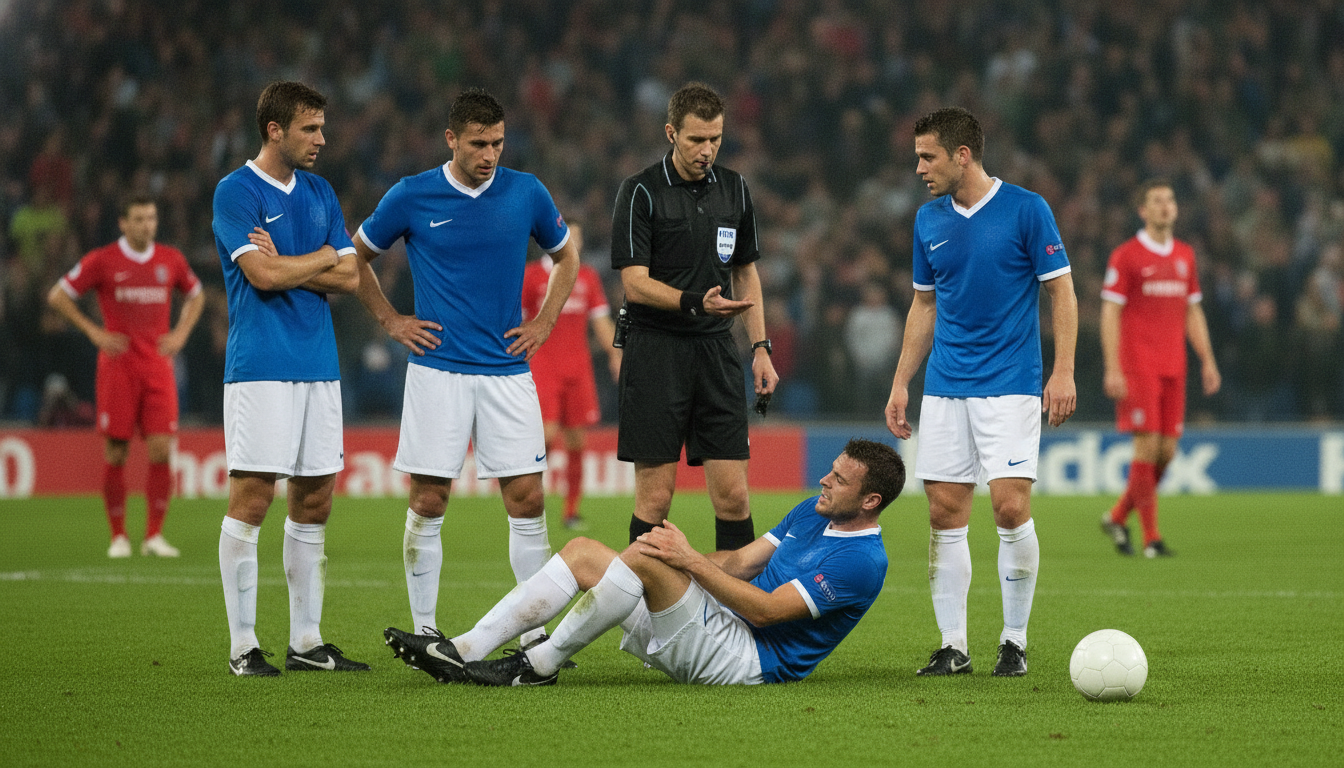
Why Do Football Players Get Hurt So Easily?
Why Do Football Players Get Hurt So Easily?
A striker barely brushes an ankle and the other player goes down clutching his shin, rolling twice, face screwed up in pain. It looks absurd from the stands. It is not always what it looks like.

Picture the moment properly first: a tangle of legs near the touchline, a stray boot catches an ankle, and the player who was touched drops to the ground immediately, sometimes grabbing a completely different part of his body, sometimes lying still for a few seconds before the physio even arrives. Fans watching on television often laugh at how little contact there seemed to be. The truth is a mix of two things happening at once, and they look identical from a distance.
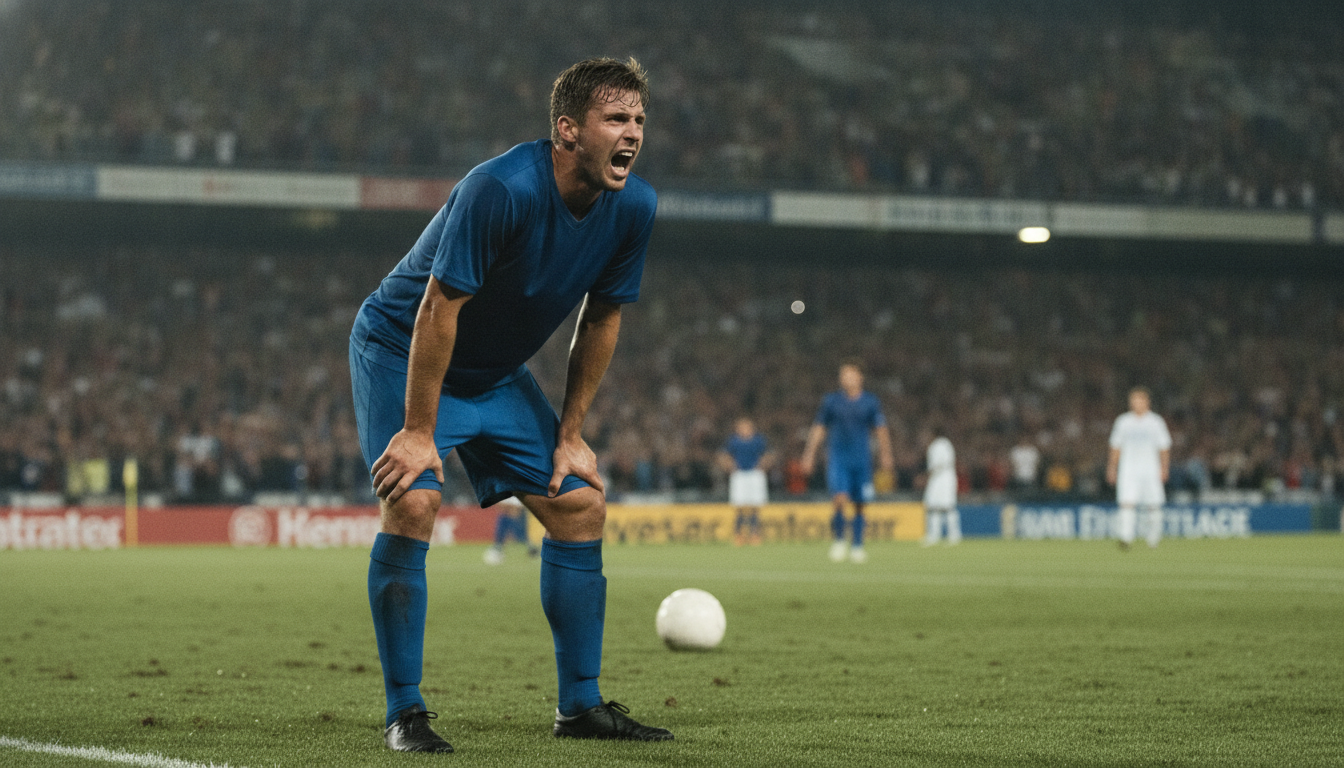
Some of it is genuinely painful. Shin pads are thin plastic, not armour, and a stud driven into the shin or ankle at pace can hurt sharply even when the contact looks glancing on a replay. Boots are light and studded for grip, not padded for protection, so a stamp or a raked touch on the achilles or the top of the foot can sting far more than the size of the contact suggests. What looks like nothing to a viewer thirty rows back can be a genuine jolt of pain to the person it happened to.
Some of it is not about pain at all. Going down and reacting can win a free kick in a dangerous area, or a penalty if it happens in the box. It can also get an opponent booked or sent off, since referees often make quicker decisions when a player appears badly hurt. That gives some players a reason to make more of a knock than it deserves, or to react to contact that barely touched them. This is a known and old part of the game, not a secret, and pundits and former players talk about it openly.
Adrenaline complicates both of these. During a match the body is flooded with it, and adrenaline dulls pain signals in the short term, which is why players sometimes play through a knock they only feel properly afterwards. It can also work the other way: a player who has just been fouled, is angry, or is aware the referee is watching, can react more sharply and more visibly than the injury alone would produce. Adrenaline does not just numb pain, it also changes how and when a player chooses to show it, and that makes it very hard for anyone watching, including the referee, to separate a real injury from a dramatic one just by looking.
The tactic that catches most people out is time-wasting. Late in a match, especially when a team is ahead, a player going down injured stops the clock, breaks the other side's rhythm, and forces a stoppage that eats into the minutes left to play. It does not need to be a serious injury, or even a real one, to work. A player can be perfectly fine and still stay down for twenty or thirty seconds because those seconds are useful to his team. This is why the same player can sprint back up seconds after leaving the field, to the visible irritation of the crowd and the opposition alike.
None of this means every collapse is theatre. Genuine injuries happen constantly in football, from studs catching bone to ankles rolling awkwardly on a mistimed tackle, and players who are actually hurt often look exactly like players who are pretending, because the physical positions are the same. The only honest answer is that both things are true in the same match, sometimes in the same passage of play, and there is rarely a clean way to tell them apart from the stands or the sofa.

The day's football, in your inbox at 7 AM. Nothing else.
Pick of the night's matches, what the transfer window's doing, and the one column you should read today. No ads. No tips. No operators.
One-click unsubscribe. We do not share emails.
Comments
Loading comments…