



Why do footballers spit so much?
Watch a player during a hard press or a lung-burning sprint and you will see it: head dips, a short pause, and a stream of saliva hits the grass. It is not a habit they have picked up from television. It is the body doing something it was always going to do.
Intense running pushes the body into a state where it produces more saliva and mucus than usual. Swallowing that build-up mid-sprint is genuinely uncomfortable — the throat is already working hard just to move air — so the reflex is to clear it outward instead. The spit you see is the path of least resistance.
Mouth-breathing makes this worse. At high intensity, players stop breathing through their nose almost entirely and take in air through the mouth. That dries the throat quickly, and the body responds by producing more mucus to protect the lining. More mucus means more to clear, and clearing it means spitting.
Weather plays a part too. In cold or dry conditions, mucus production goes up further as the body tries to warm and humidify the air coming in. A match played on a sharp winter afternoon will produce noticeably more spitting than one in mild conditions, for no other reason than the air itself.
The rinsing habit adds another layer. During stoppages — a goal kick, a free kick, a brief break in play — players often take a mouthful of water or a sports drink, swill it around, and spit it back out. They are not wasting the drink. Rinsing the mouth with a carbohydrate solution has a known effect on how the brain perceives effort, and swallowing a full mouthful of liquid during a match can cause discomfort when running resumes. Spitting the rinse out is the practical choice.
None of this is a decision players consciously make mid-match. The conditions of the game — the effort, the breathing, the cold, the rinsing — create the urge, and the urge is acted on without much thought. That is why it looks so unremarkable when it happens, and why it happens so often.
More on Other football
See more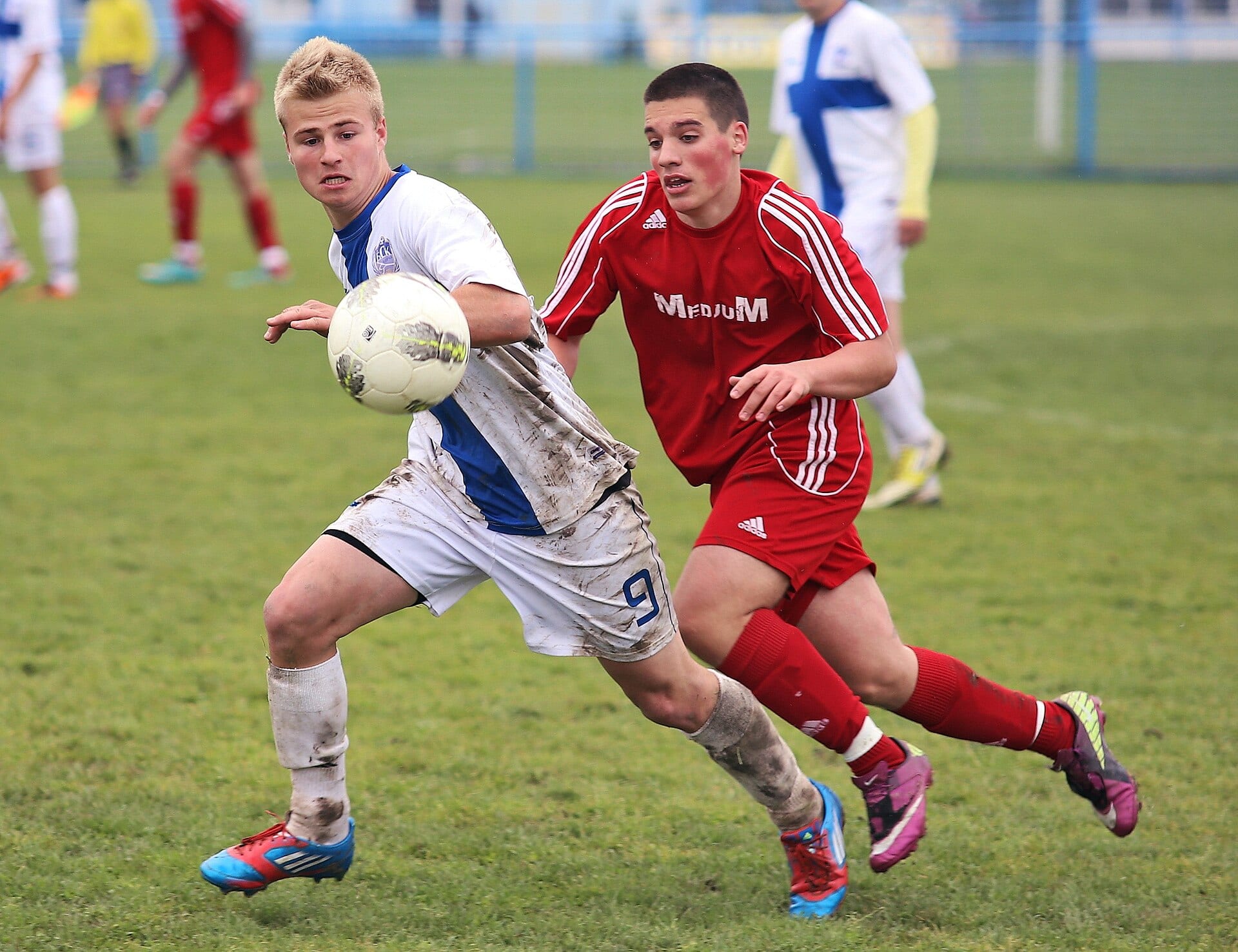

“Another angle on the same week.”
 MORE
What Happens When a Football Club Goes Into Administration?
A club's badge stays on the shirts and the fixtures still go ahead, but somewhere behind the scenes the owners have lost control of the cheque book. Here's what actually changes when the administrators walk in.
The day's football, in your inbox at 7 AM. Nothing else.
Pick of the night's matches, what the transfer window's doing, and the one column you should read today. No ads. No tips. No operators.
One-click unsubscribe. We do not share emails.
Comments
Loading comments…