


Why do footballers wear bras?
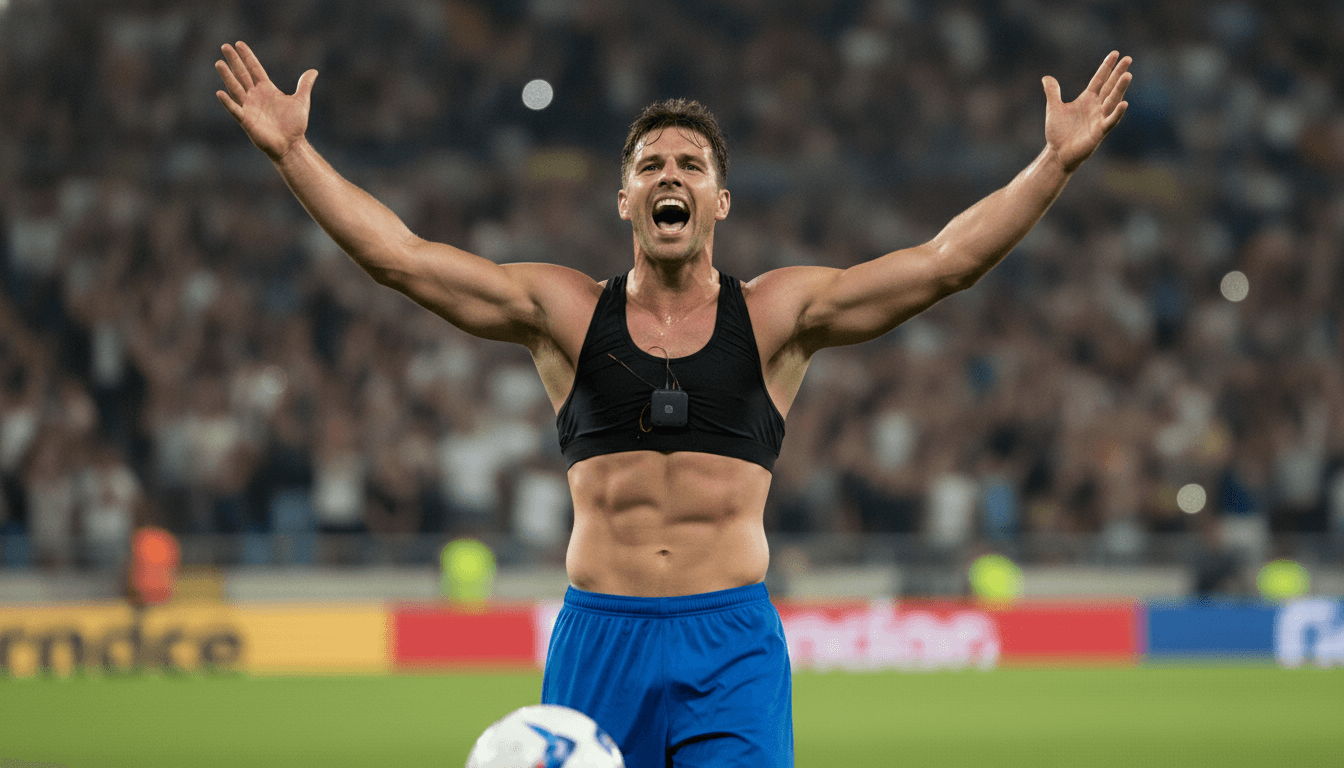
A striker scores, pulls his shirt over his head, and underneath is what looks like a pale, tight-fitting sports bra — two shoulder straps meeting a small rectangular lump sitting between his shoulder blades. That lump is the point of the whole thing.
The vest is a GPS tracking device holder. The straps keep a small pod pressed firmly against the upper back, and that pod is recording everything: how far the player has run, how fast, how many times he has sprinted, how sharply he has accelerated or braked, and what his heart rate is doing throughout. The vest itself is just the cradle. The pod is the instrument.
Clubs use the numbers to manage how hard each player is working across a week. If a midfielder has covered an unusually high distance in three matches in a row, the data will show it before his legs do. Coaching and medical staff can then pull back his training load, rest him earlier, or flag him as a higher injury risk before anything actually goes wrong. The goal is to keep players available rather than to treat them once they break down.
The nickname comes from the look of it. The elastic straps cross the chest in roughly the same way a sports bra does, and when a player strips off his shirt the resemblance is close enough that the name stuck. It is not a term the clubs use — they tend to say GPS vest or tracking vest — but it is the word most people reach for, and it is not hard to see why.
The reason it catches people off guard is simple: you cannot see it during the match. It sits under the shirt, invisible for ninety minutes, and only appears in the brief moment a player celebrates or changes his top. That flash of elastic and pod is enough to send a clip around social media with people asking what on earth they are looking at.
One thing worth knowing: the vest is not worn in every session or every match automatically. Clubs decide when to use them based on what they want to measure. A high-intensity training day might call for full tracking across the squad; a light recovery session might not. Some players wear them in matches, some in training only, and the decision sits with the coaching and performance staff rather than the player.
The data collected does not just disappear into a spreadsheet. It feeds into decisions about who starts, who is rotated, and who needs a week away from the pitch. At the level where margins between winning and losing are small, knowing that a player's sprint output has dropped fifteen percent over a run of games is the kind of detail that shapes a team selection.
More on Other football
See more

“Another angle on the same week.”
 MORE
What Happens When a Football Club Goes Into Administration?
A club's badge stays on the shirts and the fixtures still go ahead, but somewhere behind the scenes the owners have lost control of the cheque book. Here's what actually changes when the administrators walk in.
The day's football, in your inbox at 7 AM. Nothing else.
Pick of the night's matches, what the transfer window's doing, and the one column you should read today. No ads. No tips. No operators.
One-click unsubscribe. We do not share emails.
Comments
Loading comments…