
 MIL0
MIL0 NEW1
NEW1 BOU4
BOU4 LCN0
LCN0 CRY3
CRY3 MID0
MID0 LEY1
LEY1 BRD3
BRD3 SUN1
SUN1 HUL0
HUL0 BOL2
BOL2 WHU3
WHU3 BLK1
BLK1 SHU2
SHU2 CAR1
CAR1 STK1
STK1 SOU3
SOU3 SWA1
SWA1 WAT2
WAT2 PNE1
PNE1 WXM1
WXM1 BUR1
BUR1 DOR3
DOR3 VIL2
VIL2 FCP0
FCP0 MNC2
MNC2 LILL2
LILL2 BET3
BET3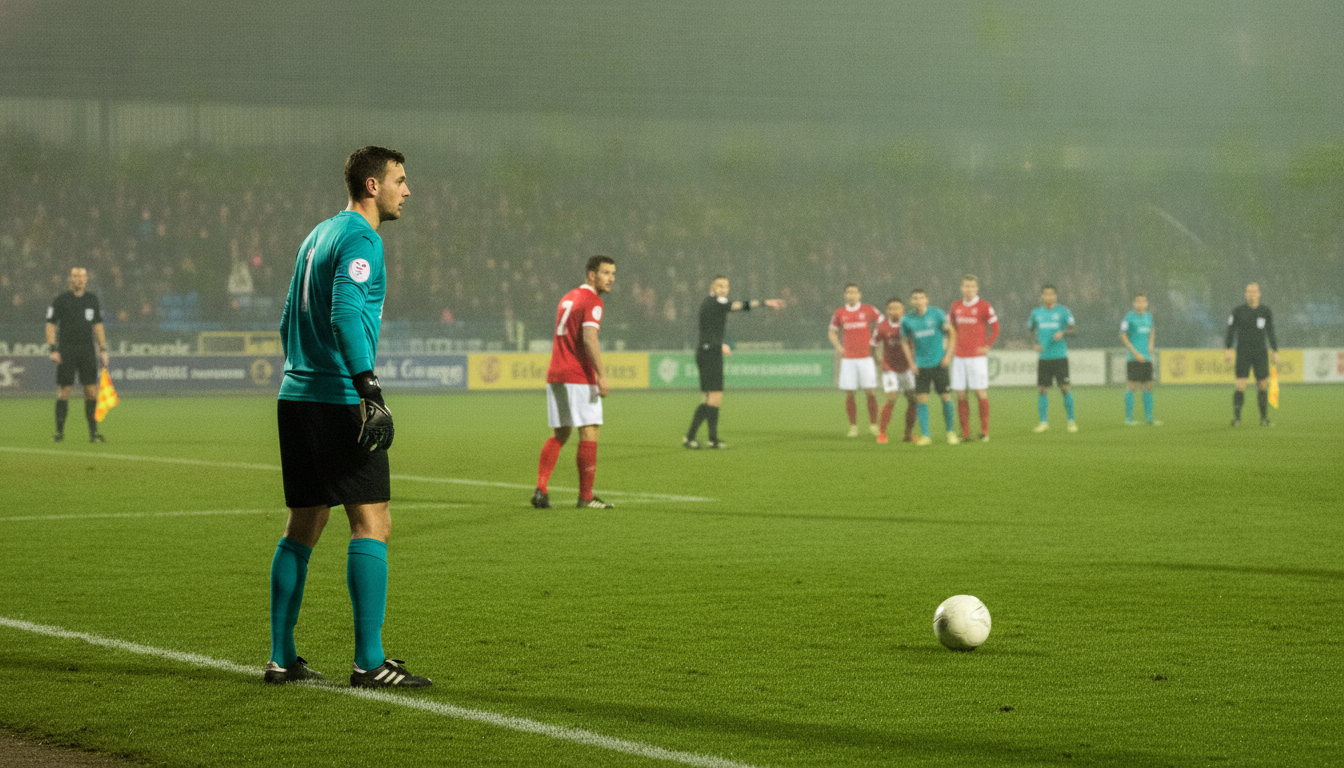
Can a Goalkeeper Be Offside?
Can a Goalkeeper Be Offside?
It happens maybe once a season: a goalkeeper jogs forward for a last-gasp corner and ends up stood deep in the opponent's box, level with strikers. Is that legal? The Laws of the Game say yes, and no, in the same breath.

Picture it: injury time, a corner is about to be swung in, and the goalkeeper has left their own line and jogged the length of the pitch to stand on the edge of the six-yard box, shoulder to shoulder with defenders. Nobody stops the game. Nobody even checks the flag. That goalkeeper, physically, is exactly where a striker would be flagged for standing.
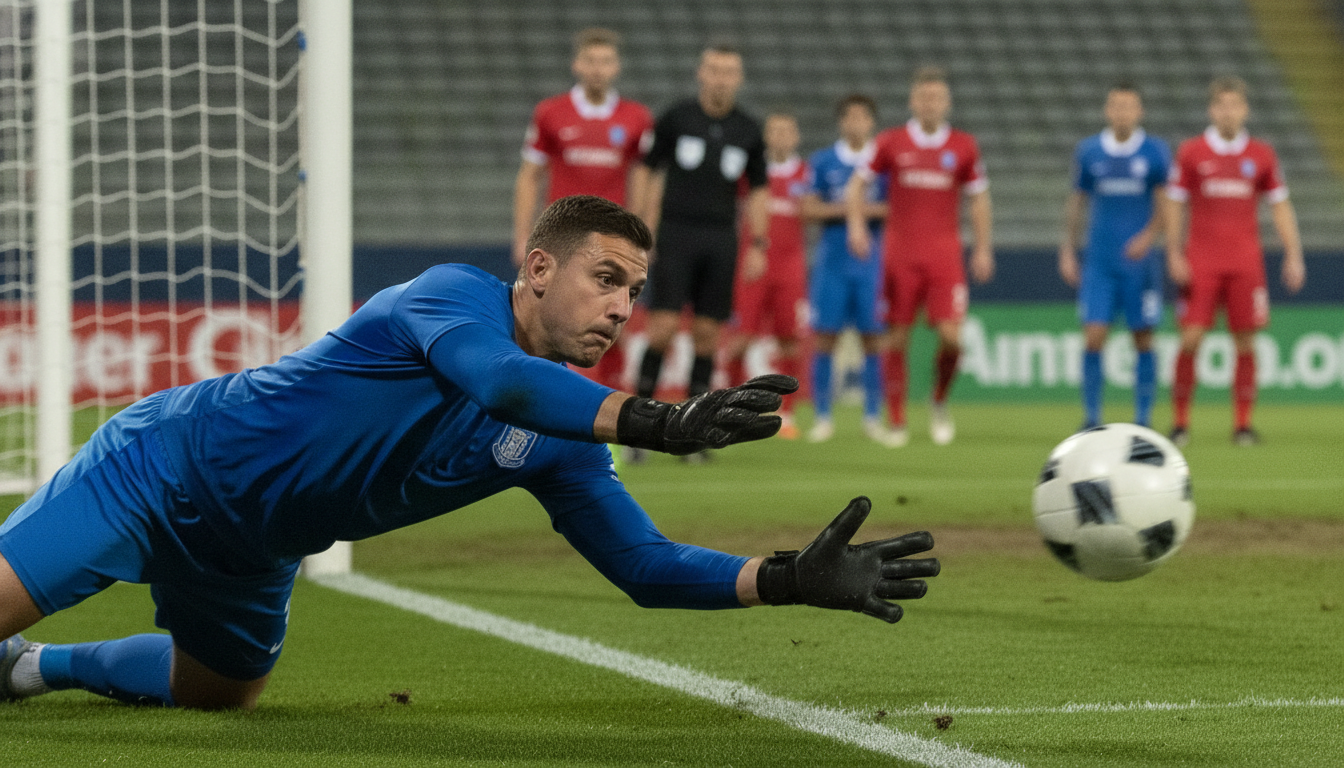
A goalkeeper can be offside. There is nothing in the Laws of the Game that makes goalkeepers a special case for position, the rule is written for "all players" and a goalkeeper is a player. What decides offside position has nothing to do with which gloves someone is wearing and everything to do with where their body is.
IFAB's Law 11 spells out the position test in one sentence: "A player is in an offside position if: any part of the head, body or feet is in the opponents' half (excluding the halfway line) and any part of the head, body or feet is nearer to the opponents' goal line than both the ball and the second-last opponent." Read that again and notice what it does not say, it does not say outfield player, it does not say striker, it says player. A goalkeeper who wanders past the second-last defender and the ball is, by the letter of the law, standing offside.
There is one carve-out, and it applies to every player on the pitch, keepers included. The Laws add: "The hands and arms of all players, including the goalkeepers, are not considered." So a goalkeeper's flung-out arm, or the hand raised to catch a cross, does not count toward the offside line, only the head, body and feet do. That exclusion exists because keepers (and defenders in general) stretch their arms and hands further than their body position would otherwise suggest, and the law does not want a fingertip deciding a goal.
Being in an offside position is not itself an offence, and that is where the theory almost never turns into a whistle. A player, goalkeeper or otherwise, is only penalised for being offside if they become involved in active play: interfering with an opponent, interfering with play by touching the ball, or gaining an advantage from the position. A goalkeeper camped upfield for a stoppage-time set piece is offside in position but does nothing with the ball, so referees have nothing to penalise. It is only if that goalkeeper then gets a touch, or blocks a defender's route to the ball, that the flag has any reason to go up.
The edge case worth knowing is the reverse situation: a goalkeeper cannot be caught offside by their own goal line, no matter how far outfield players push up, because offside position is measured against the opponents' half and the opponents' goal line, not your own. The only way a keeper gets flagged is by doing what almost no goalkeeper ever does, running past the last defender at the other end and then touching the ball.
Sources1 source
IFAB Laws of the Game — Law 11: Offside, IFAB Laws of the Game — Law 11: Offside
Flagside's editors read every piece we publish. We work from the football press, write our own copy rather than reprinting anyone's, and check each article for accuracy and sourcing. Every outlet that fed into this piece is named under Sources.

The day's football, in your inbox at 7 AM. Nothing else.
Pick of the night's matches, what the transfer window's doing, and the one column you should read today. No ads. No tips. No operators.
One-click unsubscribe. We do not share emails.
Comments
Loading comments…