
 ARS2
ARS2 CHE1
CHE1 EVE2
EVE2 MAN2
MAN2 BIR2
BIR2 WOL2
WOL2 MNC3
MNC3 BIR1
BIR1 CHA0
CHA0 LIV4
LIV4 CRY1
CRY1 EVE0
EVE0 BHA0
BHA0 ARS1
ARS1 TOT3
TOT3 WHU1
WHU1 HOM2
HOM2 DUN1
DUN1 STJ2
STJ2 HIBS1
HIBS1 BOU
BOU LCN
LCN CRY
CRY MID
MID LEY
LEY BRD
BRD SUN
SUN HUL
HUL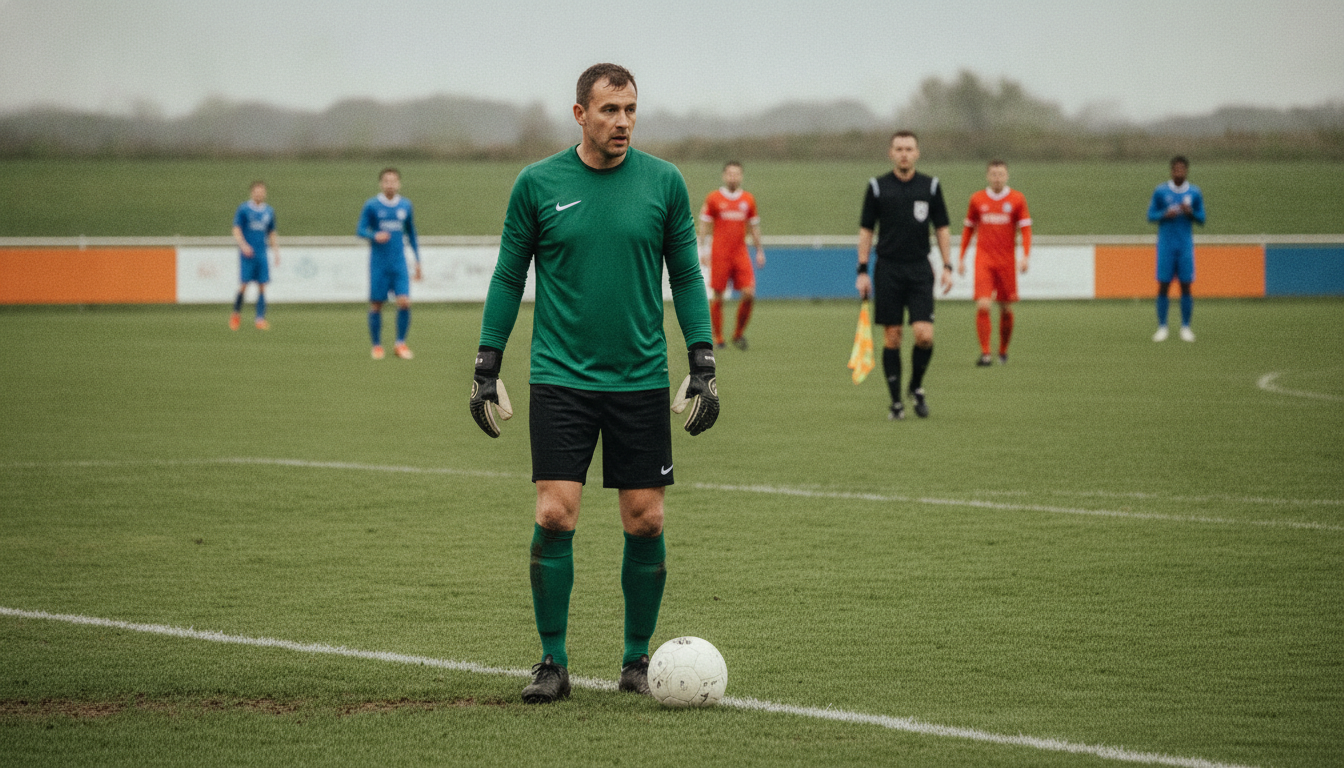
Can a Goalkeeper Leave the Box?
Can a Goalkeeper Leave the Box?
A striker breaks clear through the middle, one-on-one, and the goalkeeper doesn't wait on the line, they sprint off their line, out past the penalty area, arms wide, to meet the attacker before the shot ever comes.

That sprint out of the box is legal, and it always has been. A goalkeeper can go anywhere on the pitch, into midfield, out to the touchline, even up for a last-minute corner, with exactly the same freedom of movement as any outfield player. The Laws of the Game do not put a leash on them.
What changes the moment they cross the line of the penalty area is not where their feet are, but what their hands are allowed to do. Inside the box, a goalkeeper can pick the ball up. Outside it, they can't, not without giving away a foul. If a goalkeeper handles the ball once they've stepped past that line, it's treated as an offense and the other team gets an indirect free kick from the spot where it happened. The running is free. The handling is not.
This is exactly the situation IFAB, the body that writes football's Laws of the Game, sets out as a worked example under Law 3: The Players. The scenario is a goalkeeper coming out to close down a one-on-one, and the wording is oddly specific about where it goes wrong: "An attacker runs with the ball towards the opponents' goal (one-on-one situation). The goalkeeper runs out of their penalty area and then fouls the attacker when they are 20 m in front of the goal (reckless challenge for the ball)." Twenty metres. Not "outside the box," not "near the edge of the area", twenty metres out, written into the lawbook as if someone measured it.
That precision matters because it settles the exact question a goalkeeper's rush so often raises: is this a foul inside the box or outside it? If the goalkeeper is that far out when the challenge happens, the offense has happened well clear of the penalty area, and the punishment follows from where the foul was committed, not from what usually happens near a goal. A reckless challenge that far out is a free kick and a caution, not the penalty and possible sending-off that the same tackle would bring six yards from goal.
The pattern behind all of this is that the Laws never treat the goalkeeper as tied to the box in the way commentary sometimes implies. They're a player who happens to be allowed to use their hands, and only within a specific zone. Strip away the handling privilege and a goalkeeper is just another body on the pitch, free to close down space, free to get caught upfield, free to be beaten by a lob from inside their own half if they've wandered too far to get back. The rush out to meet a one-on-one, arms spread, ball at the attacker's feet, isn't a goalkeeper bending a rule. It's a goalkeeper using the one freedom the Laws always gave them, and running into the one limit that was always there too, not the line of the box, but the ball in their own hands once they're past it.
Sources1 source
IFAB Laws of the Game — Law 3: The Players
Flagside's editors read every piece we publish. We work from the football press, write our own copy rather than reprinting anyone's, and check each article for accuracy and sourcing. Every outlet that fed into this piece is named under Sources.

The day's football, in your inbox at 7 AM. Nothing else.
Pick of the night's matches, what the transfer window's doing, and the one column you should read today. No ads. No tips. No operators.
One-click unsubscribe. We do not share emails.
Comments
Loading comments…