
 PNE0
PNE0 EVE4
EVE4 BRD0
BRD0 BUR0
BUR0 NEW3
NEW3 WBA2
WBA2 TOT5
TOT5 CHA1
CHA1 AEK4
AEK4 LEVS0
LEVS0 LYON1
LYON1 FEN2
FEN2 NKC1
NKC1 SLB2
SLB2 VIK3
VIK3 DZG1
DZG1 VIE2
VIE2 HOM2
HOM2 CRY
CRY MNC
MNC CHE
CHE LTN
LTN FUL
FUL WIM
WIM WXM
WXM BIR
BIR ARA
ARA UCRA
UCRA%22%20%2F%3E%0A%20%20%3Crect%20width%3D%22100%25%22%20height%3D%22100%25%22%20fill%3D%22url(%23glow)%22%20%2F%3E%0A%20%20%3Cg%20transform%3D%22rotate(-8%2C%20600%2C%20337.5)%22%3E%0A%20%20%20%20%3Crect%20x%3D%22-200%22%20y%3D%22418.5%22%20width%3D%221600%22%20height%3D%222%22%20fill%3D%22%23E4002B%22%20opacity%3D%220.136%22%20%2F%3E%0A%20%20%20%20%3Crect%20x%3D%22-200%22%20y%3D%22499.5%22%20width%3D%221600%22%20height%3D%221%22%20fill%3D%22%23E4002B%22%20opacity%3D%220.136%22%20%2F%3E%0A%20%20%3C%2Fg%3E%0A%20%20%3Ccircle%20cx%3D%22584%22%20cy%3D%22160%22%20r%3D%22370%22%20fill%3D%22%23E4002B%22%20opacity%3D%220.128%22%20%2F%3E%0A%20%20%3Ccircle%20cx%3D%22369%22%20cy%3D%22243%22%20r%3D%22167%22%20fill%3D%22%23E4002B%22%20opacity%3D%220.041%22%20%2F%3E%0A%20%20%3Ccircle%20cx%3D%22837%22%20cy%3D%22615%22%20r%3D%22130%22%20fill%3D%22%23E4002B%22%20opacity%3D%220.071%22%20%2F%3E%0A%20%20%3Ccircle%20cx%3D%22843%22%20cy%3D%22319%22%20r%3D%22225%22%20fill%3D%22%23E4002B%22%20opacity%3D%220.051%22%20%2F%3E%0A%20%20%3Ccircle%20cx%3D%22933%22%20cy%3D%22562%22%20r%3D%22293%22%20fill%3D%22%23E4002B%22%20opacity%3D%220.073%22%20%2F%3E%0A%20%20%3Ctext%20x%3D%2248%22%20y%3D%2264%22%0A%20%20%20%20%20%20%20%20font-family%3D%22'Taurus%20Grotesk'%2C%20system-ui%2C%20sans-serif%22%0A%20%20%20%20%20%20%20%20font-size%3D%2214%22%20font-weight%3D%22500%22%20letter-spacing%3D%222.5%22%0A%20%20%20%20%20%20%20%20fill%3D%22%23E4002B%22%20opacity%3D%220.85%22%3EOTHER%20FOOTBALL%3C%2Ftext%3E%0A%20%20%3Ctext%20x%3D%2248%22%20y%3D%22611%22%0A%20%20%20%20%20%20%20%20font-family%3D%22'Suomi%20Veto%20Lugati'%2C%20'Anton'%2C%20'Oswald'%2C%20Impact%2C%20sans-serif%22%0A%20%20%20%20%20%20%20%20font-style%3D%22italic%22%20font-weight%3D%22700%22%0A%20%20%20%20%20%20%20%20font-size%3D%2264%22%20letter-spacing%3D%22-0.01em%22%0A%20%20%20%20%20%20%20%20fill%3D%22%23FFFFFF%22%20opacity%3D%220.96%22%3EWhat%20happens%20if%20a%20footballer%20needs%20the%20toilet%20during%20%E2%80%A6%3C%2Ftext%3E%0A%20%20%3Ctext%20x%3D%221152%22%20y%3D%22647%22%0A%20%20%20%20%20%20%20%20text-anchor%3D%22end%22%0A%20%20%20%20%20%20%20%20font-family%3D%22'Taurus%20Grotesk'%2C%20system-ui%2C%20sans-serif%22%0A%20%20%20%20%20%20%20%20font-size%3D%2211%22%20font-weight%3D%22500%22%20letter-spacing%3D%222%22%0A%20%20%20%20%20%20%20%20fill%3D%22%23FFFFFF%22%20opacity%3D%220.45%22%3EFLAGSIDE.FOOTBALL%3C%2Ftext%3E%0A%3C%2Fsvg%3E)
What footballers actually do when they need the toilet during a match
The match carries on regardless. If a player cannot wait, their options are limited and none of them are comfortable.

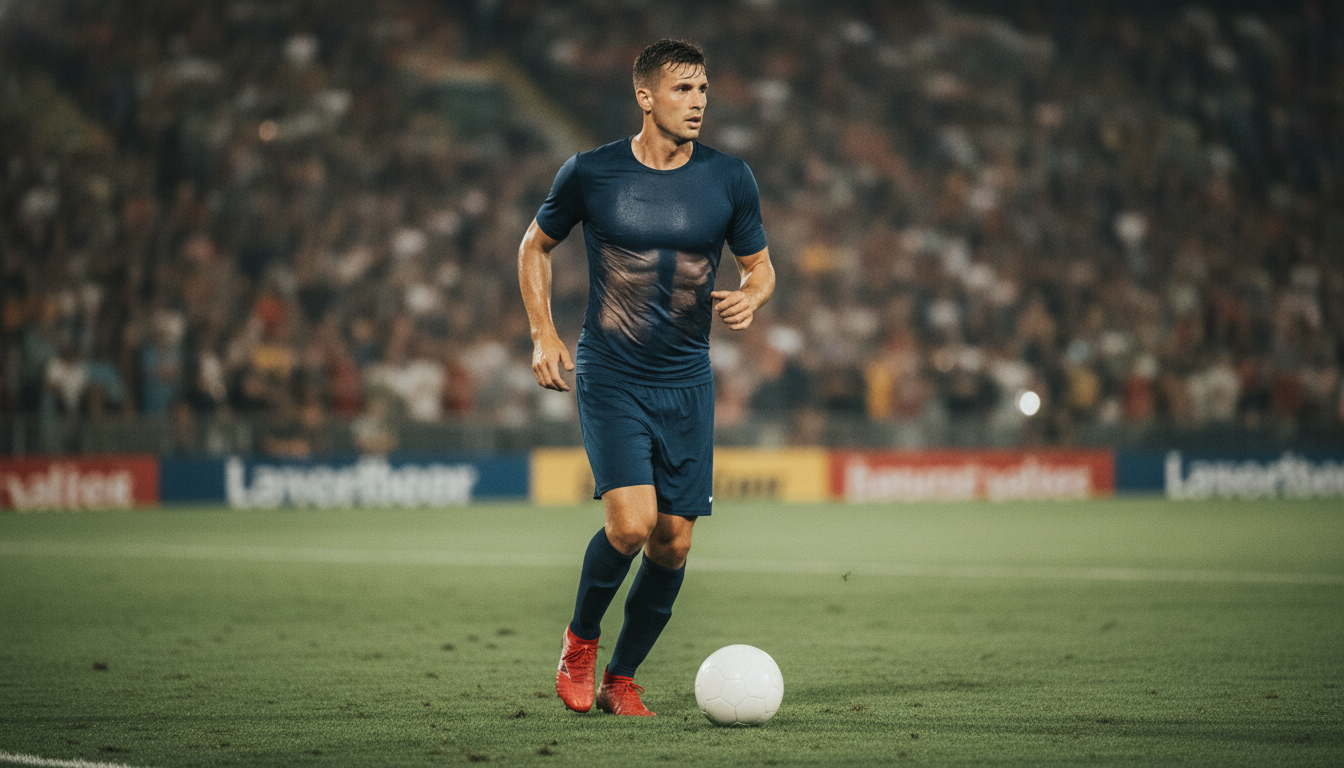
Picture a midfielder, forty minutes into the second half, jogging over to the referee and saying something quietly. The referee nods. The player trots to the touchline, disappears down the tunnel, and their team reshapes into a ten. That is the reality of needing the toilet during a professional football match.
Play does not stop. There is no provision for a pause, no equivalent of a timeout. A player can ask the referee's permission to leave the pitch, and most referees will grant it at a suitable moment, but the game continues without them. They also need permission to come back on, so the time their team is a man short is not entirely in their own hands.
This is why players work hard to avoid the situation in the first place. Fluid intake is managed carefully in the hours before kick-off, and during the match players tend to sip rather than drink freely. The goal is to stay hydrated enough to perform without filling up to the point where the body demands relief at an inconvenient moment. It does not always work.
Half-time is the obvious release valve. The fifteen-minute break gives players access to the dressing room, and using the toilet there is routine for many. Managers and coaches plan their team talks around it. For a player who has been holding on since the thirtieth minute, the half-time whistle can feel like the most welcome sound in football.
When the body will not wait that long, some players have found less dignified solutions. Goalkeepers are the most frequently reported, partly because they spend long stretches of the match standing near their net with little to do and no easy route to the tunnel. There are well-documented cases of goalkeepers urinating behind the goal during breaks in play, an injury stoppage, a lengthy VAR check, a substitution at the other end of the pitch. Outfield players have done the same in the corner of the pitch or behind a goal, though it tends to attract more attention when they do.
These incidents occasionally surface in the press, usually because a camera catches something or a player mentions it afterwards. They are treated as curiosities rather than scandals, which probably reflects how common the problem is behind the scenes.
The edge case worth knowing about is what happens when a goalkeeper leaves their goal to use the tunnel. Their team does not just lose a body, they lose the one player whose absence leaves the goal completely unguarded. In practice, an outfield player would move into goal, but the referee is not obliged to stop play while any of this is sorted out. A team that conceded while their goalkeeper was down the tunnel would have no grounds for complaint. It has not happened at the highest level in any widely reported case, but the possibility is real, and it is why goalkeepers tend to prefer the behind-the-net option over the tunnel.

The day's football, in your inbox at 7 AM. Nothing else.
Pick of the night's matches, what the transfer window's doing, and the one column you should read today. No ads. No tips. No operators.
One-click unsubscribe. We do not share emails.
Comments
Loading comments…