
 COK0
COK0 TAH0
TAH0 ARG4
ARG4 BOL0
BOL0 LTU3
LTU3 AND0
AND0 BOT0
BOT0 MOZ2
MOZ2 SEY0
SEY0 SRI2
SRI2 FIJ2
FIJ2 NCD1
NCD1 PNG1
PNG1 SOL1
SOL1 AZE
AZE LIE
LIE DEN
DEN POR
POR GER
GER SRB
SRB GRE
GRE NED
NED ISR
ISR KOS
KOS MLT
MLT GIB
GIB IRL
IRL AUT
AUT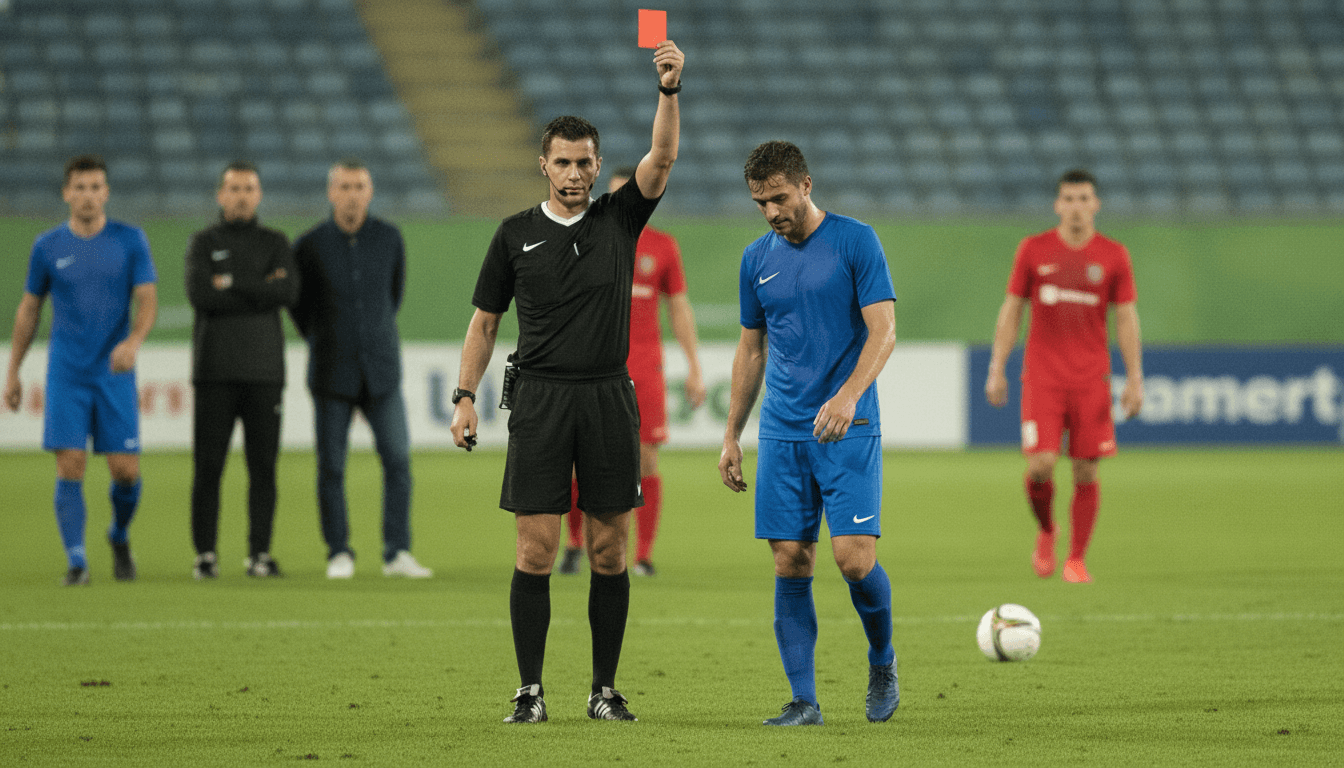
What happens when a footballer gets a red card
A player lunges into a tackle two-footed, the referee reaches into his pocket, and a red rectangle goes up. That card ends the player's afternoon on the spot and leaves his team a man down for whatever's left of the game.
Written with AI and checked automatically before publishing. How we work
Picture the moment properly. A referee jogs to the spot, raises his arm, and shows a red card at head height so both benches and the crowd can see it. The player who committed the foul turns, sometimes protests, then walks off the pitch alone, usually straight down the tunnel rather than to the bench. Nobody comes on to replace him. His team plays the rest of the match with ten men, or fewer if it happens again.
That is the whole of it, in plain terms: the player is sent off, takes no further part in the match, and his team cannot bring on a substitute to make up the numbers. Law 12 of the IFAB rulebook covers this directly, a red card carries a specific instruction that the offending player leaves for good and the team plays on short-handed. That clause is the sting, a red card is not just a personal punishment, it is a numerical one. Ten men have to see out however much of the game is left.
Red cards are not reserved for violence alone. The Laws set out a family of offences that all carry the same punishment: violent conduct, serious foul play, and deliberate handball or a professional foul that stops an obvious goal-scoring chance. On that last category the rulebook is unusually precise about handball specifically. A deliberate handball that denies a goal or a clear scoring chance is a red card wherever on the pitch it happens, and even a non-deliberate handball can get the same punishment if it happens outside the penalty area and stops that clear chance. A handball does not need to be deliberate to earn a red card, as long as it happens outside the box and denies a clear opportunity. Location and intent both do work here, but not in the way most fans assume.
Once the card is shown, the player has to leave the field straight away, there is no lingering to argue the toss on the pitch itself. If the offence happened away from the referee's eyeline, perhaps in a tunnel scuffle or an off-the-ball incident missed in the moment, the sending-off can still be applied retrospectively, but the referee has to tell both teams and get an announcement made to the crowd before the game restarts. Nobody is left wondering why the team sheet suddenly shows ten shirts.
The edge case worth knowing is timing. A red card does not have to happen during play at all. Referees have the power to show cards during the half-time interval too, even for an offence that happened off the field of play entirely. So a player who loses his head in the tunnel at half-time, nowhere near the pitch and nowhere near the ball, can still be sent off before the second half kicks off, his team walks back out already a man short, for an incident the crowd never even saw.
Sources1 source
IFAB Laws of the Game — Law 12: Fouls and Misconduct, IFAB Laws of the Game — Law 12: Fouls and Misconduct, IFAB Laws of the Game — Law 12: Fouls and Misconduct
We name and link every outlet this article draws on, and rewrite their reporting in our own words rather than reprinting it.
%22%20%2F%3E%0A%20%20%3Crect%20width%3D%22100%25%22%20height%3D%22100%25%22%20fill%3D%22url(%23glow)%22%20%2F%3E%0A%20%20%3Cg%20transform%3D%22rotate(-8%2C%20600%2C%20337.5)%22%3E%0A%20%20%20%20%3Crect%20x%3D%22-200%22%20y%3D%22418.5%22%20width%3D%221600%22%20height%3D%222%22%20fill%3D%22%23E4002B%22%20opacity%3D%220.106%22%20%2F%3E%0A%20%20%20%20%3Crect%20x%3D%22-200%22%20y%3D%22499.5%22%20width%3D%221600%22%20height%3D%221%22%20fill%3D%22%23E4002B%22%20opacity%3D%220.106%22%20%2F%3E%0A%20%20%3C%2Fg%3E%0A%20%20%3Ccircle%20cx%3D%2291%22%20cy%3D%22394%22%20r%3D%22347%22%20fill%3D%22%23E4002B%22%20opacity%3D%220.050%22%20%2F%3E%0A%20%20%3Ccircle%20cx%3D%22905%22%20cy%3D%22337%22%20r%3D%22206%22%20fill%3D%22%23E4002B%22%20opacity%3D%220.130%22%20%2F%3E%0A%20%20%3Ccircle%20cx%3D%221092%22%20cy%3D%22489%22%20r%3D%22277%22%20fill%3D%22%23E4002B%22%20opacity%3D%220.083%22%20%2F%3E%0A%20%20%3Ccircle%20cx%3D%2258%22%20cy%3D%22243%22%20r%3D%22366%22%20fill%3D%22%23E4002B%22%20opacity%3D%220.053%22%20%2F%3E%0A%20%20%3Ccircle%20cx%3D%22148%22%20cy%3D%221%22%20r%3D%22263%22%20fill%3D%22%23E4002B%22%20opacity%3D%220.105%22%20%2F%3E%0A%20%20%3Ctext%20x%3D%2248%22%20y%3D%2264%22%0A%20%20%20%20%20%20%20%20font-family%3D%22'Taurus%20Grotesk'%2C%20system-ui%2C%20sans-serif%22%0A%20%20%20%20%20%20%20%20font-size%3D%2214%22%20font-weight%3D%22500%22%20letter-spacing%3D%222.5%22%0A%20%20%20%20%20%20%20%20fill%3D%22%23E4002B%22%20opacity%3D%220.85%22%3EOTHER%20FOOTBALL%3C%2Ftext%3E%0A%20%20%3Ctext%20x%3D%2248%22%20y%3D%22611%22%0A%20%20%20%20%20%20%20%20font-family%3D%22'Suomi%20Veto%20Lugati'%2C%20'Anton'%2C%20'Oswald'%2C%20Impact%2C%20sans-serif%22%0A%20%20%20%20%20%20%20%20font-style%3D%22italic%22%20font-weight%3D%22700%22%0A%20%20%20%20%20%20%20%20font-size%3D%2264%22%20letter-spacing%3D%22-0.01em%22%0A%20%20%20%20%20%20%20%20fill%3D%22%23FFFFFF%22%20opacity%3D%220.96%22%3EWhat%20Happens%20If%20a%20Football%20Match%20Draws%3F%3C%2Ftext%3E%0A%20%20%3Ctext%20x%3D%221152%22%20y%3D%22647%22%0A%20%20%20%20%20%20%20%20text-anchor%3D%22end%22%0A%20%20%20%20%20%20%20%20font-family%3D%22'Taurus%20Grotesk'%2C%20system-ui%2C%20sans-serif%22%0A%20%20%20%20%20%20%20%20font-size%3D%2211%22%20font-weight%3D%22500%22%20letter-spacing%3D%222%22%0A%20%20%20%20%20%20%20%20fill%3D%22%23FFFFFF%22%20opacity%3D%220.45%22%3EFLAGSIDE.FOOTBALL%3C%2Ftext%3E%0A%3C%2Fsvg%3E)
The day's football, in your inbox at 7 AM. Nothing else.
Pick of the night's matches, what the transfer window's doing, and the one column you should read today. No ads. No tips. No operators.
One-click unsubscribe. We do not share emails.
Comments
Loading comments…