
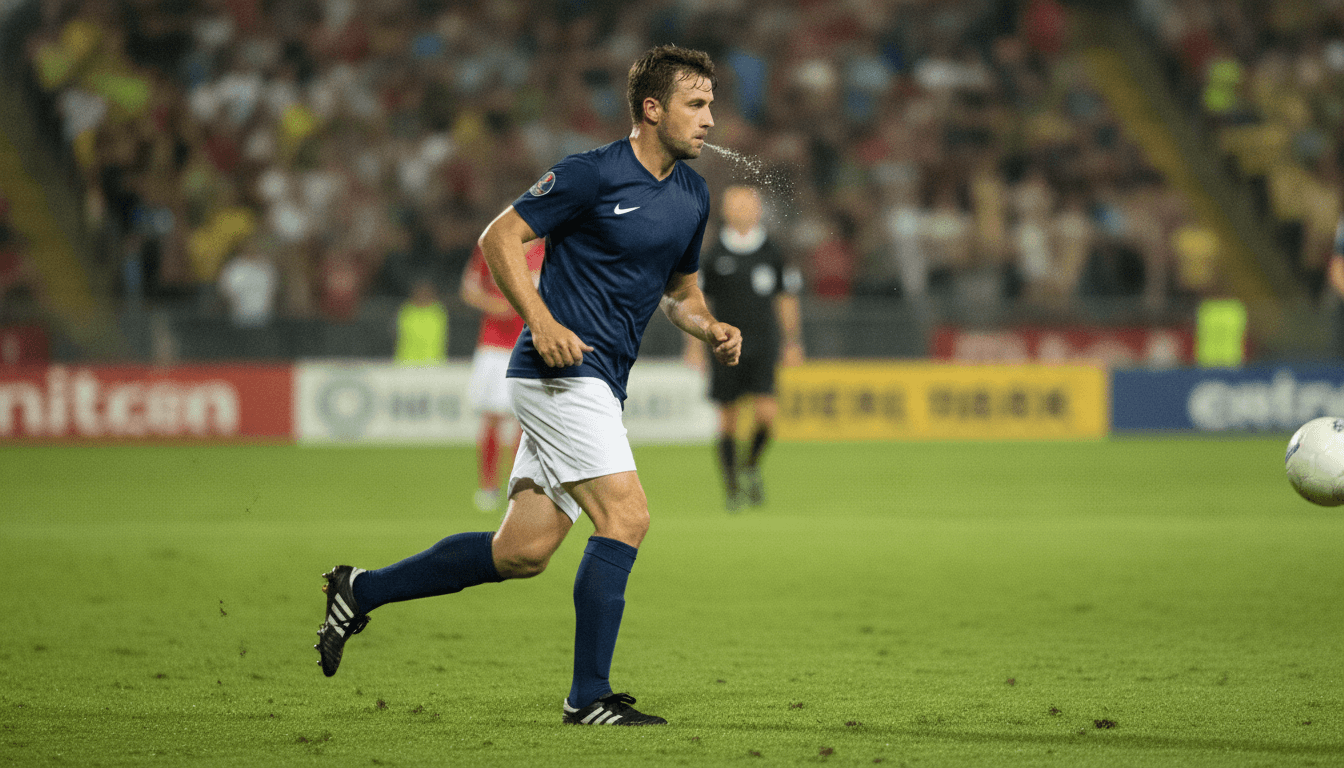
Why do football players spit so much?
It happens dozens of times a match, barely noticed — but there are straightforward physical reasons behind it.
Written with AI and checked automatically before publishing. How we work
Watch a goalkeeper during a drinks break and you will see it clearly: he takes a mouthful of water or energy drink, swills it around, and spits it onto the turf before handing the bottle back. A midfielder sprinting back into position does the same thing mid-run, barely breaking stride, a quick turn of the head and a stream of saliva gone.
The short answer is that the body produces more fluid in the mouth and throat than a player can comfortably swallow when running hard, and spitting is simply the fastest way to clear it.
Intense exercise drives up saliva production and, especially in cold or dry air, triggers the body to make thick mucus in the airways. Swallowing repeatedly while breathing hard through the mouth is awkward and slow. Spitting takes a fraction of a second and keeps the airway clear. At the pace professional football is played, that matters.
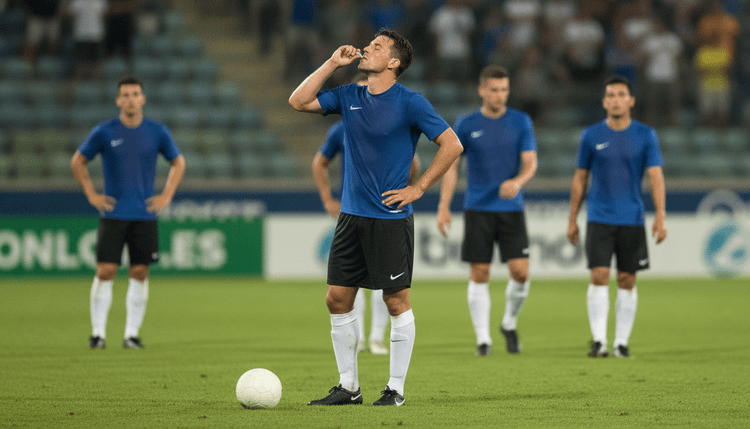
The drinks-break spit is a slightly different thing. Players rinse with water or an energy drink to freshen the mouth and get a small benefit from the sugars — the mouth has receptors that respond to carbohydrates even without swallowing. But taking a full mouthful of liquid into the stomach during hard running risks cramps and nausea, so they spit it out instead. The mouth gets the signal; the stomach stays settled.
Beyond the physiology, habit does a lot of the work. Players learn the behaviour young, training alongside teammates who do it, and it becomes automatic. Most professionals spit without consciously deciding to — it is as unremarkable to them as adjusting a sock. The culture of the game has normalised it so thoroughly that it rarely registers as a choice at all.
Cold weather makes it more visible. Low temperatures and dry air irritate the airways and produce more mucus, so a winter match will see far more spitting than a warm August evening. The same player, the same effort level, noticeably different output depending on what the air is doing to their throat.
The one thing that does vary is what players spit during a match versus at half-time. On the pitch, mid-run, it is almost always saliva or mucus cleared on instinct. During a break, when a coach is talking and a player has a bottle in hand, it is more likely to be the deliberate rinse-and-spit. Same gesture, slightly different cause.

%22%20%2F%3E%0A%20%20%3Crect%20width%3D%22100%25%22%20height%3D%22100%25%22%20fill%3D%22url(%23glow)%22%20%2F%3E%0A%20%20%3Cg%20transform%3D%22rotate(4%2C%20600%2C%20337.5)%22%3E%0A%20%20%20%20%3Crect%20x%3D%22-200%22%20y%3D%22418.5%22%20width%3D%221600%22%20height%3D%222%22%20fill%3D%22%23E4002B%22%20opacity%3D%220.070%22%20%2F%3E%0A%20%20%20%20%3Crect%20x%3D%22-200%22%20y%3D%22499.5%22%20width%3D%221600%22%20height%3D%221%22%20fill%3D%22%23E4002B%22%20opacity%3D%220.070%22%20%2F%3E%0A%20%20%3C%2Fg%3E%0A%20%20%3Ccircle%20cx%3D%224%22%20cy%3D%22626%22%20r%3D%22145%22%20fill%3D%22%23E4002B%22%20opacity%3D%220.113%22%20%2F%3E%0A%20%20%3Ccircle%20cx%3D%22274%22%20cy%3D%22469%22%20r%3D%22372%22%20fill%3D%22%23E4002B%22%20opacity%3D%220.123%22%20%2F%3E%0A%20%20%3Ccircle%20cx%3D%22786%22%20cy%3D%22644%22%20r%3D%22186%22%20fill%3D%22%23E4002B%22%20opacity%3D%220.131%22%20%2F%3E%0A%20%20%3Ccircle%20cx%3D%22483%22%20cy%3D%22608%22%20r%3D%22277%22%20fill%3D%22%23E4002B%22%20opacity%3D%220.111%22%20%2F%3E%0A%20%20%3Ccircle%20cx%3D%22764%22%20cy%3D%22319%22%20r%3D%22351%22%20fill%3D%22%23E4002B%22%20opacity%3D%220.124%22%20%2F%3E%0A%20%20%3Ccircle%20cx%3D%22633%22%20cy%3D%22387%22%20r%3D%22389%22%20fill%3D%22%23E4002B%22%20opacity%3D%220.103%22%20%2F%3E%0A%20%20%3Ctext%20x%3D%2248%22%20y%3D%2264%22%0A%20%20%20%20%20%20%20%20font-family%3D%22'Taurus%20Grotesk'%2C%20system-ui%2C%20sans-serif%22%0A%20%20%20%20%20%20%20%20font-size%3D%2214%22%20font-weight%3D%22500%22%20letter-spacing%3D%222.5%22%0A%20%20%20%20%20%20%20%20fill%3D%22%23E4002B%22%20opacity%3D%220.85%22%3EOTHER%20FOOTBALL%3C%2Ftext%3E%0A%20%20%3Ctext%20x%3D%2248%22%20y%3D%22611%22%0A%20%20%20%20%20%20%20%20font-family%3D%22'Suomi%20Veto%20Lugati'%2C%20'Anton'%2C%20'Oswald'%2C%20Impact%2C%20sans-serif%22%0A%20%20%20%20%20%20%20%20font-style%3D%22italic%22%20font-weight%3D%22700%22%0A%20%20%20%20%20%20%20%20font-size%3D%2264%22%20letter-spacing%3D%22-0.01em%22%0A%20%20%20%20%20%20%20%20fill%3D%22%23FFFFFF%22%20opacity%3D%220.96%22%3EWhat%20happens%20if%20a%20football%20match%20is%20a%20draw%3F%3C%2Ftext%3E%0A%20%20%3Ctext%20x%3D%221152%22%20y%3D%22647%22%0A%20%20%20%20%20%20%20%20text-anchor%3D%22end%22%0A%20%20%20%20%20%20%20%20font-family%3D%22'Taurus%20Grotesk'%2C%20system-ui%2C%20sans-serif%22%0A%20%20%20%20%20%20%20%20font-size%3D%2211%22%20font-weight%3D%22500%22%20letter-spacing%3D%222%22%0A%20%20%20%20%20%20%20%20fill%3D%22%23FFFFFF%22%20opacity%3D%220.45%22%3EFLAGSIDE.FOOTBALL%3C%2Ftext%3E%0A%3C%2Fsvg%3E)
The day's football, in your inbox at 7 AM. Nothing else.
Pick of the night's matches, what the transfer window's doing, and the one column you should read today. No ads. No tips. No operators.
One-click unsubscribe. We do not share emails.
Comments
Loading comments…