
 FUL1
FUL1 MAN1
MAN1 BOU0
BOU0 LIV1
LIV1 LEE0
LEE0 CRY0
CRY0 MNC5
MNC5 SUN3
SUN3 NFO0
NFO0 COV1
COV1 BHA3
BHA3 ARS0
ARS0 EVE1
EVE1 IPS0
IPS0 NEW2
NEW2 HUL1
HUL1 TOT2
TOT2 AVL3
AVL3 NOR3
NOR3 BOL4
BOL4 WOL1
WOL1 WBA0
WBA0 BIR2
BIR2 MID2
MID2 BUR1
BUR1 DER1
DER1 LCN1
LCN1 SWA2
SWA2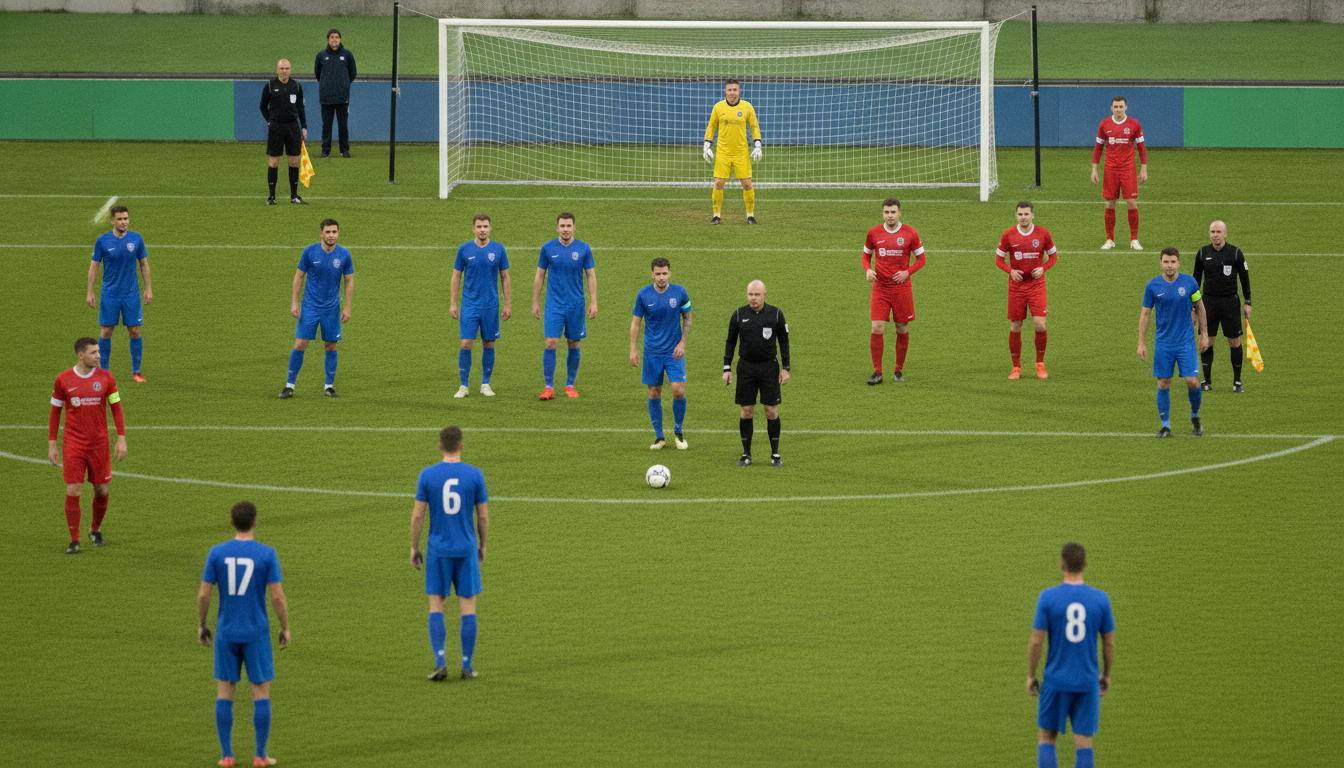
How Many Players Are on a Soccer Field?
How Many Players Are on a Soccer Field?
At kickoff, 22 players line up across the pitch, eleven in each half, one of them wearing gloves and a different shirt. That number, and the one that matters if it starts to shrink, comes straight from the rulebook.

Look at any match in the seconds before the whistle. Two lines of players face off across the centre circle, ten a side plus a goalkeeper standing apart in different colours, gloves on, hovering near their own box. Count both sides and you get 22 players on the field at once, unless someone has already been sent off.
The number is simple: eleven players per team, twenty-two in total, and one of those eleven on each side has to be the goalkeeper. That is not a convention clubs happen to follow, it is written into the Laws of the Game. IFAB's Law 3 states it in one sentence: "A match is played by two teams, each with a maximum of eleven players; one must be the goalkeeper." The word doing the work there is "must." A team can play with ten men after a red card, or nine, but it cannot play with eleven outfield players and no goalkeeper. Someone has to wear the gloves.
Eleven is also a ceiling, not a target. "Maximum" means a team can start with fewer, through injury, suspension, or simply not having enough fit players, and still play, so long as it clears the next threshold the Laws set.
That threshold is seven. A team can be reduced by red cards or injuries over the course of a match, and the game keeps going as long as each side stays at seven or above. Drop below that and the referee has to stop the match. Law 3 spells it out with the same bluntness as the eleven-a-side rule: "A match may not start or continue if either team has fewer than seven players (not including temporary dismissals or one-minute periods off the field of play in connection with the 'Time-limited substitution protocol' or the 'Off-field treatment and assessment protocol')."
The bracketed exception is the part most people never notice. A player who is off the pitch for a temporary dismissal, or briefly absent under the time-limited substitution protocol or the off-field treatment and assessment protocol, still counts as part of the team for the purposes of that seven-player floor. So a side is not suddenly deemed to have collapsed to six just because one player is receiving treatment off the field for a minute, the Laws treat that absence as temporary, not as a player lost from the count.
In practice this means the number on the pitch at any given moment can dip and recover within a match without the game stopping, as long as the team's actual roster strength, minus permanent dismissals, never falls under seven. Once it does, the referee abandons the match. Twenty-two at kickoff, down to a minimum of seven per side before the whole thing has to stop, with one player on each team always designated as the goalkeeper: that is the full shape of the rule most fans have never read but every match obeys.
Sources1 source
IFAB Laws of the Game — Law 3: The Players, IFAB Laws of the Game — Law 3: The Players
Flagside's editors read every piece we publish. We work from the football press, write our own copy rather than reprinting anyone's, and check each article for accuracy and sourcing. Every outlet that fed into this piece is named under Sources.

The day's football, in your inbox at 7 AM. Nothing else.
Pick of the night's matches, what the transfer window's doing, and the one column you should read today. No ads. No tips. No operators.
One-click unsubscribe. We do not share emails.
Comments
Loading comments…